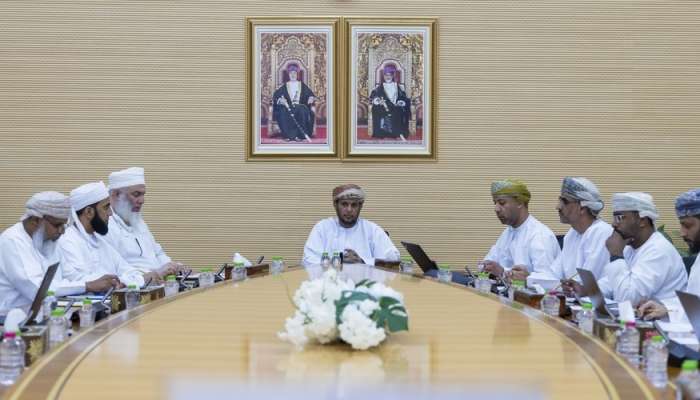

The Sultanate of Oman is making significant strides in establishing a robust and internationally recognized Halal certification system. Recent developments, highlighted by the third meeting of the National Halal System Task Force, demonstrate a commitment to bolstering the global competitiveness of Omani products and ensuring they meet stringent domestic and international standards within the rapidly expanding global Halal market. This initiative is critical for unlocking new export opportunities and attracting investment.
Oman Develops Integrated National Halal System
Chaired by Dr. Saleh bin Said Masan, Undersecretary of the Ministry of Commerce, Industry and Investment Promotion for Commerce and Industry, the task force meeting focused on the progress towards launching a comprehensive, integrated Halal certification framework. The global Halal economy, currently valued at over $7 trillion, is experiencing exponential growth and is forecasted to reach approximately $10 trillion by 2030. This presents a substantial opportunity for Oman to capitalize on this burgeoning market, but it requires a well-defined and reliable system to assure consumers and trading partners of product authenticity.
The discussion acknowledged the wide reach of the Halal concept, extending far beyond simply Halal food. Key sectors within the Halal economy include personal care and cosmetics, Halal tourism, Islamic finance, modest fashion, and pharmaceuticals – all of which Oman aims to address with its new system.
Sector-Specific Oversight and Regulations
The task force reviewed advancements made in defining sector-specific regulations. Following earlier phases, the framework now clearly delineates oversight responsibilities:
- Cosmetics will be regulated by the Ministry of Commerce, Industry and Investment Promotion.
- Food and water products fall under the purview of the Ministry of Agriculture, Fisheries and Water Resources.
- Pharmaceuticals will be supervised by the Ministry of Health.
This structured approach ensures that specialized knowledge and expertise are applied to each sector, contributing to the system’s overall accuracy and credibility. Progress on administrative, technical, and financial aspects of the regulations, including the approval process and associated fee structures, were also critically assessed.
Streamlining Market Access with Technology and Processes
One of the key outcomes of the meeting was the designation of the ‘Oman Business Platform’ as the central hub for all Halal certification applications and the registration of certifying bodies. This digitalization effort is expected to significantly improve efficiency and transparency in the process.
To further expedite access to both local and international markets, a ‘Fast Track’ application mechanism is being implemented, slated to launch at the beginning of 2025. This system will prioritize applications from Omani exporters needing swift Halal verification, fostering confidence among consumers and facilitating trade expansion. Relatedly, the team is working to address common challenges exporters face when navigating international Halal standards.
Enhancing Expertise and International Collaboration
Recognizing the importance of a skilled workforce, plans are underway for comprehensive training and capacity-building programs for officials and auditors involved in the Halal system. Furthermore, Oman’s active participation in relevant regional and international Halal forums will be crucial for staying abreast of best practices and shaping global standards.
Discussions also touched upon the potential benefits of Oman becoming a member of the Standards and Metrology Institute for the Islamic Countries (SMIIC). Membership would provide access to valuable expertise in standardization, particularly in the realm of Halal, and strengthen Oman’s position within the international Halal community. Several design proposals for a nationally recognized Halal logo were also examined.
Ensuring Religious Integrity and Transparency
Dr. Masan emphasized the importance of a collaborative approach, highlighting the crucial role of public-private partnerships in ensuring the success of the national Halal System. Leveraging the expertise of the Ministry of Endowments and Religious Affairs is also viewed as fundamental.
The Office of the Grand Mufti has been firmly established as the definitive Sharia authority for interpreting Halal requirements. This ensures the system remains deeply rooted in Oman’s established religious principles and maintains regulatory coherence. This is a critical element for gaining consumer trust, both domestically and internationally, and safeguarding the long-term integrity of the Halal certification process.
Furthermore, the Undersecretary underscored the necessity of implementing robust procedures for periodic Sharia compliance audits of certified products and services. These audits will be complemented by rigorous technical reviews, concentrating on supply chain oversight and product integrity verification. This multi-layered approach will guarantee continuous adherence to both religious and regulatory stipulations, building a system known for its reliability and trustworthiness.
In conclusion, Oman’s development of a national Halal certification system is a strategically vital initiative. By prioritizing regulatory clarity, technological integration, skills development, international cooperation, and, most importantly, adherence to Sharia principles, Oman positions itself to become a leading player in the expanding global Halal economy. The successful launch and operation of this system will not only boost Omani exports but also enhance consumer confidence and solidify Oman’s reputation as a trust-worthy producer of Halal products and services. Businesses interested in tapping into the Halal market are encouraged to monitor updates on the Oman Business Platform and prepare for the implementation of the ‘Fast Track’ application mechanism in 2025.