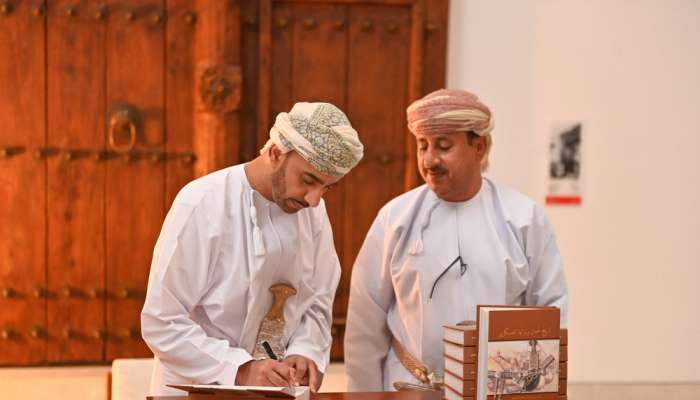

Oman’s rich and complex history has long been a source of national pride and scholarly interest. Recently, the Oman Historical Association, in collaboration with the National Museum, unveiled a significant contribution to understanding this past: a new book titled “Oman’s History and Military Heritage.” This comprehensive work, authored by Falih Saif Al Maamari, promises a detailed exploration of Oman’s historical trajectory, with a particular focus on its Oman military history, from ancient times to the present day.
A Comprehensive Look at Oman’s Military History
The launch ceremony, held under the patronage of Eng. Ibrahim bin Said Al Kharousi, Undersecretary of the Ministry of Heritage and Tourism for Heritage, underscored the importance of this publication. “Oman’s History and Military Heritage” isn’t simply a recounting of battles; it’s a scholarly study that meticulously examines the evolution of Oman’s military capabilities and their connection to the broader historical narrative. The book’s scope is remarkably broad, stretching back to the 4th millennium BC and continuing through to the current era of the Renewed Renaissance under His Majesty Sultan Haitham bin Tarik.
Tracing the Development of Warfare in Oman
A key aspect of the book is its detailed analysis of warfare throughout Omani history. Al Maamari doesn’t just describe conflicts; he delves into the development of weapons, the organization of armies, the construction of fortifications, and the military tactics and strategies employed by Omani forces across the centuries. This provides a nuanced understanding of how Oman defended its sovereignty and projected its influence.
The author’s research is impressively thorough. The book draws upon a diverse range of sources, demonstrating a commitment to rigorous historical methodology. These sources include archaeological discoveries, ancient written records, intriguing rock inscriptions, and valuable manuscripts. Furthermore, Al Maamari incorporates historical documents, as well as references from Omani, Arab, and international publications, creating a truly multi-faceted perspective.
Preserving Cultural Memory and National Identity
The publication of “Oman’s History and Military Heritage” is more than just an academic exercise. It represents a concerted effort by the Oman Historical Association and the National Museum to document Oman’s national history and safeguard its cultural memory. This is particularly crucial in an era where cultural heritage is increasingly vulnerable. The book actively contributes to raising public awareness about the significance of Omani heritage, and specifically, the role of military heritage in shaping Omani identity.
Additionally, the book highlights the strategic importance of Oman throughout history. Its geographical location, controlling vital trade routes, has consistently made it a focal point for regional and global powers. Understanding Oman’s historical fortifications, therefore, is essential to understanding its resilience and its ability to maintain its independence.
The Importance of Collaboration
The collaborative nature of this project – bringing together the expertise of the Oman Historical Association and the resources of the National Museum – is a testament to the commitment to preserving and promoting Oman’s cultural legacy. Such partnerships are vital for ensuring that historical research is accessible to a wider audience and that its findings inform public understanding.
The book’s launch event itself served as a platform for celebrating Omani history and fostering a sense of national pride. Eng. Al Kharousi’s presence underscored the government’s support for initiatives that promote cultural preservation and historical research. This support is crucial for encouraging further scholarship and ensuring that Oman’s rich past continues to be explored and understood.
Looking Ahead: The Future of Oman’s Historical Research
“Oman’s History and Military Heritage” is a valuable addition to the growing body of literature on Omani history. It provides a comprehensive and insightful account of the nation’s past, with a particular emphasis on its military traditions. The book’s meticulous research and engaging writing style make it accessible to both scholars and general readers interested in learning more about this fascinating region.
This publication serves as a reminder of the importance of preserving and celebrating Oman’s unique cultural identity. By understanding its Oman military history, Omanis can gain a deeper appreciation for the sacrifices and achievements of their ancestors and build a stronger foundation for the future. We encourage readers to seek out this book and delve into the captivating story of Oman’s past. Further research and exploration of Oman’s historical sites are encouraged to continue building upon this important work.