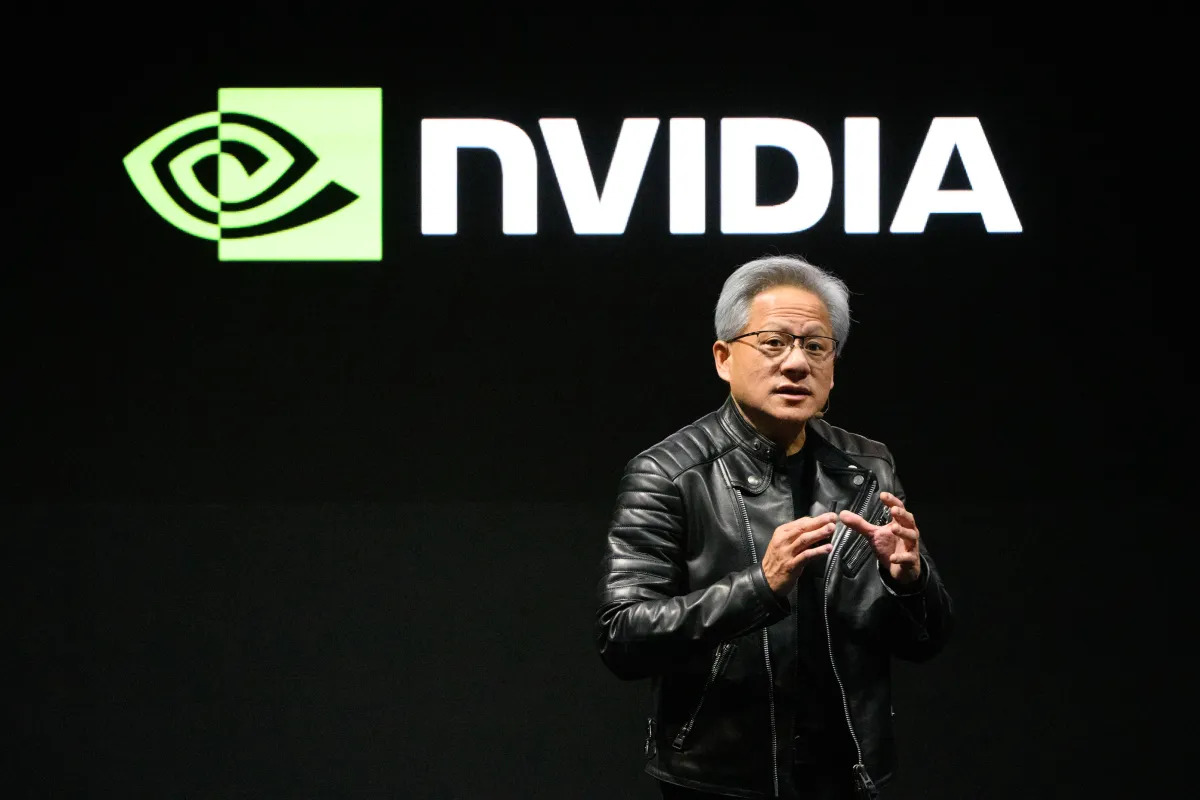

Nvidia is deepening its commitment to the rapidly evolving field of artificial intelligence with a dual announcement focused on open source development. The company acquired SchedMD, the creators of the Slurm workload manager, and simultaneously released a new family of open AI models called Nvidia Nemotron 3. These moves signal Nvidia’s strategy to become a central provider of both the hardware and software infrastructure powering the next generation of AI applications.
The acquisitions and releases took place on Monday, furthering a trend of increased investment in open source AI by the semiconductor giant. Nvidia plans to maintain Slurm as a vendor-neutral, open source project, ensuring its continued accessibility to the high-performance computing community. The Nemotron 3 models are designed to be highly efficient for building accurate AI agents, offering a range of capabilities from simple tasks to complex reasoning.
Nvidia’s Acquisition of SchedMD and the Importance of Slurm
SchedMD, founded in 2010 by the original developers of Slurm, has long been the leading force behind the popular workload manager. Slurm, initially launched in 2002, is crucial for managing and scheduling jobs on large-scale computing clusters, particularly those used for AI training and inference. According to Nvidia, the technology is “critical infrastructure for generative AI.”
The terms of the acquisition were not disclosed. Nvidia stated it will continue to invest in Slurm, aiming to accelerate its access across diverse systems. This suggests a focus on optimizing Slurm to work seamlessly with Nvidia’s hardware and software ecosystem, while still upholding its open-source nature.
Workload Management in the AI Era
As AI models grow in size and complexity, the need for efficient workload management becomes paramount. SchedMD’s Slurm provides a robust framework for allocating resources, prioritizing tasks, and ensuring optimal utilization of computing infrastructure. Without such tools, training and deploying large language models and other advanced AI applications would be significantly more challenging and expensive.
Nvidia’s acquisition isn’t simply about owning the software; it’s about controlling a key piece of the AI development pipeline. By integrating Slurm more closely with its GPUs and AI software stack, Nvidia can offer a more complete and optimized solution to its customers.
Introducing Nvidia Nemotron 3: A Family of Open AI Models
Alongside the SchedMD acquisition, Nvidia unveiled Nemotron 3, a new family of open AI models. The company claims this is its most efficient family of open models to date, specifically designed for building accurate AI agents. This release is part of a broader push towards open AI development, allowing researchers and developers to experiment and build upon Nvidia’s work.
The Nemotron 3 family consists of three models: Nemotron 3 Nano, a smaller model for targeted tasks; Nemotron 3 Super, geared towards multi-AI agent applications; and Nemotron 3 Ultra, designed for more complex reasoning and problem-solving. This tiered approach allows users to select the model that best fits their specific needs and resource constraints.
“Open innovation is the foundation of AI progress,” said Jensen Huang, founder and CEO of Nvidia, in a press release. He further stated that Nemotron aims to transform advanced AI into an open platform, providing developers with the transparency and efficiency needed for large-scale agentic systems.
This launch follows Nvidia’s recent release of Alpamayo-R1, an open reasoning vision language model focused on autonomous driving research. The company is also expanding access to its Cosmos world models, which are open source under a permissive license, with additional workflows and guides for developers. These initiatives demonstrate Nvidia’s growing commitment to fostering an open ecosystem around its machine learning technologies.
The focus on open source and open AI aligns with Nvidia’s broader strategy of positioning itself as a key enabler of “physical AI.” This refers to the application of AI to real-world robotics and autonomous systems, a market Nvidia believes will be a major growth driver in the coming years. The company aims to be the primary supplier of the AI and software needed to power the “brains” behind these technologies.
Nvidia’s moves are occurring as competition in the AI space intensifies. Other tech giants, including Meta and Google, are also investing heavily in open source AI initiatives. However, Nvidia’s unique position as a leading provider of both hardware and software gives it a significant advantage.
Looking ahead, the integration of SchedMD’s Slurm with Nvidia’s broader AI platform will be a key area to watch. The company is expected to continue releasing new open AI models and tools, further solidifying its position as a leader in the field. The success of these efforts will depend on Nvidia’s ability to balance its commercial interests with the principles of open source collaboration and maintain developer trust.