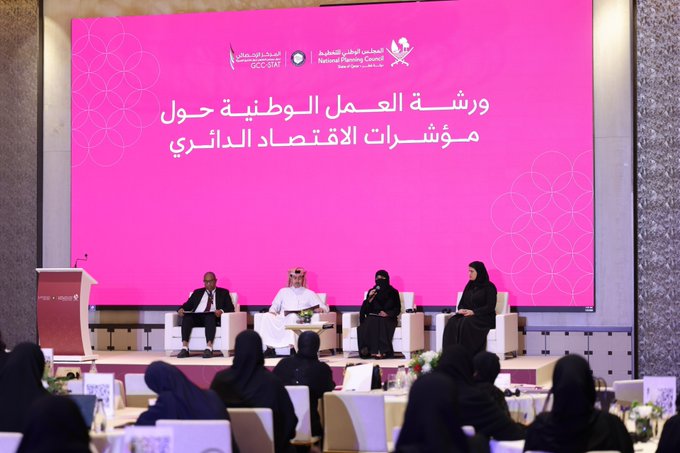

Doha, Qatar – The National Planning Council (NPC) of Qatar launched a National Workshop on circular economy indicators this week, signaling a significant step towards sustainable development goals. The four-day event, held January 26-29, gathers experts from over 18 national entities to collaborate on measuring and analyzing data related to resource management and waste reduction. This initiative underscores Qatar’s commitment to diversifying its economy and minimizing its environmental impact.
The workshop, conducted in cooperation with the GCC Statistical Center, brings together approximately 80 specialists focused on environmental, economic, and developmental issues. It was inaugurated by Ibrahim Hamad Al Mohannadi, Director of Social and Environmental Statistics Department at the National Statistics Center, who emphasized the importance of integrated data systems for effective policy evaluation. The event is taking place as Qatar continues to implement its National Vision 2030 and Third National Development Strategy.
The Importance of Circular Economy Indicators in Qatar
The move to develop robust circular economy indicators reflects a growing global trend towards more sustainable economic models. A circular economy aims to eliminate waste and pollution, keep products and materials in use, and regenerate natural systems, moving away from the traditional “take-make-dispose” approach. According to the NPC, integrating environmental and economic statistics is crucial for assessing the impact of policies designed to foster this transition.
Qatar’s National Vision 2030 and the Third National Development Strategy (2024-2030) both prioritize balancing economic growth with environmental protection. The development of these indicators will help track progress towards these goals and ensure that Qatar’s development remains sustainable in the long term. Furthermore, the initiative aligns with the United Nations Sustainable Development Goals, where circularity is increasingly recognized as a key component.
Workshop Focus Areas
The workshop agenda covers a wide range of topics essential for building a comprehensive understanding of the circular economy. Discussions include the global framework for these indicators, national policies and measures, and technical cooperation with international organizations like the Organisation for Economic Co-operation and Development (OECD) and the United Nations Economic Commission for Europe (UNECE).
A key focus is on enhancing the technical capabilities of Qatari professionals in data collection and analysis. Participants will explore various data sources and methodologies to ensure the accuracy and reliability of the indicators developed. This includes improving integration across environmental, economic, and social data sets, which is vital for producing reports that meet international standards.
A panel discussion featuring representatives from the Ministry of Municipality, the Ministry of Environment and Climate Change, and the Public Works Authority will address the practical challenges of implementing a circular economy in Qatar. Specifically, the discussion will center on managing waste generated by infrastructure projects and identifying incentives to encourage investment in recycling industries. This is particularly relevant given Qatar’s ongoing infrastructure development and preparations for future events.
The NPC views this workshop as part of a broader effort to promote awareness of circular economy principles and empower national institutions to utilize data-driven insights for sustainable resource management. This includes fostering innovation in resource management practices and aligning national policies with global best practices. Related efforts include promoting waste management and exploring opportunities for sustainable consumption.
Looking ahead, the NPC is expected to use the outcomes of this workshop to refine its national indicators for the circular economy and integrate them into its policy-making processes. The success of this initiative will depend on continued collaboration between national entities and the consistent application of international methodologies. It remains to be seen how quickly these indicators will be fully implemented and how effectively they will drive the transition towards a more circular and sustainable economy in Qatar, but the workshop represents a crucial first step.