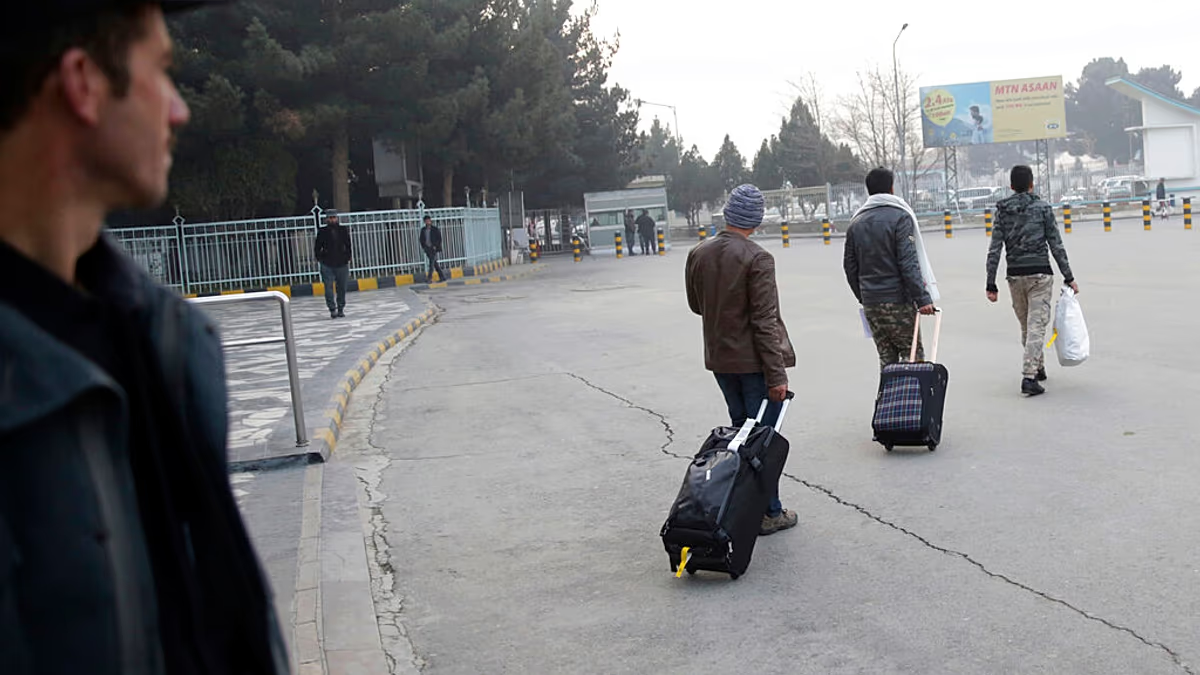

The European Union is facing increasing pressure to engage with the Taliban regime in Afghanistan to address the complex issue of migration and the repatriation of Afghan nationals. European Commissioner for Migration, Magnus Brunner, stated the EU must pursue technical discussions with authorities in Afghanistan, even while disagreeing with their governance. This comes as Germany moves closer to finalizing a deal with the Taliban to expedite the return of rejected asylum seekers and individuals convicted of crimes.
The move, announced by German Interior Minister Alexander Dobrindt, aims to streamline the deportation process for Afghan citizens who lack legal residency in Germany. Brunner emphasized that such engagement, while difficult, is necessary, stating that avoiding contact is not a viable option. The discussions are limited to civil servants and focus solely on technical aspects of repatriation.
EU Migration Policy and Engagement with the Taliban
The EU’s willingness to engage with the Taliban, even on a technical level, reflects a growing concern over security risks posed by individuals who have been denied asylum or have committed crimes. Brunner noted instances of “criminals and people posing a security threat” among Afghan migrants, justifying the need for repatriation. Additionally, several EU member states have been pushing for a more proactive approach to returning Afghan nationals living illegally within the bloc.
However, this approach has sparked criticism from within the EU and from human rights organizations. Concerns center on the potential for legitimizing the Taliban regime, which has been widely condemned for its systematic violations of human rights, particularly those of women and girls, since seizing power in August 2021. Critics argue that dialogue could pave the way for a gradual normalization of relations with a government that does not adhere to international norms.
Berlin maintains it has no official diplomatic relations with the Taliban, differentiating between communication and formal recognition. Brunner echoed this sentiment, stating that engaging in talks does not equate to acknowledging or respecting the Taliban government. The EU itself initiated exploratory talks with the Taliban in October, responding to pressure from 20 member states seeking solutions for returning Afghan nationals.
Challenges to Repatriation and Afghan Capacity
Despite the push for repatriation, significant challenges remain. A recent report from the UN Development Programme (UNDP) indicates that Afghanistan currently lacks the capacity to adequately absorb returning refugees. Kanni Wignaraja, UNDP director for Asia and the Pacific, highlighted a “disconnect” between calls for returns and the realities on the ground.
The UNDP report details the severe conditions in Afghanistan, including limited access to international assistance and the Taliban’s restrictions on basic human rights, as major obstacles to successful reintegration. These factors create a difficult environment for returning Afghans, particularly women and girls. The situation is further complicated by the ongoing economic crisis and humanitarian challenges facing the country.
Meanwhile, some experts suggest that increased engagement with the Taliban could potentially create leverage to improve the human rights situation within Afghanistan. This remains a contentious point, with many skeptical of the Taliban’s willingness to enact meaningful reforms.
Implications for EU Security and Future Policy
The EU’s evolving approach to migration from Afghanistan underscores the complex balancing act between security concerns, humanitarian obligations, and geopolitical realities. The debate over engaging with the Taliban highlights the difficult choices facing policymakers as they grapple with the consequences of the situation in Afghanistan. The issue of asylum seekers and their return to countries with questionable human rights records remains a central challenge for the EU.
The finalization of the Germany-Taliban deal is expected in the coming weeks, and will likely set a precedent for other EU member states. The situation warrants continued monitoring, particularly regarding the impact of repatriation on both Afghan citizens and the security landscape within Europe. Further developments in EU border control policies and international cooperation will be crucial in addressing this ongoing challenge.
Watch for further analysis of this developing situation and the full interview with Commissioner Brunner on The Europe Conversation, available on Euronews.