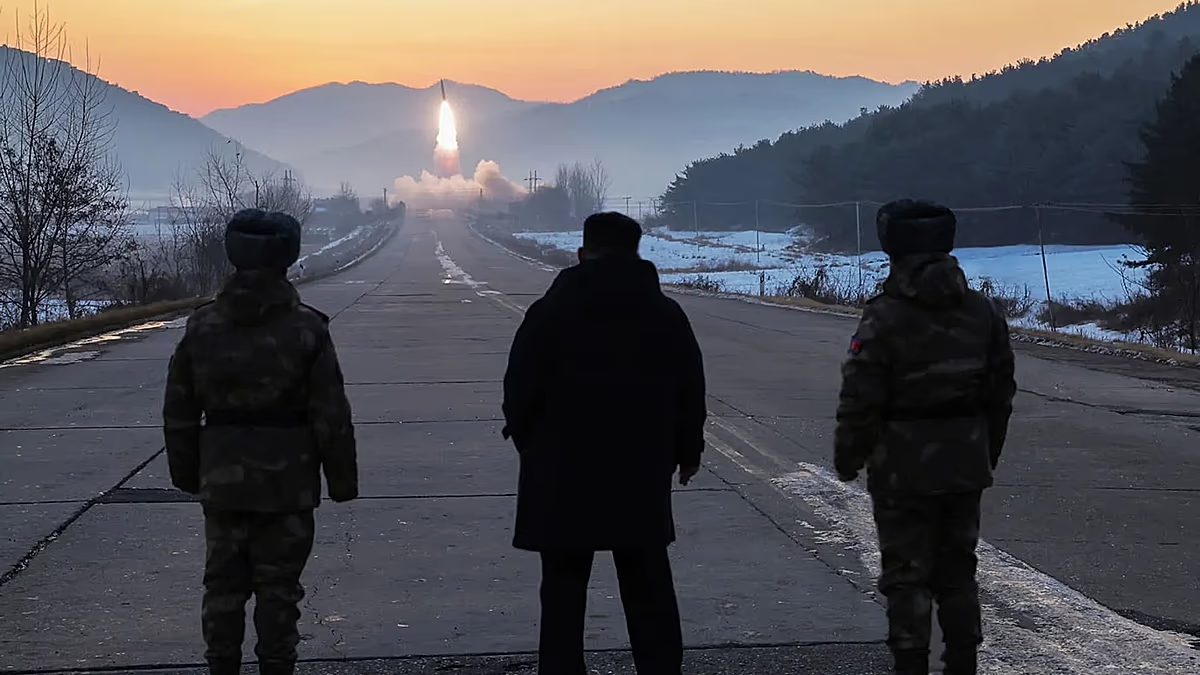

North Korea conducted a hypersonic missile test on Sunday, observed by leader Kim Jong-un, as the nation continues to accelerate its weapons development program ahead of a key political conference. The test, reported by state media, underscores Pyongyang’s commitment to bolstering its nuclear war deterrent and comes amid heightened regional tensions. This latest display of military capability raises concerns about escalating provocations and the potential for further instability in the region.
According to the Korean Central News Agency (KCNA), the drill aimed to assess the readiness of the hypersonic weapon system, enhance the operational skills of missile troops, and evaluate the country’s overall war deterrent capabilities. The test occurred just hours before South Korean President Lee Jae Myung began a summit with Chinese President Xi Jinping, adding another layer of complexity to the geopolitical landscape.
North Korea’s Expanding Missile Capabilities
The development of a functioning hypersonic missile would represent a significant advancement in North Korea’s military capabilities, potentially allowing it to overcome existing US and South Korean missile defense systems. While North Korea has conducted several tests in recent years aimed at achieving this goal, some foreign experts remain skeptical about the actual speed and maneuverability attained by the tested missiles. However, the continued testing demonstrates a clear intent to acquire this technology.
Recent Weapons Tests and Developments
In recent weeks, North Korea has showcased a series of other weapons advancements, including long-range strategic cruise missiles and new anti-air missiles. Additionally, state media released images suggesting progress in the construction of its first nuclear-powered submarine. These developments indicate a broad effort to modernize and expand its military arsenal.
Observers believe these displays are intended to highlight North Korea’s achievements in weapons development before the upcoming ruling Workers’ Party congress, the first such gathering in five years. The congress is expected to outline the country’s future policies, including its approach to relations with the United States and the possibility of resuming denuclearization talks.
Kim Jong-un emphasized the need for continuous upgrades to military capabilities, particularly offensive weapon systems, stating that recent geopolitical events and international complexities necessitate a stronger defense. He asserted that the latest launch drill confirmed a “very important technology task for national defence” had been successfully completed.
Meanwhile, North Korea has strongly condemned a recent US military operation that led to the arrest of Venezuelan President Nicolás Maduro on narco-terrorism conspiracy charges. Pyongyang views the operation as evidence of the “rogue and brutal nature of the US,” and many analysts suggest it will further motivate Kim to expand his nuclear weapons program as a guarantee of his government’s survival.
The timing of these tests also coincides with increased regional security concerns. South Korea and the United States have been conducting joint military exercises, which North Korea views as provocative. These exercises, intended to enhance readiness and interoperability, often draw condemnation from Pyongyang. The Council on Foreign Relations provides further background on North Korea’s nuclear program and regional security dynamics.
The latest launches follow a pattern of escalating tensions and demonstrate North Korea’s willingness to continue its weapons development program despite international sanctions and condemnation. The country’s pursuit of advanced weapons systems, including ballistic missiles, remains a significant challenge to regional and global security.
Looking ahead, all eyes will be on the upcoming Workers’ Party congress for clues about North Korea’s future direction. The congress could provide insights into whether Kim Jong-un intends to pursue dialogue with the US or continue down a path of military escalation. Monitoring North Korea’s actions and statements will be crucial for understanding the evolving security landscape in Northeast Asia.
Additional sources • AP