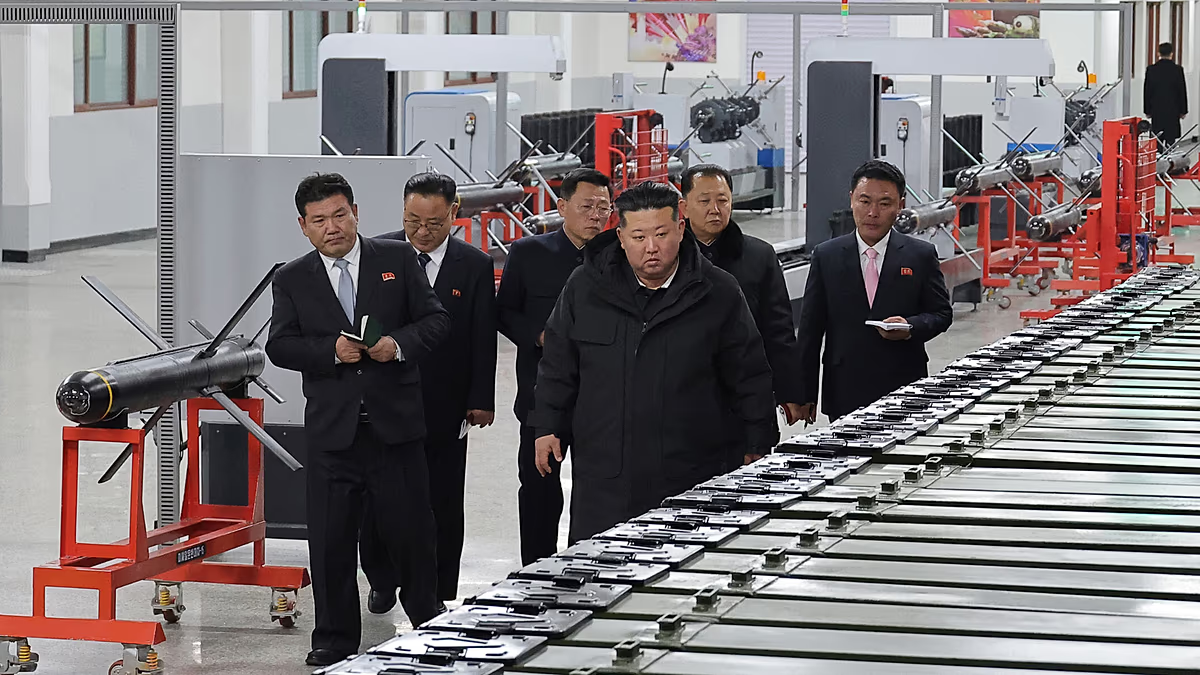

North Korea conducted a new round of ballistic missile tests Sunday, firing multiple projectiles into its eastern waters. The launches, detected by South Korea’s Joint Chiefs of Staff, represent a continued escalation in tensions and come as regional diplomacy is underway. Authorities in South Korea and the United States are currently analyzing the details of the launches, which travelled approximately 900 kilometers.
The South Korean Defence Ministry confirmed the launches violated multiple UN Security Council resolutions prohibiting ballistic activities by North Korea. The ministry urged Pyongyang to immediately cease provocative actions and return to dialogue aimed at de-escalation on the Korean Peninsula. This latest display of force occurred just hours before South Korean President Lee Jae Myung began a four-day visit to China.
North Korea’s Ballistic Missile Program: A Growing Concern
The recent launches are part of a pattern of increased weapons testing by North Korea in recent weeks. Experts suggest these demonstrations serve as a way for the nation to showcase advancements in its defense capabilities ahead of a significant ruling party congress scheduled for January or February. This congress, the first in five years, is expected to outline future policy regarding the United States and potential resumption of stalled negotiations.
Japanese Defense Minister Shinjiro Koizumi described the launches as a “serious problem” threatening regional and global peace and security. Meanwhile, North Korean leader Kim Jong-un has been strengthening ties with both Russia and China, potentially bolstering his negotiating position should talks with the US resume. Some analysts believe Kim may feel he has increased leverage to secure concessions.
Diplomatic Efforts and Regional Response
President Lee Jae Myung’s visit to China aims to garner support from Beijing, North Korea’s primary ally and trading partner, in promoting peace on the Korean Peninsula. Lee’s office stated he will request China play a “constructive role” in encouraging North Korea to engage in dialogue. However, the extent of China’s influence over North Korea remains a subject of debate.
South Korea and the US have consistently called on China to leverage its relationship with North Korea to encourage a return to negotiations or denuclearization. China, along with Russia, has previously blocked attempts to strengthen economic sanctions against North Korea. This complicates international efforts to curb the nation’s weapons development. The Council on Foreign Relations provides further background on North Korea’s foreign relations.
Following the launches, South Korea convened an emergency meeting of its national security council. Details of the launches were reported to President Lee, and the council discussed potential responses. The South Korean presidential office indicated unspecified steps were being considered.
Additionally, the timing of these missile tests is notable, occurring amidst heightened geopolitical tensions and ongoing international efforts to address the conflict in Ukraine. The launches also follow a period of increased military activity by both North and South Korea, raising concerns about potential miscalculation or escalation. The development of nuclear weapons by North Korea remains a key security concern for the region and the international community.
Looking ahead, all eyes will be on the upcoming Workers’ Party congress for indications of North Korea’s future policy direction. The international community will be closely monitoring for any signals of a willingness to return to dialogue or a further escalation of tensions. Continued vigilance and diplomatic engagement will be crucial in managing the evolving situation on the Korean Peninsula.
Additional sources • AP