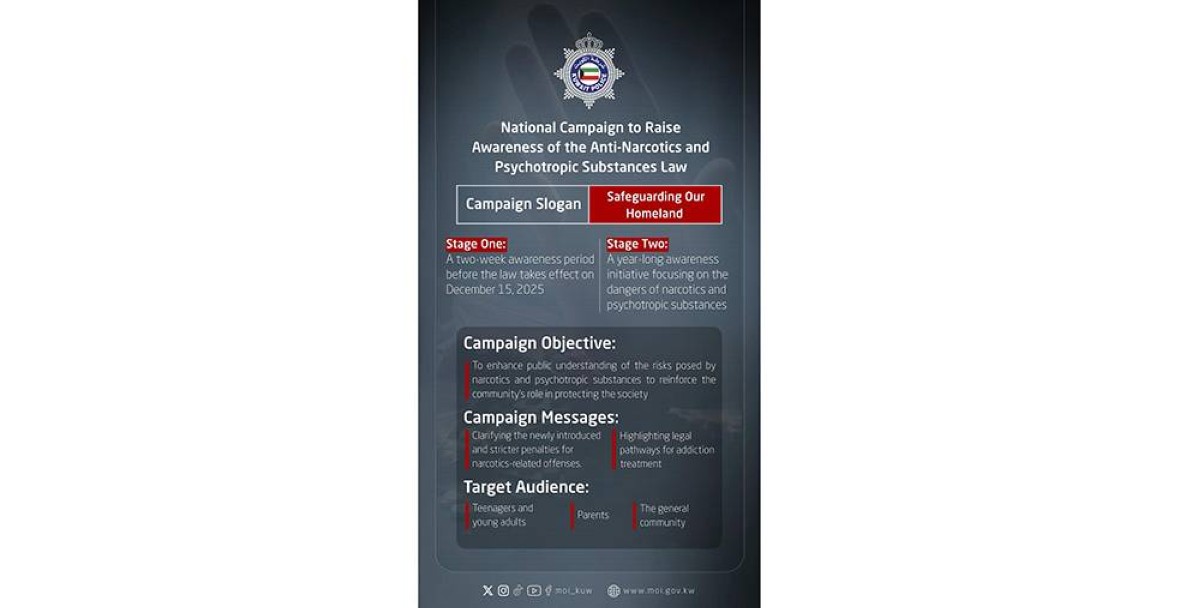

Kuwait is taking a firm stance against the growing threat of narcotics with the imminent implementation of a significantly strengthened anti-drugs law. Interior Minister Sheikh Fahad Al-Yousef Al-Sabah announced on Sunday that the new legislation will come into effect on December 15th, marking a new era in the nation’s fight against drug trafficking, smuggling, and dealing. This comprehensive overhaul aims to deter criminal activity through harsher penalties and bolster the capabilities of Kuwaiti security forces.
A New Chapter in Combating Drug Crime in Kuwait
The new law represents a substantial escalation in Kuwait’s efforts to protect its society from the devastating effects of drugs. Sheikh Fahad emphasized that the legislation isn’t simply about punishment; it’s about creating a robust deterrent to prevent the import, smuggling, manufacture, and cultivation of illicit substances. The penalties outlined are considerably more severe than those previously in place, with potential punishments now including the death penalty or life imprisonment, alongside substantial fines reaching up to KD 2 million.
This increased severity reflects a growing concern over the sophistication and reach of drug networks operating within and through Kuwait. Authorities have already confiscated significant quantities of drugs and successfully thwarted numerous smuggling attempts in recent years, demonstrating the scale of the challenge. The implementation of this law is expected to further empower security agencies to proactively combat these threats.
Key Provisions of the New Anti-Drugs Law
The updated legislation addresses several critical areas, expanding the scope of punishable offenses and increasing the penalties associated with them.
Increased Penalties for Trafficking and Dealing
The core of the new law focuses on tougher consequences for those involved in the supply chain of illegal drugs. This includes those engaged in trafficking, dealing, selling, buying, and promoting drugs in any form. The aim is to disrupt these networks at all levels, from large-scale importers to street-level dealers.
Protecting Vulnerable Groups
A particularly important aspect of the new legislation is the heightened protection offered to minors. Penalties for utilizing children in drug-related activities have been significantly increased. Furthermore, offenses committed in environments like rehabilitation centers, treatment facilities, educational institutions, or even prisons will attract stricter punishments. This acknowledges the unique vulnerabilities present in these locations and aims to safeguard those seeking help or serving sentences.
Targeting Organized Crime
The law also cracks down on the organization and facilitation of drug crime. Establishing and running drug gangs will be met with severe repercussions, as will exploiting positions of public office to aid in drug-related offenses. This sends a clear message that corruption and organized crime will not be tolerated within Kuwait’s security apparatus. These measures are vital for comprehensive drug control and long-term prevention.
A Humanitarian Approach Alongside Strict Enforcement
While the new drug laws in Kuwait prioritize stringent penalties, they also incorporate a crucial element of compassion and support. Recognizing addiction as a health issue, the law offers legal pathways to treatment, allowing individuals to voluntarily seek help or be referred through addiction reports filed by family members (up to the third degree of kinship).
This is complemented by robust confidentiality guarantees for personal data, protecting individuals who seek treatment from potential stigma or repercussions. The law also explicitly prohibits the malicious reporting of individuals, ensuring that the system is not abused. This balance between enforcement and rehabilitation is a key feature of the new approach.
Nationwide Awareness Campaign: “Safeguarding Our Homeland”
To ensure public understanding and cooperation, the General Directorate of Public Relations and Security Media will launch a nationwide awareness campaign titled “Safeguarding Our Homeland.” This multifaceted campaign will educate citizens on the specifics of the new law, outlining the penalties for various offenses and, importantly, detailing the available treatment options.
Utilizing a broad range of media platforms – including traditional television and radio, official ministry websites, cinemas, exhibitions, and public electronic displays – the campaign seeks to reach all segments of Kuwaiti society. Collaboration with other state bodies will ensure a consistent and comprehensive message. Such proactive public education is a crucial component of any successful narcotics enforcement strategy.
Strengthening Efforts Against Human Trafficking & Migrant Smuggling
Meanwhile, in a related development, Attorney General Saad Al-Safran announced the formation of a specialized task force dedicated to combating human trafficking and migrant smuggling. This initiative is directly aligned with Kuwait’s national strategy for the prevention of these crimes and reinforces the country’s commitment to international and regional agreements.
Task Force Objectives
The task force will focus on several key objectives: activating the national referral system for victims within the public prosecution, developing standardized procedures for identifying and protecting potential victims, creating unified documentation models for trafficking and smuggling cases, and establishing a centralized database to track these incidents.
This move underscores Kuwait’s commitment to upholding the rule of law, protecting vulnerable individuals, and aligning its domestic practices with international standards. The Public Prosecution emphasized that the creation of this team reflects its dedication to evolving alongside changing crime patterns and ensuring effective justice.
In conclusion, the implementation of the new anti-drugs law in Kuwait represents a monumental step forward in the nation’s fight against the devastating impact of narcotics. Combining stringent penalties with compassionate treatment options and bolstered enforcement capabilities, the legislation provides a comprehensive framework for safeguarding the country’s security and protecting its citizens. The “Safeguarding Our Homeland” awareness campaign and the dedicated task force against human trafficking further demonstrate Kuwait’s proactive and multifaceted approach to combating these critical issues. For more information on Kuwait’s legal framework and security initiatives, please visit the official website of the Kuwait Ministry of Interior.