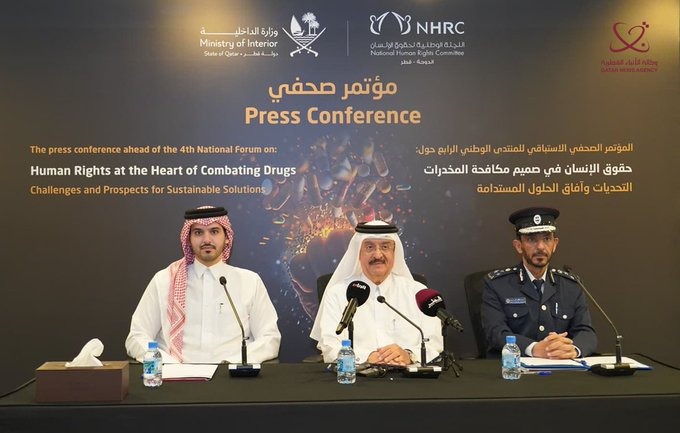

Doha, Qatar – The National Human Rights Committee (NHRC) will host its fourth national forum on January 20 and 21, focusing on the critical intersection of drug control and human rights. The event, titled “Human Rights at the Core of Combating Drugs: Challenges and Prospects for Sustainable Solutions,” aims to foster a comprehensive, rights-based approach to Qatar’s counter-narcotics efforts. Organizers say the forum addresses a growing global concern and its potential impact on achieving sustainable development goals.
The two-day forum will bring together representatives from the Ministry of Social Development and Family, the Ministry of Education and Higher Education, the Ministry of Public Health, the Public Prosecution, the National Planning Council, and the National Cyber Security Agency. Participation also extends to UN offices, civil society organizations, and media outlets, signaling a broad collaborative effort. The event is being held in Doha, Qatar.
The Growing Challenge of Drug Control and Human Rights
According to NHRC Deputy Chairman Dr. Mohammed bin Saif Al Kuwari, the selection of this topic reflects increasing global challenges related to drug trafficking and substance abuse. International studies indicate rising rates of drug use, highlighting the need for a proactive and human rights-focused response. The forum acknowledges the detrimental effects of drug-related issues on individuals and communities.
Dr. Al Kuwari affirmed that Qatar has largely mitigated serious risks associated with drug abuse through existing legislation and public policies. However, he stressed the importance of continuous development and strengthening of these measures to address evolving smuggling techniques and emerging threats. This includes adapting to the challenges posed by new technologies like artificial intelligence.
Qatar’s Proactive Approach
The Ministry of Interior has been a key partner in Qatar’s efforts to combat drugs, focusing on law enforcement and preventative measures. Assistant Director of Human Rights Department at the Ministry of Interior, Brig. Gen. Saad Salem Al Dosari, highlighted a longstanding partnership with the NHRC, formalized by a Memorandum of Understanding in 2018. This collaboration has led to joint training and awareness initiatives.
Al Dosari explained that the forum directly supports the Ministry of Interior’s 2024-2030 strategy, particularly its objective to protect society from the harms of drug abuse. He emphasized that tackling this issue requires a unified societal response, involving official bodies, families, and the media.
The Ministry of Interior will present three specialized working papers during the forum. These papers will cover security awareness initiatives, emerging patterns of drug crimes and comprehensive countermeasures, and recovery and rehabilitation programs for inmates convicted of drug offenses. The focus is on a holistic approach encompassing prevention, enforcement, and rehabilitation.
Forum Objectives and Expected Outcomes
The forum aims to integrate human rights principles into all aspects of drug control, from legislation and policy to rehabilitation programs. This aligns with Qatar’s Permanent Constitution, Qatar National Vision 2030, and international human rights obligations. A key goal is to ensure that counter-narcotics measures are implemented with respect for the dignity and rights of all individuals.
Organizers expect the forum to produce concrete recommendations for relevant entities involved in drug prevention and control. These recommendations will focus on strengthening preventative measures and adopting a comprehensive, human rights-based strategy.
Furthermore, the forum intends to establish a specialized unit dedicated to raising public awareness about the risks of drug use and illicit substances. A publication compiling the forum’s speeches, academic papers, discussions, and recommendations is also planned. The forum comprises eight sessions designed to facilitate in-depth exploration of these issues.
The NHRC anticipates that the forum will contribute to bolstering Qatar’s ongoing efforts in drug control and enhancing its preparedness to address future challenges. The next step involves analyzing the forum’s outcomes and submitting the resulting recommendations to the relevant government bodies. The timeline for implementation of these recommendations and their potential impact on Qatar’s drug control policies remain to be seen.