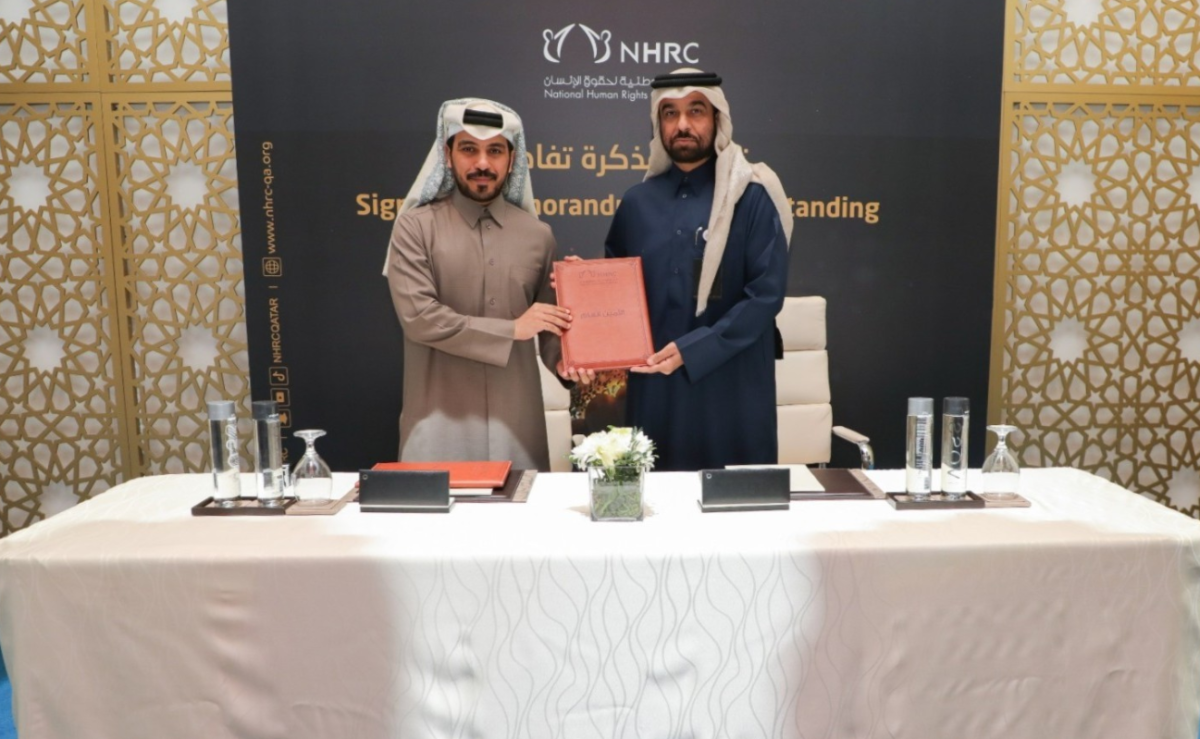

Doha, Qatar – The National Human Rights Committee (NHRC) of Qatar and Qatar Sports For All (QSFA) formalized their commitment to promoting human rights through sport on Wednesday, signing a memorandum of understanding (MoU). The agreement aims to strengthen collaboration between the two organizations, focusing on integrating human rights principles into sporting events and community programs across the nation. This partnership comes as Qatar continues to refine its approach to labor and social issues in preparation for future international events.
The signing took place on the sidelines of the 4th National Human Rights Forum in Doha, signaling a deliberate effort to connect sporting initiatives with broader national discussions on rights and inclusivity. HE NHRC Secretary-General Sultan bin Hassan Al Jammali and QSFA Executive Director Abdullah Al Dossari signed the MoU, outlining a framework for joint action. The initiative reflects a growing global trend of linking sports with social responsibility.
Enhancing Human Rights in the Qatari Sports Sector
The core objective of the MoU is to foster a deeper understanding and implementation of human rights within the Qatari sports ecosystem. This includes not only the rights of athletes but also those of workers involved in the construction and operation of sports facilities, as well as spectators and community participants. The agreement acknowledges the unique platform that sports provides for advocating for equality and non-discrimination.
Specifically, the collaboration will center around several key areas. These include the exchange of knowledge regarding relevant legislation, publications, and best practices in both human rights and sports administration. Additionally, the NHRC and QSFA will share strategic plans to improve performance and impact in their respective fields.
Joint Programs and Training
A significant component of the MoU involves the development and delivery of joint training courses and workshops. These programs will educate stakeholders in the sports sector about human rights principles and their practical application to sporting activities. The intention is to build capacity within the industry to proactively identify and address potential human rights concerns.
Furthermore, the two entities will work together on initiatives designed to reinforce the concept of sport as a vehicle for community participation and social inclusion. This will include targeted programs for vulnerable groups, such as people with disabilities, the elderly, women, and children, ensuring equitable access to sporting opportunities. Qatar has been actively working to improve accessibility for people with disabilities in public spaces, and this partnership aims to extend those efforts to the sports arena.
Monitoring and Assessment
The MoU also establishes a mechanism for the exchange of expertise and information related to monitoring and assessing the human rights situation within the sports sector. This collaborative approach will allow for a more comprehensive and nuanced understanding of the challenges and opportunities present. The NHRC’s established monitoring procedures will be valuable in evaluating the impact of sporting events on local communities.
This monitoring isn’t limited to large-scale events. The agreement also emphasizes the importance of assessing the human rights impact of grassroots sports programs and community activities. This broader scope reflects a commitment to embedding human rights considerations into all levels of the sports sector. Relatedly, the partnership will likely address issues of fair play and athlete welfare, contributing to a more ethical sporting environment.
The partnership between the NHRC and QSFA comes at a time of increased scrutiny regarding labor practices and social impact in Qatar, particularly following the 2022 FIFA World Cup. While the tournament itself led to some reforms, concerns remain about the long-term sustainability of these changes. This MoU can be seen as a step towards solidifying a commitment to human rights beyond the context of major sporting events.
Looking ahead, the NHRC and QSFA will establish a joint working group to develop a detailed action plan for implementing the MoU. The timeline for this plan and its specific deliverables remains to be determined, and the success of the partnership will depend on sustained commitment and effective collaboration between the two organizations. Observers will be watching to see how this initiative translates into concrete improvements in the protection and promotion of human rights within Qatar’s vibrant sports landscape.
The National Human Rights Committee website provides further information on their work. Qatar’s government portal details the country’s sports initiatives. Discussions around sport and human rights are also ongoing at the international level with the Office of the High Commissioner for Human Rights.