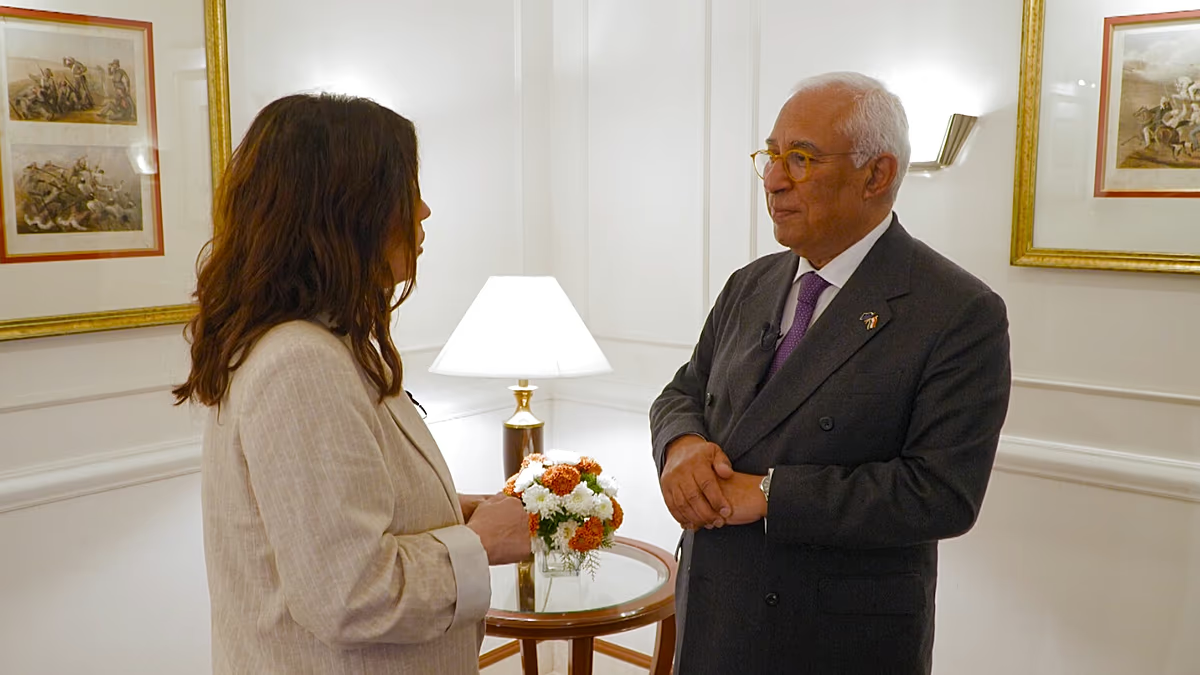

A landmark trade deal between the European Union and India was finalized this week, hailed as a significant economic opportunity and a strategic win for the EU in a volatile global landscape. The agreement, years in the making, is poised to reduce tariffs on a wide range of goods, from European wines and cars to Indian products, and provide greater predictability for businesses operating in both regions. European Council President António Costa emphasized the agreement as a demonstration of reliable international partnerships, particularly relevant given escalating global trade tensions.
Costa highlighted the agreement’s importance beyond economics, stating it sends a powerful message from the world’s two largest democracies about the value of cooperation. The deal comes amid growing concerns about protectionist policies and geopolitical instability, and is seen by many as a counterweight to those trends. Negotiations were reportedly spurred, in part, by increased uncertainty in the international arena.
EU-India Trade Deal Signals Shift in Global Trade Dynamics
The finalized trade deal is expected to significantly boost economic ties between the EU and India, two major players in the global economy. While specific details are still being released, officials confirm substantial tariff reductions are included, aiming to increase bilateral trade flows. This move is particularly noteworthy as it represents a successful conclusion to negotiations that have faced numerous hurdles over the years.
According to Costa, the agreement provides much-needed predictability for businesses, fostering investment and growth. This is especially crucial in light of recent disruptions to global supply chains and the increasing threat of trade wars. The deal also encompasses cooperation in areas beyond trade, including security, defence, and people-to-people exchanges.
Meanwhile, the EU is also focused on bolstering its internal competitiveness. An informal summit is planned for February 12th at Alden Biesen castle in Belgium, where EU leaders will convene with former Italian Prime Ministers Mario Draghi and Enrico Letta. Their recent reports have emphasized the need for increased investment and strategic reforms to strengthen the European economy and address concerns about declining competitiveness.
The summit will serve as a crucial platform to discuss how to implement the recommendations of Draghi and Letta, particularly in the context of ongoing global economic challenges and the protectionist policies of nations like the United States. The need to improve economic resilience and reduce dependence on foreign markets will also be central themes of the discussion.
European Space Agency Faces Funding Disparity
On a related note, concerns are growing about the EU’s investment in space exploration compared to its global competitors. Josef Aschbacher, Director General of the European Space Agency, stated that the US invests six times more in public space funding than Europe, and China spends approximately 50% more. This funding gap poses a risk to European companies within the space industry.
Despite Europe’s strong capabilities and innovative companies, Aschbacher warns that the lack of investment could lead to a decline in the bloc’s global share of the space sector. He emphasizes the need for increased funding to maintain Europe’s position as a key player in space exploration and technology.
Looking ahead, the EU will continue to navigate a complex geopolitical and economic landscape. The success of the India trade deal will likely encourage further efforts to forge new partnerships and strengthen existing ones. The upcoming summit and the ongoing discussions about space funding underscore the EU’s commitment to enhancing its economic resilience and global competitiveness. Analysts will be closely watching how these developments unfold and their impact on the future of the European Union.