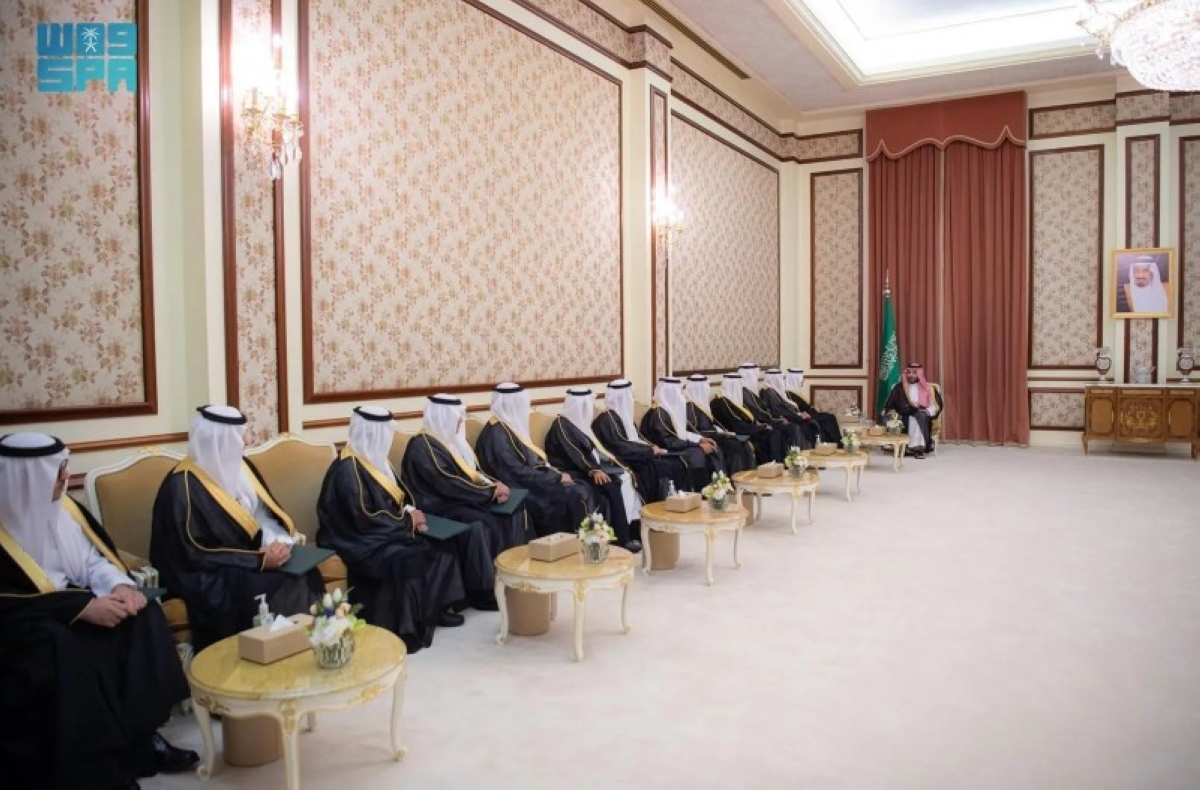

Dammam, Saudi Arabia – Crown Prince Mohammed bin Salman oversaw the swearing-in ceremony for 16 newly appointed Saudi ambassadors on Tuesday, solidifying the Kingdom’s diplomatic presence across Africa, Asia, Europe, and the Middle East. The event, held at Al-Khaleej Palace in Dammam, signifies a strategic move to strengthen bilateral relations with key partner nations. Minister of Foreign Affairs Prince Faisal bin Farhan was also in attendance.
The appointments span a diverse range of countries, including Qatar, Brunei, Romania, Nigeria, and the Netherlands. This widespread deployment of diplomatic personnel underscores Saudi Arabia’s increasing engagement in international affairs and its commitment to fostering global partnerships. The ceremony took place as the Kingdom continues to pursue its Vision 2030 economic diversification plan, which relies heavily on international cooperation.
Strengthening Saudi Arabia’s Diplomatic Corps
The appointment of these ambassadors represents a significant investment in Saudi Arabia’s diplomatic capabilities. According to the Ministry of Foreign Affairs, the new envoys were selected based on their extensive experience and expertise in international relations. This initiative aligns with the Kingdom’s broader strategy to play a more active role in addressing regional and global challenges.
Key Ambassadorial Appointments
Among the newly appointed ambassadors are Prince Saad bin Mansour to Qatar, a strategically important neighbor, and Saleh Al-Shiha to Brunei Darussalam, reflecting growing ties with Southeast Asian nations. Khalid Al-Shammari will serve as a non-resident ambassador to both Romania and Moldova, indicating a consolidated approach to diplomatic representation in Eastern Europe. Yousef Al-Balawi’s appointment to Nigeria highlights the Kingdom’s focus on strengthening relationships within Africa.
Further appointments include Anas Al-Wusaidi to Bosnia and Herzegovina, Saad Al-Maimouni to Burkina Faso, Turki bin Ibrahim to Albania, Saud Al-Musaed to Sierra Leone, Abdullah Al-Zahrani to Ethiopia, Khalid Al-Shamrani to Tajikistan, Mohammed Al-Ghamdi to Singapore, Mazid Al-Huwaishan to Myanmar, Fahd bin Mohammed to Nepal, Thamer Al-Qusaibi to Vietnam (also non-resident to Cambodia), and Shaher Al-Khunaini to the Netherlands.
The selection of ambassadors to countries like Myanmar and Ethiopia, both facing internal conflicts, suggests a willingness by Saudi Arabia to engage in complex diplomatic situations. However, the Kingdom’s approach is expected to prioritize stability and humanitarian concerns. The appointments also reflect a growing emphasis on economic diplomacy, with several ambassadors assigned to nations with significant trade potential.
The timing of these appointments is noteworthy. They occur amidst ongoing efforts to mediate regional conflicts and promote economic integration. Additionally, Saudi Arabia is actively seeking to diversify its economic partnerships beyond traditional allies. This is evidenced by the increased focus on countries in Africa and Southeast Asia.
The Ministry of Foreign Affairs has not released specific details regarding the ambassadors’ immediate priorities. However, analysts suggest that strengthening bilateral trade, attracting foreign investment, and promoting cultural exchange will be key objectives. The new envoys will also likely be tasked with representing Saudi Arabia’s interests in multilateral forums.
In contrast to previous years, this cohort of ambassadors appears to represent a broader range of professional backgrounds. While many have extensive experience within the Ministry of Foreign Affairs, others bring expertise from the private sector and academia. This diversification could lead to more innovative approaches to diplomatic engagement.
The appointments also come as Saudi Arabia continues to navigate a changing geopolitical landscape. The Kingdom is facing increasing competition from other regional powers, and maintaining strong international relationships is crucial for its security and economic prosperity. The role of these Saudi ambassadors will be vital in achieving these goals.
The Kingdom’s foreign policy has been undergoing a noticeable shift in recent years, with a greater emphasis on proactive diplomacy and economic diversification. This is reflected in the selection of countries to which ambassadors have been appointed, as well as the profiles of the individuals chosen for these roles. The focus on diplomatic relations is a key component of Vision 2030.
Looking ahead, the ambassadors are expected to formally present their credentials to the heads of state in their respective host countries within the coming weeks. The Ministry of Foreign Affairs will likely provide further guidance on specific policy priorities for each ambassador. The success of these appointments will be measured by their ability to strengthen bilateral ties and advance Saudi Arabia’s strategic interests. Monitoring the progress of these international partnerships will be crucial in assessing the effectiveness of the Kingdom’s evolving foreign policy.