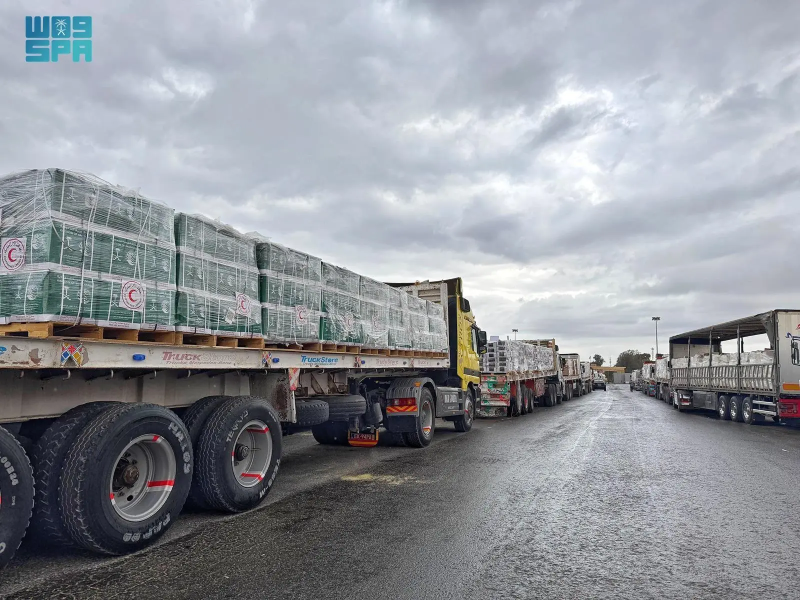

A new humanitarian aid convoy from the King Salman Humanitarian Aid and Relief Center (KSrelief) entered the Gaza Strip via the Rafah Border Crossing this week, aiming to provide essential relief to Palestinians affected by the ongoing conflict. The shipment includes significant quantities of food, winter clothing, and shelter supplies as the region faces increasingly harsh weather conditions. This delivery represents a continuation of Saudi Arabia’s broader efforts to support the Palestinian people during a period of acute need.
The aid arrived in Rafah, a city in the southern Gaza Strip that has become a focal point for displaced populations. According to reports, the relief items will be distributed in coordination with the Saudi Center for Culture and Heritage, which is actively establishing and managing displacement camps in Rafah and Khan Younis. The timing is particularly critical given the anticipated challenges of winter in the region.
KSrelief’s Continued Humanitarian Aid to Gaza
This latest contribution from KSrelief builds on a substantial history of financial and material assistance to Palestinians. Since its establishment in 2015, KSrelief has allocated billions of dollars in aid globally, with a consistent focus on supporting vulnerable populations in the Palestinian territories. The organization’s efforts aim to lessen the impact of ongoing crises and improve living conditions.
The current situation in Gaza is characterized by widespread displacement, food insecurity, and a lack of access to basic services. The United Nations Relief and Works Agency for Palestine Refugees in the Near East (UNRWA) estimates that over 1.9 million people, roughly 85% of the population, have been internally displaced due to the recent escalation of conflict.
Addressing Immediate Needs
The delivered supplies are geared towards alleviating some of the most pressing immediate needs. Winter clothing distribution is a crucial element as temperatures drop, increasing the risk of hypothermia and respiratory illnesses, especially among displaced individuals living in inadequate shelter. Shelter materials, including tents and plastic sheeting, are intended to provide protection from the elements for families who have lost their homes.
Food security remains a significant concern. Previous reports from aid organizations highlighted severe shortages of essential food items and soaring prices within the Gaza Strip. This KSrelief convoy is hoped to bolster existing stocks and prevent further deterioration of humanitarian conditions.
The Role of Displacement Camps
The Saudi Center for Culture and Heritage’s work in establishing displacement camps is a vital component of the overall response. These camps aim to offer a temporary haven for those forced from their homes, providing access to sanitation facilities, medical care, and other essential services. However, camps often face challenges related to overcrowding and resource management.
According to sources familiar with the operation, the camps are designed to accommodate a growing number of displaced persons and are being equipped with winterization kits to mitigate the effects of cold weather. The center is working alongside local partners to ensure effective and equitable distribution of aid.
The Rafah Border Crossing itself has become a critical, though often constrained, artery for humanitarian relief entering Gaza. Restrictions on access and lengthy inspection processes have consistently hampered the flow of aid, according to international observers. Efforts continue to streamline these procedures and increase the volume of supplies reaching those in need.
The delivery of this aid to Palestine follows broader international appeals for increased assistance. Several nations and organizations have pledged support, but the scale of the crisis demands a significantly larger and more sustained response. The World Food Programme (WFP) has warned of a potential famine in Gaza if deliveries don’t increase substantially.
Furthermore, the healthcare system in Gaza has been severely strained. Hospitals are operating beyond capacity, facing shortages of medical supplies, and struggling to cope with a surge in casualties. While this convoy focuses on basic necessities, addressing the healthcare crisis remains a paramount concern for humanitarian organizations. Secondary keywords like “Gaza crisis” and “relief efforts” are frequently used to describe the situation.
The challenges of distributing humanitarian aid within Gaza are complex and multifaceted. The ongoing conflict, damaged infrastructure, and internal displacement all contribute to logistical difficulties. Aid agencies rely heavily on local networks and coordination with relevant authorities to ensure that supplies reach the intended recipients.
The Saudi popular campaign to support the people of Palestine underscores the public’s desire to contribute to the relief effort. This campaign facilitates donations from individuals and organizations across Saudi Arabia, which are then channeled through KSrelief and other partners to provide assistance on the ground.
Looking ahead, the situation in Gaza remains highly volatile and dependent on ongoing political developments. More aid deliveries are planned in the coming weeks, with KSrelief stating its commitment to continuing its support for the Palestinian people. However, the long-term prospects for sustainable recovery and rebuilding are uncertain and contingent upon a cessation of hostilities and improved access for reconstruction efforts. Observers are closely watching for any changes in border access regulations and for a potential escalation or de-escalation of the conflict.