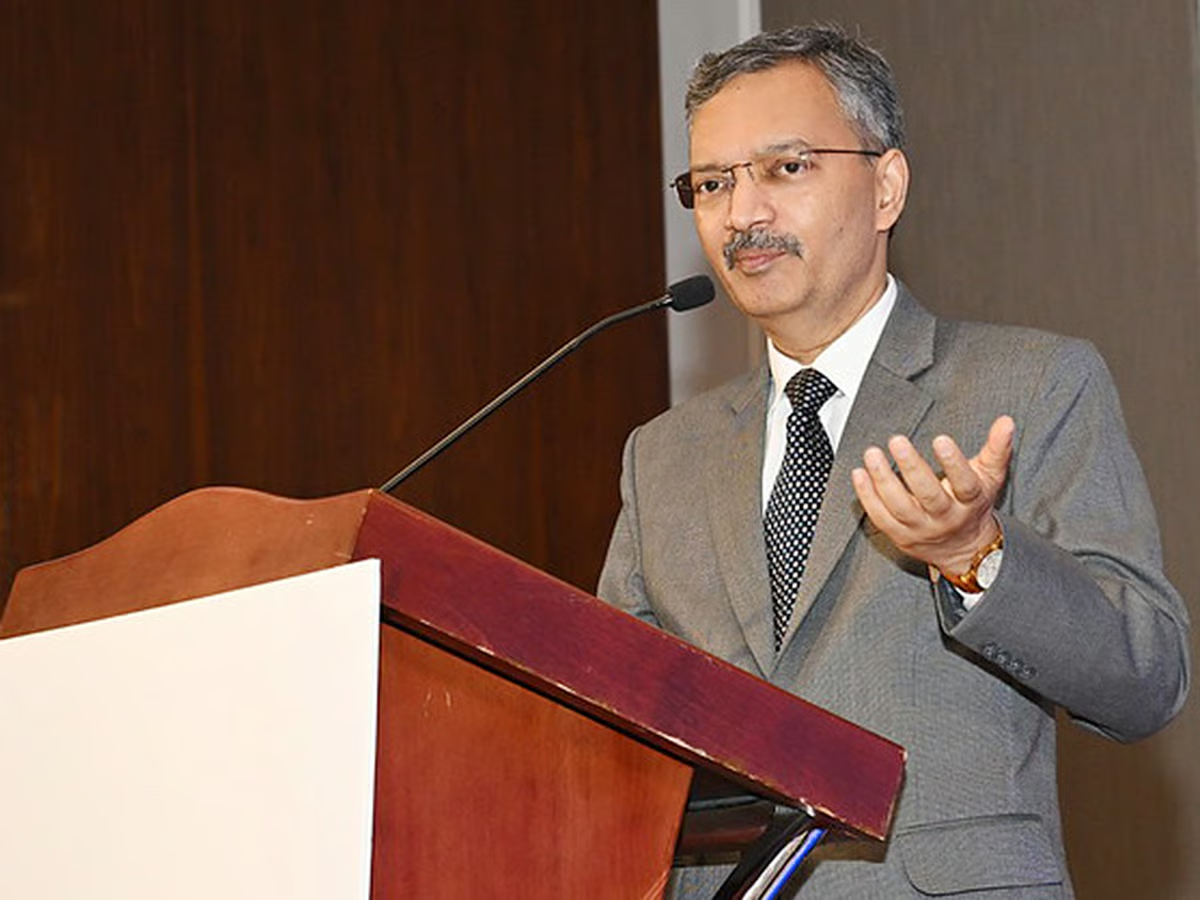

Dubai, UAE – The Indian Business & Professional Council (IBPC) Dubai hosted a welcome reception for Dr. Deepak Mittal, the newly appointed Ambassador of India to the UAE, on Monday. The event signaled continued strengthening of India-UAE relations and the crucial role of the Indian diaspora in fostering economic ties. Ambassador Mittal was formally announced as Patron of IBPC Dubai, alongside key figures from both nations.
The reception, held in Dubai, marked Ambassador Mittal’s first official engagement with the Indian business community since assuming his post. Abulnasser Jamal Alshaali, PhD, the UAE Ambassador to India, and Satish Kumar Sivan, Consul General of India to Dubai and the Northern Emirates, were also named Patrons of the IBPC Dubai. This demonstrates a unified commitment to bilateral economic growth.
Strengthening Economic Cooperation: The Future of India-UAE Relations
The IBPC Dubai has long maintained a close working relationship with the Indian Embassy, built on a shared objective of supporting Indian businesses and professionals in the UAE. Sunil Sinha, Vice Chairman of IBPC Dubai, emphasized this partnership during the welcome event, noting its importance in navigating the evolving economic landscape. This collaboration is seen as vital for maximizing opportunities for the Indian community.
The relationship between India and the UAE has seen significant growth in recent years, driven by increased trade, investment, and cultural exchange. According to the Ministry of External Affairs, the UAE is a major trading partner of India, and a key source of foreign direct investment. This trend is expected to continue with the implementation of new agreements.
Ambassador Mittal, in his keynote address, highlighted the IBPC Dubai’s role as a critical link between the two countries. He specifically urged the council and its members to actively contribute to the successful implementation of the Comprehensive Economic Partnership Agreement (CEPA). The CEPA, signed in February 2022, aims to boost non-oil trade to $100 billion by 2030.
The Impact of the CEPA
The CEPA represents a significant step forward in bilateral trade, eliminating or reducing tariffs on a vast range of goods and services. Experts predict the agreement will create new opportunities for businesses in sectors such as gems and jewellery, textiles, engineering goods, and pharmaceuticals. However, realizing these benefits requires proactive engagement from the business community.
The UAE is home to the largest Indian diaspora globally, with an estimated 3.5 million Indians residing in the country. Ambassador Mittal acknowledged the importance of this community, stating that organizations like the IBPC Dubai are uniquely positioned to deepen cooperation across key sectors including trade, energy, technology, and innovation. This will ensure sustained benefits for both nations.
The Ambassador also touched upon the growing importance of technological collaboration, identifying areas such as fintech, artificial intelligence, and renewable energy as potential growth drivers. Increased investment in these sectors is anticipated as both countries seek to diversify their economies and promote sustainable development. Foreign investment is a key component of this strategy.
Meanwhile, the IBPC Dubai is actively working to facilitate connections between Indian and Emirati businesses. The council organizes networking events, trade missions, and seminars to promote collaboration and knowledge sharing. These initiatives aim to address challenges and unlock new opportunities for growth.
In contrast to previous years, the current focus is on translating the broad framework of the CEPA into concrete business deals and partnerships. This requires a concerted effort from both governments and the private sector to streamline processes, reduce barriers to entry, and foster a more conducive business environment.
The appointment of Dr. Mittal as Patron of IBPC Dubai is expected to further strengthen this collaboration. His experience and understanding of the India-UAE relationship will be invaluable in guiding the council’s efforts. The IBPC also anticipates increased engagement with the UAE Ministry of Economy to address specific trade concerns.
Looking ahead, the success of the India-UAE economic partnership will depend on continued dialogue, proactive implementation of the CEPA, and a commitment to fostering innovation and sustainability. The next six months will be crucial in assessing the initial impact of the CEPA and identifying areas for further improvement. Monitoring trade data and business sentiment will be key indicators of progress, alongside any potential adjustments to the agreement based on evolving economic conditions.