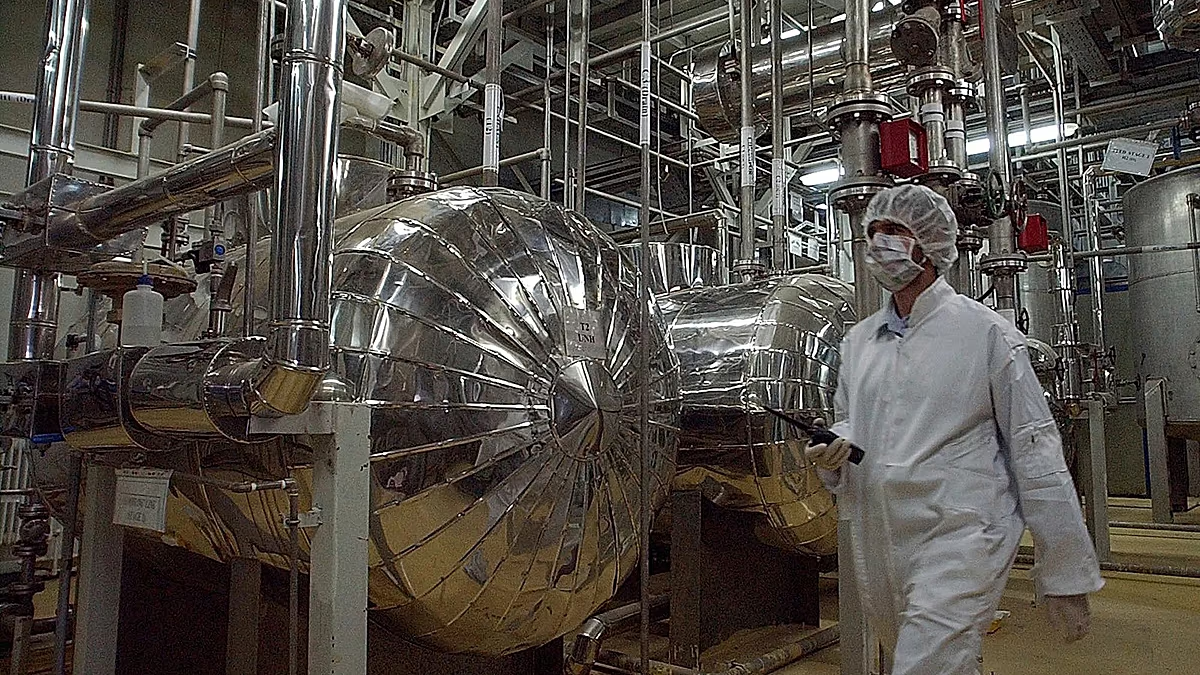

Israeli Prime Minister Benjamin Netanyahu and U.S. President Donald Trump have affirmed their commitment to preventing Iran from rebuilding its ballistic missile capabilities and resuming its nuclear program. These statements, made following a meeting at Mar-a-Lago, signal a continued hardline stance against Tehran, particularly as concerns grow over Iran’s recent activities. The leaders indicated a willingness to take further action to maintain the existing strategic landscape, impacting regional stability and international non-proliferation efforts.
Netanyahu, addressing the Knesset on Monday, stated that he and Trump would “not permit Iran to restore its ballistic missile industry, and certainly we will not allow it to renew the nuclear programme.” This sentiment echoes Trump’s earlier declaration that the U.S. would “eradicate” Iran’s nuclear and missile programs if necessary. The comments came amid ongoing protests in Iran fueled by economic hardship and rising costs of living.
Growing Concerns Over Iran’s Ballistic Missile Program
Israeli officials and media reports have been increasingly focused on indications that Iran is actively working to rebuild its ballistic missile arsenal following reported damage sustained during a 12-day conflict with Israel in June. Trump has also suggested that Iran is exploring new nuclear sites, potentially replacing those previously targeted in strikes. According to Trump, a response to this potential buildup “may be more powerful than the last time.”
While both leaders have adopted firm rhetoric, Trump also expressed a belief that Iran remains open to negotiations regarding its nuclear and missile programs. He indicated that Iran “may be behaving badly” but continues to signal a potential interest in a comprehensive agreement with the United States. However, previous attempts to reach such a deal have stalled, with significant disagreements over the scope of limitations and sanctions relief.
The History of the JCPOA
The situation is rooted in the 2015 Joint Comprehensive Plan of Action (JCPOA), a landmark agreement initially hailed as a diplomatic breakthrough. The U.S. Department of State provides comprehensive background information on the JCPOA. Under the deal, Iran agreed to curb its nuclear activities in exchange for the lifting of international sanctions.
However, the JCPOA faced significant opposition, particularly from within the United States. In 2018, President Trump unilaterally withdrew the U.S. from the agreement, describing it as “the worst deal ever negotiated” and reimposing a “maximum pressure” campaign of sanctions on Iran. This withdrawal led to escalating tensions and a decrease in Iran’s compliance with the JCPOA’s terms.
Internal Unrest in Iran
Meanwhile, Iran is grappling with widespread protests. Demonstrations initially sparked on December 28th by shopkeepers in Tehran protesting high prices and economic stagnation have broadened to include political demands. The unrest is linked to a significant decline in the value of the Iranian rial against the U.S. dollar.
Netanyahu voiced solidarity with the Iranian people, stating, “We in Israel identify with the struggle of the Iranian people, and its aspirations for freedom and justice.” He characterized the protests as “a decisive moment” for the country. The internal instability in Iran adds another layer of complexity to the ongoing nuclear and missile technology concerns.
The deepening economic crisis in Iran, coupled with the diplomatic impasse over its nuclear program, has created a volatile situation. Recent statements from both the U.S. and Israel underscore a shared commitment to containing Iran’s capabilities, even potentially through military means. Related secondary keywords include Iran nuclear program and Iran arms control.
Looking ahead, the international community will be closely watching Iran’s response to the increased pressure and its internal political developments. Further escalations are possible, and the potential for a return to negotiations remains uncertain. Stay informed on this evolving situation and its implications for regional and global security.
Additional sources • AFP