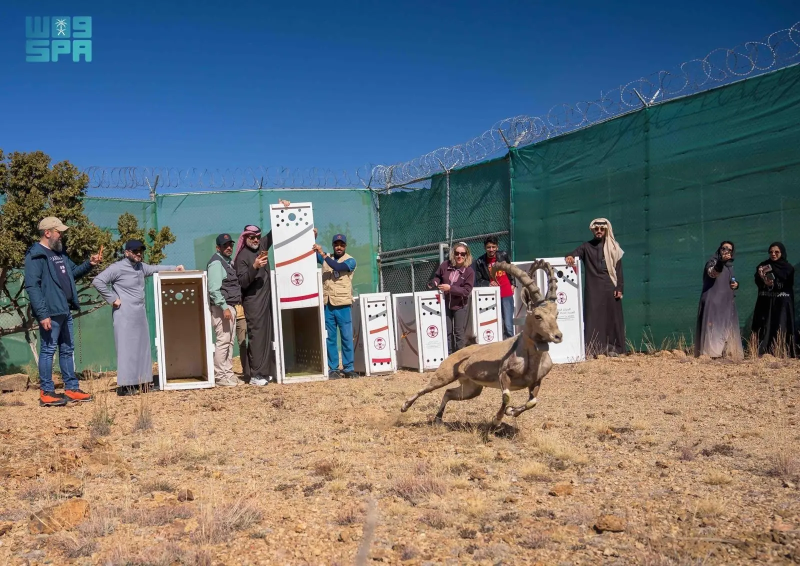

RIYADH — A collaborative effort between the National Center for Wildlife (NCW) and Soudah Development has resulted in the release of twelve endangered animals into Al-Soudah Park in the Asir Region of Saudi Arabia. The released animals include six Nubian ibex and six Arabian gazelles, marking a significant step in the Kingdom’s ongoing wildlife conservation initiatives. The release took place recently, with ongoing monitoring to ensure the animals’ successful adaptation to their new environment.
The reintroduction program, centered in the mountainous Al-Soudah Park, aims to bolster the populations of these critically important native species. This initiative is part of a broader national strategy to protect Saudi Arabia’s unique biodiversity and enhance the ecological health of its protected areas. The Asir Region, known for its diverse terrain and relatively cooler climate, provides a suitable habitat for both the ibex and gazelle.
Strengthening Biodiversity Through Nubian Ibex and Arabian Gazelle Reintroduction
The NCW’s work focuses on breeding programs for endangered species, followed by carefully planned reintroduction efforts. This approach is crucial, as both the Nubian ibex and Arabian gazelle have faced significant population declines due to habitat loss and historical hunting pressures. According to the NCW, the ultimate goal is to establish self-sustaining populations within protected areas like Al-Soudah Park.
The Arabian gazelle, a graceful and swift antelope, once roamed freely across the Arabian Peninsula. However, its numbers have dwindled dramatically, leading to its classification as endangered by the International Union for Conservation of Nature (IUCN). Similarly, the Nubian ibex, a wild goat species adapted to rugged mountainous environments, has experienced substantial population reductions.
Monitoring and Assessment of Released Animals
Following the release, specialized teams are diligently tracking the animals’ progress. This involves utilizing advanced technologies, including GPS collars and remote camera traps, to monitor their health, movement patterns, and behavioral adaptations. The data collected will be instrumental in evaluating the effectiveness of the reintroduction program.
The monitoring process isn’t simply about tracking location. Teams are also observing the animals’ feeding habits, social interactions, and overall physical condition. This detailed assessment allows for early identification of any challenges the animals may face, such as difficulty finding food or increased vulnerability to predators.
The NCW has a long history of working to protect Saudi Arabia’s natural heritage. Recent years have seen increased investment in conservation efforts, aligning with the Kingdom’s Vision 2030, which emphasizes sustainable development and environmental protection. This includes expanding protected areas and implementing stricter regulations against illegal hunting and trade.
The Importance of Al-Soudah Park
Al-Soudah Park, located in the Asir Mountains, was selected as a prime location for the reintroduction program due to its suitable habitat and existing conservation infrastructure. The park offers a diverse range of ecosystems, from juniper forests to rocky slopes, providing the ibex and gazelle with the resources they need to thrive.
Soudah Development, a company focused on sustainable tourism in the region, has been a key partner in the initiative. Their involvement extends beyond providing logistical support to include habitat restoration and community engagement programs. These programs aim to foster a sense of stewardship among local residents, encouraging them to participate in conservation efforts.
The reintroduction of these species is expected to have a positive ripple effect on the entire ecosystem. Grazing by the Arabian gazelle can help maintain grassland health, while the presence of the Nubian ibex contributes to nutrient cycling in mountainous areas. This, in turn, can benefit other plant and animal species within the park. The success of this ecological restoration project could serve as a model for similar initiatives across the Kingdom.
However, challenges remain. The long-term viability of the reintroduced populations will depend on factors such as continued habitat protection, effective anti-poaching measures, and the ability of the animals to adapt to a changing climate. The NCW acknowledges the need for ongoing research and adaptive management to address these uncertainties.
The NCW is also working on similar species recovery programs for other endangered animals in Saudi Arabia, including the Arabian leopard and the Houbara bustard. These efforts are part of a comprehensive strategy to safeguard the Kingdom’s rich biodiversity for future generations. The focus on native species is particularly important, as they play a vital role in maintaining the ecological integrity of the region.
Looking ahead, the NCW plans to analyze the data collected from the initial release to refine its reintroduction protocols. A further assessment of the Al-Soudah Park ecosystem is scheduled for the end of the year to determine if additional releases are feasible. The long-term success of this wildlife program will require sustained commitment and collaboration between government agencies, private sector partners, and local communities.