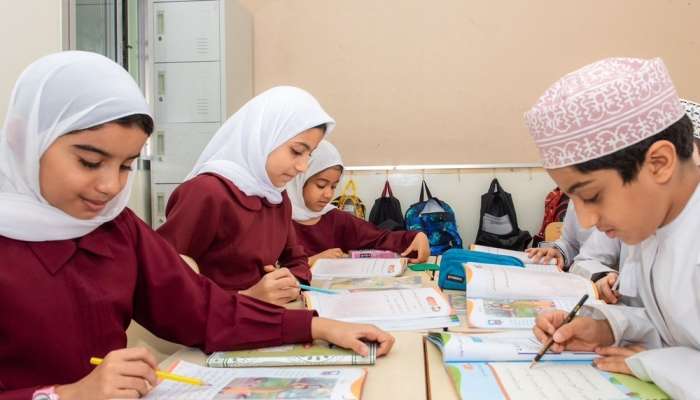

Oman’s future is inextricably linked to the well-being and development of its children. Recent data released by the National Centre for Statistics and Information (NCSI) provides a comprehensive overview of the Omani child population in 2024, revealing key trends in demographics, health, education, and economic participation. Understanding these figures is crucial for policymakers and stakeholders committed to achieving the goals of Oman Vision 2040, particularly those related to youth empowerment and social welfare.
Growth and Demographics of the Omani Child Population
As of 2024, the total number of children in Oman aged 0-17 reached approximately 1,282,893, marking a small but notable increase of 1.2 thousand individuals compared to the previous year. This demonstrates a continuing growth in the younger segments of the population, forming the foundation of the nation’s demographic pyramid. A significant characteristic of this demographic is the gender balance; the ratio stands at 104 males for every 100 females.
Crucially, Omani children represent a substantial majority – around 85 percent – of all children within the Sultanate. This highlights the predominantly national character of Oman’s youth and reinforces the need for targeted investments in programs specifically designed for Omani citizens.
Age Group Distribution
The distribution of Omani children across different age brackets provides valuable insights for planning sector-specific services. Currently, the largest cohort falls within the 5-9 age group, comprising 32 percent of the total. This is closely followed by the 10-14 age group (28 percent) and the 0-4 age group (27 percent). The 15-17 age group, representing those on the cusp of adulthood, accounts for 13 percent of the young population.
Health and Well-being Indicators
Maintaining the health of its children remains a top priority for Oman. In 2024, there were 63,187 Omani live births, a slight decrease of approximately 2 percent from the year prior. However, despite this minor dip, the country continues to achieve remarkable success in childhood immunization.
Vaccination rates for children under one year of age are exceptionally high, signaling a robust public health system. Specifically, vaccination coverage reached: 100 percent for Tuberculosis (TB), 99.8 percent for Diphtheria-Tetanus-Pertussis (DTP) and Oral Polio Vaccine (OPV), and 99.6 percent for Hepatitis and Haemophilus influenzae Type B (Hib). These figures demonstrate Oman’s commitment to preventing childhood diseases and ensuring a healthy future generation.
Education and Early Childhood Development
Access to quality education and early childhood care is essential for fostering the development of Omani youth. In 2024, approximately 6,683 Omani children were enrolled in nurseries. While a positive sign, this number represents a decrease of around 13 percent compared to the previous year which necessitates further investigation into accessibility and affordability of childcare services.
Economic Participation and Social Safety Nets
Evidence of early entrepreneurial spirit within the child population is also emerging. In 2024, 1,864 Omani children aged 15-17 were registered as business owners, although this figure indicates a 7 percent decline from the previous year. Of these young entrepreneurs, 29 percent were actively involved in the construction sector.
Furthermore, data reveals that 15,145 Omani children aged 0-17 owned one or more plots of land, showing a marginal increase of approximately 1 percent from the previous year. This suggests growing economic empowerment amongst families and opportunities for future wealth creation for these children.
Oman’s social safety nets play a critical role in protecting vulnerable children. A significant number – 1,236,501 children – benefited from the Childhood Benefit in 2024. Additionally, 9,441 orphaned children received support through the Orphan Benefit, and 14,295 children with disabilities benefited from the Disability Benefit. These figures underscore the government’s dedication to inclusive social protection.
Looking Ahead: Oman Vision 2040
The NCSI projects the total number of Omani children to reach 1.3 million by 2040. This anticipated growth further amplifies the need for sustained and strategic investments in essential services, including education, healthcare, and social welfare initiatives. Aligning these efforts with the comprehensive framework of Oman Vision 2040 is paramount to ensuring that this growing young population has the opportunities and resources to thrive and contribute to the nation’s prosperity.
Continued monitoring of these key indicators, alongside qualitative research, will be vital for adapting policies and programs to meet the evolving needs of Omani children. This data-driven approach will contribute to a brighter future for Oman, built on the foundation of its thriving youth.