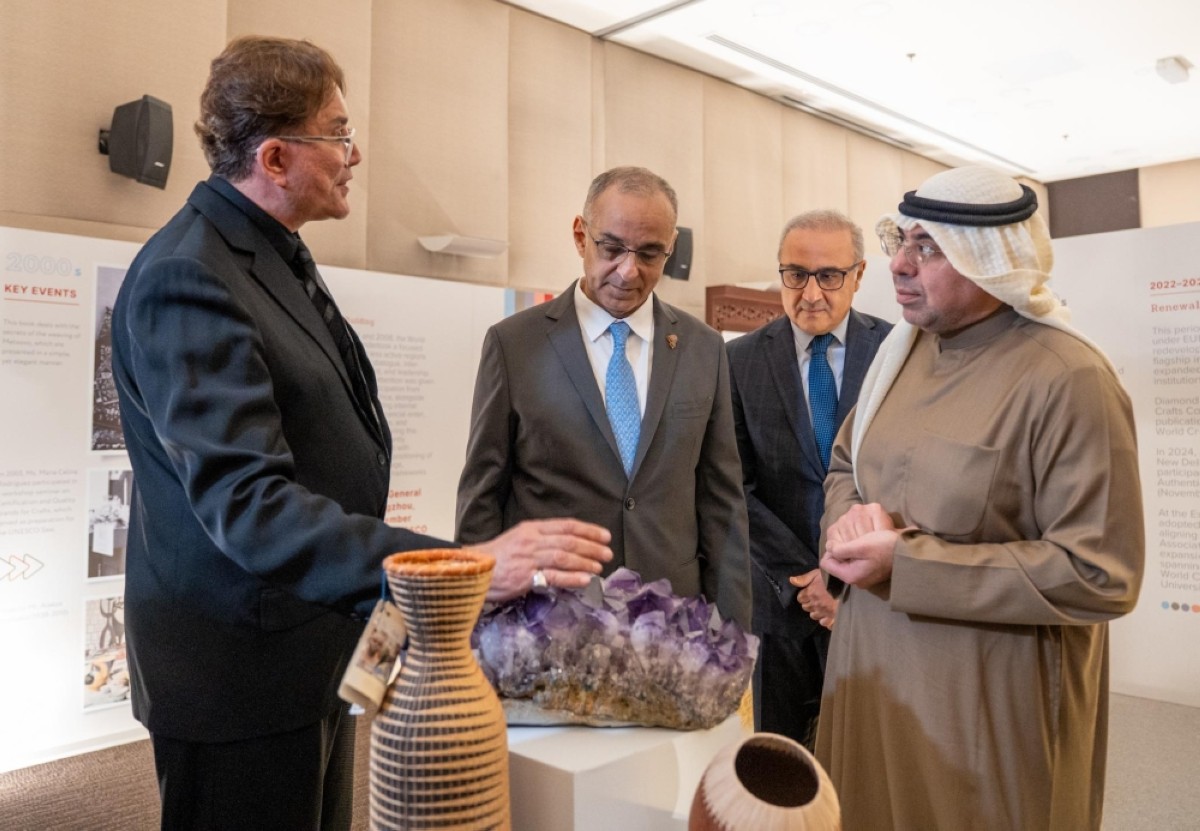

Kuwait reaffirmed its commitment to preserving cultural heritage and fostering the creative economy with the launch of the second edition of the World Crafts Forum in Kuwait on Sunday. Held at the Kuwait National Library and organized by the National Council for Culture, Arts and Letters (NCCAL) in partnership with Al-Sadu Society and the World Crafts Council, the forum is a key component of the 31st Qurain Cultural Festival. This event underscores Kuwait’s dedication to safeguarding traditional skills and promoting them on a global stage.
Kuwait Hosts the Second World Crafts Forum
The World Crafts Forum brings together a diverse group of stakeholders – craft leaders, policymakers, researchers, and artisans – for nine insightful panel discussions. These sessions are designed to explore the vital role of crafts within the broader creative economy. A central aim of the forum is to formulate actionable recommendations, culminating in the “Kuwait Declaration,” a document intended to guide future policy and support for the craft sector.
This year’s forum isn’t solely a platform for discussion; it’s also a vibrant showcase of artistry. Running concurrently is an international crafts market, open to the public from February 1st to 3rd at the Kuwait National Museum, in collaboration with Gardenia. The market features approximately 30 artisans, both local and international, providing a unique opportunity for direct engagement, cultural exchange, and economic empowerment for craftspeople.
The Importance of Preserving Traditional Crafts
Dr. Mohammed Al-Jassar, Secretary-General of NCCAL, emphasized the significance of Kuwait’s role in hosting the forum. He stated that it reflects the nation’s unwavering commitment to preserving traditional crafts and safeguarding its national heritage. “Preserving crafts and passing them down from generation to generation is a challenging yet crucial task,” he noted, highlighting the ongoing effort required to maintain these valuable skills.
He further stressed that maintaining these traditional practices is not merely about preserving the past, but about ensuring they remain an integral part of Kuwait’s identity and cultural fabric. This sentiment was echoed by Sheikha Bibi Al-Sabah, Director General of the Al-Sadu Society, who lauded the tireless work of the society in preserving the Sadu weaving tradition. Her efforts have been instrumental in Kuwait being recognized globally as a center for this unique craft.
Al-Sadu Society and Kuwait’s Global Recognition
The Al-Sadu Society’s dedication has not gone unnoticed. Kuwait’s commitment to the Sadu craft has led to the nation being declared a global city for this particular art form. Sheikha Bibi Al-Sabah acknowledged the crucial support provided by the political leadership, NCCAL, and the World Crafts Council in enabling the society’s success.
She beautifully articulated the broader impact of crafts, stating, “Crafts have touched all segments of society around the world as a national identity and a tool for emotional expression of humanity and its culture.” This underscores the power of traditional arts to connect people and preserve cultural narratives.
A Global Platform for Craft and Culture
Saad Al-Qaddoumi, President of the World Crafts Council, expressed gratitude to Kuwait’s leadership, the Ministry of Information and Culture, and NCCAL for making the forum possible. He highlighted Kuwait’s longstanding role as a trusted platform for global dialogue on crafts, culture, and creative economies, dating back to 2013.
Al-Qaddoumi emphasized the World Crafts Council’s core belief that crafts are not simply aesthetic expressions, but rather “living systems of knowledge, identity and livelihood.” He pointed out the significant economic impact of the global craft sector, supporting hundreds of millions of livelihoods, particularly those led by women and communities, through sustainable and climate-responsive production methods. The creative industries benefit greatly from the preservation and promotion of these skills.
Kuwait’s Historical Partnership with the World Crafts Council
The relationship between Kuwait and the World Crafts Council has deep roots. It began in 2012 with the election of Dr. Ghada Hijjawi-Qaddoumi, a Kuwaiti national, as President of the Council. This pivotal moment led to Kuwait becoming the regional headquarters for the Asia-Pacific region between 2013 and 2019.
Today, Kuwait continues to play a leading role, assuming a foundational position in establishing the World Crafts Council’s Arab State Region, with ongoing support from NCCAL and the Al-Sadu Society. Al-Qaddoumi concluded by honoring the artisans – past, present, and future – whose work connects cultures and shapes our shared human future. He urged attendees to ensure that crafts not only endure but actively define the future. The forum’s focus on cultural tourism also highlights the economic benefits of preserving these traditions.
In conclusion, the second edition of the World Crafts Forum in Kuwait is a testament to the nation’s dedication to preserving its cultural heritage and fostering a thriving creative economy. Through insightful discussions, a vibrant market, and a strong partnership with the World Crafts Council and Al-Sadu Society, Kuwait is solidifying its position as a global leader in the preservation and promotion of traditional crafts. The Kuwait Declaration promises to be a significant step towards supporting craft-based livelihoods and ensuring the enduring legacy of these invaluable skills for generations to come. We encourage readers to learn more about the Al-Sadu Society and the World Crafts Council to further support these important initiatives.