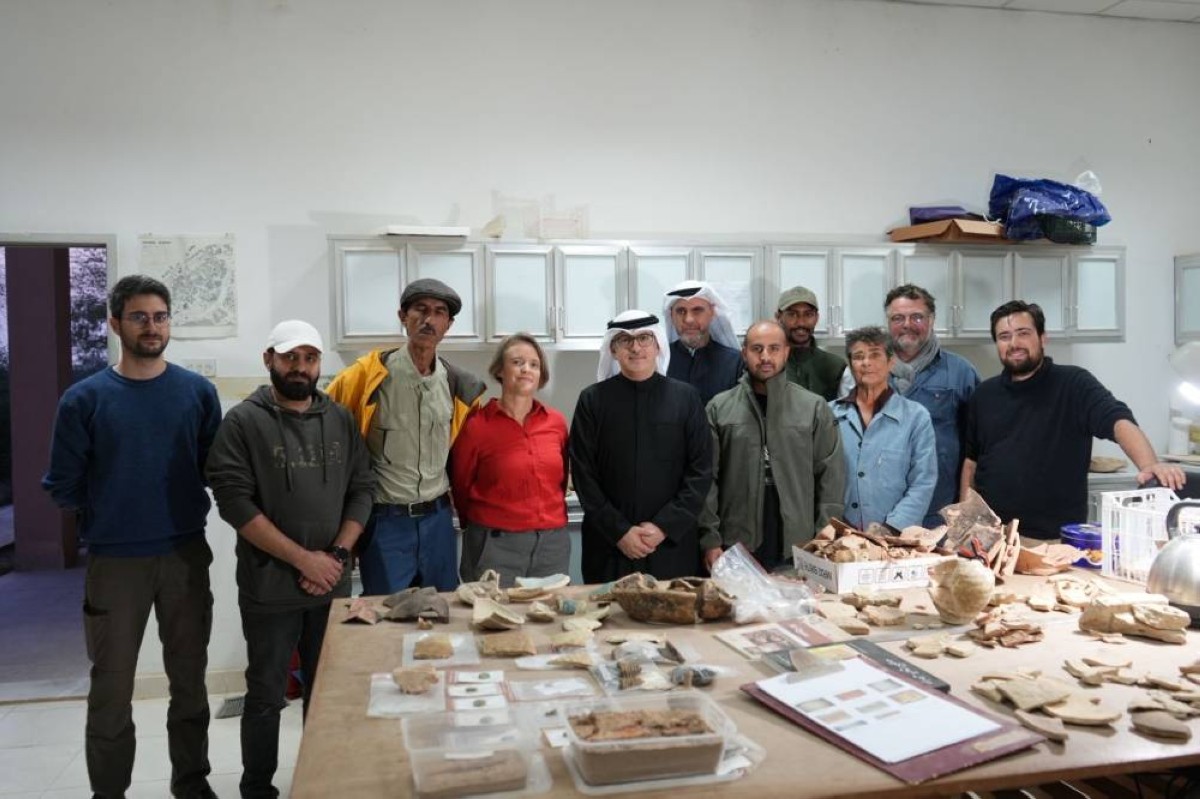

Recent archaeological discoveries on Failaka Island are rewriting the history of Kuwait, revealing a vibrant past marked by religious diversity and sophisticated craftsmanship. A joint Kuwaiti-French mission has unearthed significant finds at the Al-Qusur Monastery, offering unprecedented insight into a Christian community that thrived during the Umayyad and early Abbasid periods. These findings, including pottery inscribed with Syriac inscriptions, are reshaping our understanding of early Islamic Kuwait and the interactions between different cultures.
Unearthing the Past: Al-Qusur Monastery and its Significance
The Al-Qusur Monastery, located in the center of Failaka Island, has been the focus of excavations since 2011. The latest discoveries, announced by the National Council for Culture, Arts and Letters (NCCAL) on Wednesday, point to a well-established monastic settlement active from the mid-7th to mid-9th centuries CE. This period represents a crucial transition in the region, moving from predominantly Christian influence to the rise of early Islam.
Mohammad bin Redha, the Acting Assistant Secretary-General for Antiquities and Museums, highlighted the importance of the finds to KUNA, the Kuwait News Agency. He emphasized how the discoveries illuminate a previously underrepresented chapter in Kuwait’s history. The presence of Syriac inscriptions on pottery, alongside other artifacts, confirms the existence of a community practicing Eastern Syriac Christianity.
Architectural Remains and Early Craftsmanship
The excavations have revealed substantial architectural remains, painting a picture of a complex and organized monastic life. The site includes a large church, a refectory (dining hall), and an extensive food-preparation complex. This suggests a self-sufficient community capable of supporting a significant number of monks.
However, the discoveries extend beyond mere structural outlines. The team uncovered early examples of artificial basalt, a testament to the advanced technological capabilities of the inhabitants. This “pyrotechnology,” as described by Dr. Julie Bonneric, the French mission supervisor, involved melting and recrystallizing clay and sand at extremely high temperatures to mimic the properties of natural volcanic basalt. This innovative process was used to create durable grinding stones for the monastery’s mill.
The Flour Mill: A Glimpse into Daily Life
One of the most remarkable finds is a well-preserved flour mill located opposite the church. The mill features two low mud-brick pillars designed to support the rotating grinding stones. The team noted that some components were crafted from local stone sourced directly from Failaka Island, demonstrating resourcefulness and local expertise.
The use of artificial basalt in other parts of the mill highlights a sophisticated understanding of materials science and manufacturing. This wasn’t simply a functional space; it was a carefully constructed facility reflecting the community’s dedication to providing for its needs. The presence of such installations provides invaluable insight into the daily routines and economic activities of the monks.
Evidence of Coexistence and Cultural Exchange
Dr. Bonneric further explained that the site provides compelling evidence of Christian-Islamic coexistence during the early Islamic era. While the monastery clearly represents a Christian center, the archaeological record suggests a period of relative peace and interaction with the surrounding Islamic communities.
The discoveries aren’t limited to Christian artifacts. Pottery analysis reveals influences from Persian cultures, and inscriptions in both Syriac and Persian have been found on ostraca (pottery shards used for writing). Additionally, the team unearthed coins, an ornate perfume bottle, and various other items that speak to a diverse and interconnected world. This cultural exchange is a key aspect of understanding the complexities of this historical period.
Ongoing Research and Future Discoveries
The current excavation season, the 12th, began on November 17, 2025, and is specifically focused on the monastery’s earliest phase and the daily lives of its monks. The Kuwaiti archaeological team, comprised of members like Saif Al-Batti Boutaiban, Ahmad Al-Thawadi, and Anwar Al-Tamimi, are meticulously documenting and analyzing each find.
Professor Hassan Ashkanani of Kuwait University described the discovery as a landmark for Failaka Island, emphasizing its potential to reshape historical narratives. The ongoing research promises to reveal even more about this fascinating period of Kuwait’s history and the people who lived there. Further archaeological research is planned to explore the wider context of the monastery and its relationship to other settlements on the island and beyond.
In conclusion, the recent discoveries at Al-Qusur Monastery on Failaka Island represent a significant leap forward in our understanding of early Kuwaiti history. The presence of Syriac inscriptions and the evidence of advanced craftsmanship, coupled with indications of peaceful coexistence, offer a nuanced and compelling picture of a vibrant past. These findings underscore the importance of continued archaeological investigation in Kuwait and the potential for uncovering even more hidden treasures that will enrich our knowledge of the region’s cultural heritage. We encourage readers to follow the progress of the excavations and learn more about the fascinating history of Failaka Island.