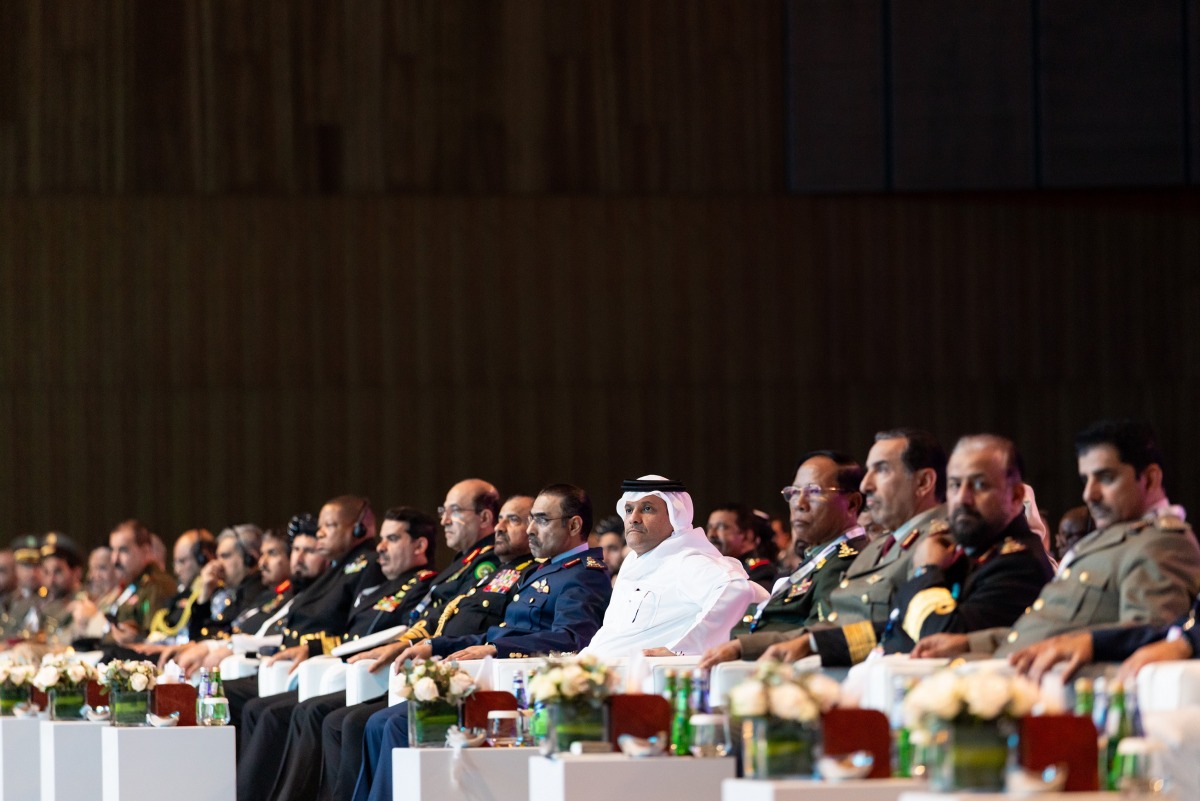

Doha, Qatar – The Middle East Naval Commanders Conference (MENC), a key component of the ninth Doha International Maritime Defence Exhibition and Conference (DIMDEX) 2026, convened yesterday to address escalating maritime security challenges in the region and globally. Senior naval leaders, defence officials, and experts gathered to discuss the crucial role of defence diplomacy in fostering stability and cooperation. The conference, held at the Qatar National Convention Centre, underscored the need for collaborative approaches to protect vital sea lanes and counter emerging threats.
Under the patronage of Deputy Prime Minister and Minister of State for Defence Affairs H E Sheikh Saoud bin Abdulrahman bin Hassan Al-Thani, the MENC focused on the theme of “Defence Diplomacy and Maritime Security Challenges.” The event was organized in collaboration with the Joaan Bin Jassim Academy for Defence Studies and drew high-level participation from numerous countries, including ministers, ambassadors, and academics. This year’s conference highlights the growing importance of international partnerships in maintaining regional peace.
The Evolving Landscape of Maritime Security
Sheikh Saoud bin Abdulrahman bin Hassan Al-Thani emphasized that relying solely on military strength is no longer sufficient to address modern security concerns. He stated that issues like cybersecurity, terrorism, and disruptions to global supply chains require a more nuanced approach, positioning defence diplomacy as a vital tool for dialogue and partnership. The Deputy Prime Minister noted that effective diplomacy builds trust and reduces the risk of escalation, even amidst ongoing tensions.
The conference acknowledged the increasing complexity of threats facing maritime nations. These include not only traditional naval warfare but also piracy, illegal fishing, and the potential for conflict arising from disputes over maritime resources. Additionally, the rise of non-state actors and the proliferation of advanced technologies pose new challenges to maintaining maritime domain awareness.
Qatar’s Role in Regional Stability
Qatar has consistently positioned itself as a facilitator of dialogue and a mediator in regional conflicts, according to remarks made during the conference. His Excellency highlighted the nation’s commitment to resolving disputes through peaceful means and fostering cooperation based on mutual respect and international law. This approach has made Qatar a key venue for important discussions on security and stability.
Brigadier General (Dr.) Rajeh Mohammed bin Aqeel Al-Nabet, President of the Joaan Bin Jassim Academy for Defence Studies, affirmed the Qatar Armed Forces’ belief in shared responsibility for maritime security. He stressed the importance of coordinated efforts, trust-building partnerships, and the exchange of expertise to ensure the safety and stability of the region. This collaborative spirit was a recurring theme throughout the conference.
Integrating Diplomacy and Defence
Minister of State at the Qatari Ministry of Foreign Affairs, H E Dr. Mohammed bin Abdulaziz Al-Khulaifi, underscored the interconnectedness of maritime security with broader issues such as trade, food security, and regional stability. He stated that effective security at sea requires seamless coordination between foreign affairs and defence ministries, as well as sustained cooperation with international partners. The ministry indicated a commitment to strengthening these linkages.
The discussion also touched upon the need for stronger regional mechanisms and multilateral institutions to safeguard sea lanes and protect coastal states. Experts suggested that enhanced information sharing and joint exercises are crucial for improving collective response capabilities. Furthermore, the development of innovative solutions to address emerging threats, such as unmanned systems and artificial intelligence, was identified as a priority.
The conference highlighted the importance of a holistic approach to maritime defence, encompassing not only military capabilities but also diplomatic engagement, economic cooperation, and legal frameworks. This integrated strategy is seen as essential for addressing the multifaceted challenges facing the maritime domain. The need for international law to be upheld in these areas was also a key point of discussion.
Looking ahead, the outcomes of the MENC will likely inform future discussions and initiatives aimed at enhancing maritime security in the Middle East and beyond. Further details regarding specific collaborative projects and policy recommendations are expected to be released in the coming weeks. The ongoing geopolitical landscape and the evolving nature of maritime threats will continue to shape the agenda for future conferences and require sustained attention from regional and international stakeholders.
The next DIMDEX is scheduled for 2028, and observers will be watching for concrete steps taken to implement the strategies discussed at this year’s event.