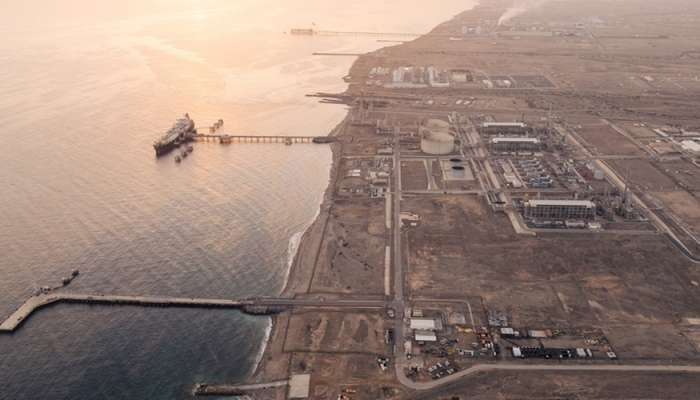

The Sultanate of Oman’s production of natural gas, including domestic production and imports, witnessed a slight growth of 0.9 percent, reaching 42.6173 billion cubic metres (BCM) by the end of September 2025. This marginal increase indicates a steady performance in the country’s energy sector. According to data released by the National Centre for Statistics and Information (NCSI), the growth in natural gas production is attributed to various factors, including changes in associated and non-associated gas production.
## Natural Gas Production Trends
Oman’s natural gas production is a crucial component of its energy mix. The data released by NCSI showed that associated gas production increased by 10 percent by the end of September 2025, reaching 9.4511 BCM compared to 8.5956 BCM in the same period of 2024. This significant growth in associated gas production is a positive indicator for the country’s oil and gas industry.
### Associated Gas Production Growth
The 10 percent increase in associated gas production can be attributed to the rise in oil production activities. Associated gas is produced alongside crude oil, and an increase in oil production naturally leads to a higher output of associated gas. This growth is a reflection of Oman’s efforts to optimize its oil production capabilities.
## Non-Associated Gas Production and Imports
In contrast, non-associated gas production (including imports) declined by 1.4 percent, reaching 33.1662 BCM by the end of September 2025 compared to 33.6264 BCM by the end of September 2024. However, the overall natural gas production remained relatively stable due to the offsetting effect of the increase in associated gas production. The decline in non-associated gas production may be attributed to various factors, including changes in production levels at specific gas fields.
## Natural Gas Consumption Patterns
The data also revealed interesting trends in natural gas consumption. Natural gas consumption in industrial projects declined by 3.5 percent, reaching 20.8842 BCM by the end of September 2025, compared to 21.6331 BCM for the corresponding period in 2024. However, gas usage in power generation plants rose by 1.4 percent by the end of September 2025, reaching 11.7738 BCM compared to 11.6099 BCM by the end of September 2024.
### Gas Consumption in Industrial Areas
Additionally, gas consumption in oil fields (including losses, metre differences, and shrinkage factor) grew by 10.9 percent, reaching 9.7493 BCM by the end of September 2025 compared to 8.7912 BCM in the corresponding period of 2024. As for gas used in industrial areas (including industrial areas, Oman Mining Company, and Oman Cement), it recorded a growth of 11.8 percent, reaching 210 million cubic metres by the end of September 2025 compared to 187.8 million cubic metres during the same period in 2024.
## Conclusion
In conclusion, Oman’s natural gas production demonstrated a slight growth of 0.9 percent by the end of September 2025, driven by a significant increase in associated gas production. While non-associated gas production declined, the overall natural gas supply remained relatively stable. The trends in natural gas consumption indicate a shift in usage patterns, with growth in power generation and industrial areas. As Oman continues to develop its energy infrastructure, the country’s natural gas sector is likely to play a vital role in supporting its economic growth. With the data indicating a positive trajectory in certain sectors, stakeholders and investors can look forward to a promising outlook for Oman’s energy industry.