


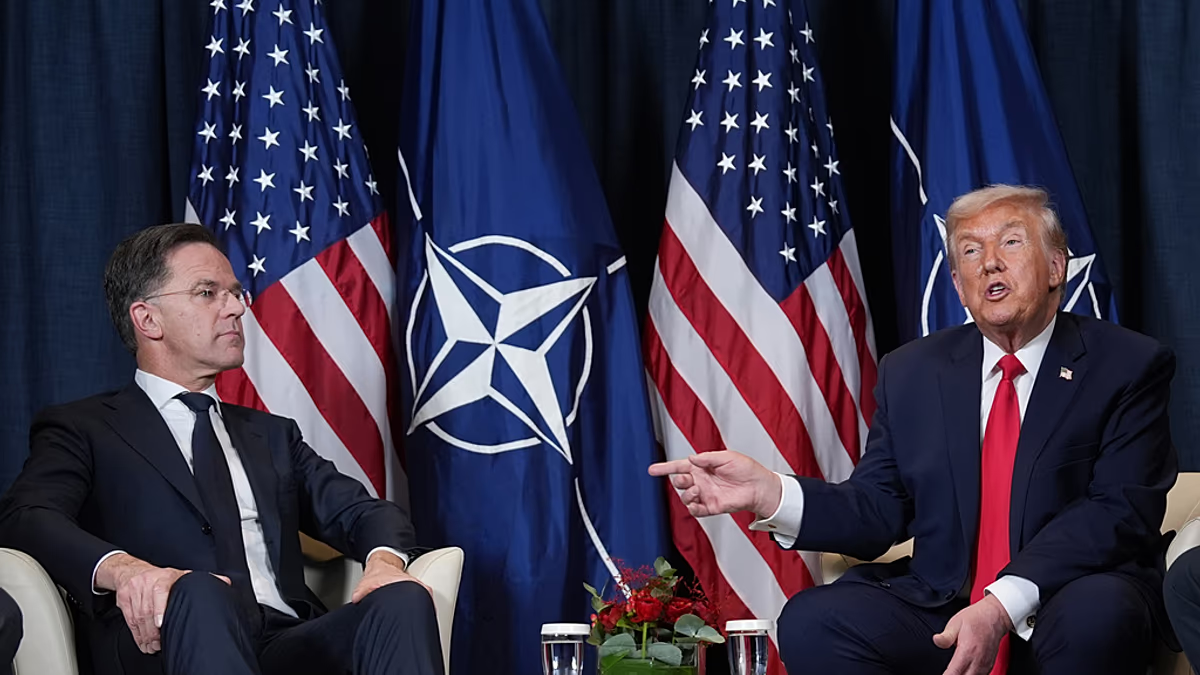

Spain’s Foreign Minister José Manuel Albares has characterized a recent agreement between the United States and NATO regarding increased U.S. military presence in the Arctic as a bilateral arrangement, not a NATO decision. The deal, brokered by Dutch Prime Minister Mark Rutte, follows weeks of public tension initiated by former President Donald Trump’s expressed interest in purchasing Greenland. This development is fueling renewed discussion about European strategic autonomy and the potential for a more unified European defense policy, particularly concerning NATO security.
Trump publicly announced the agreement on Wednesday, suggesting it would allow for a greater U.S. military footprint in the Arctic, including more bases in Greenland. However, details remain scarce. Albares stated that other allied nations have received the same limited information – only the initial announcement – and that any further discussion will be brought before the NATO Council.
The Greenland Issue and U.S. Arctic Strategy
The situation stems from Trump’s unexpected pursuit of acquiring Greenland, an autonomous territory within the Kingdom of Denmark. He argued that U.S. ownership of Greenland was a “national security necessity” to counter the growing influence of China and Russia in the strategically important Arctic region. The Council on Foreign Relations provides extensive background on the increasing geopolitical importance of the Arctic.
Danish authorities consistently rejected the idea of selling Greenland, emphasizing the importance of respecting the territory’s sovereignty and the wishes of its population. Polls within Greenland have repeatedly shown strong opposition to becoming part of the United States. The current agreement, according to Denmark, does not involve any discussion of transferring sovereignty.
Albares underscored that the future of Greenland is a matter for the people of Greenland and Denmark alone. He noted that the U.S. approach, including the threat of tariffs against European nations, was unacceptable and that the European Union will not negotiate under duress.
European Response and Calls for Autonomy
The Spanish Foreign Minister’s comments reflect a growing sentiment within the EU regarding the need for greater independence in security and defense matters. He argued that Europe must develop its own deterrent capabilities to avoid being subjected to coercion, whether through military threats or trade pressure.
Albares specifically called for a “coalition of the willing” focused on European security, alongside increased integration of the continent’s defense industries. Ultimately, he advocated for the creation of a fully-fledged European army. This push for a stronger, more independent European defense posture is not new, but the recent U.S. actions appear to have given it fresh impetus.
The situation highlights the complex dynamics within NATO and the differing perspectives on security priorities between the United States and its European allies. While European nations generally value the transatlantic alliance, there is increasing concern about the reliability of U.S. leadership and a desire to take greater control of their own security destinies.
The details of the agreement brokered by Rutte remain unclear, and it is likely that further information will emerge in the coming days and weeks. The focus will be on understanding the extent of the increased U.S. military presence and how it will impact the existing security arrangements in the Arctic. Observers will also be watching closely for any further developments in the EU’s efforts to strengthen its own defense capabilities and address the long-term implications for NATO security.
For ongoing updates on this evolving situation, and the broader implications for international relations, continue to follow trusted news sources and analysis from foreign policy experts.