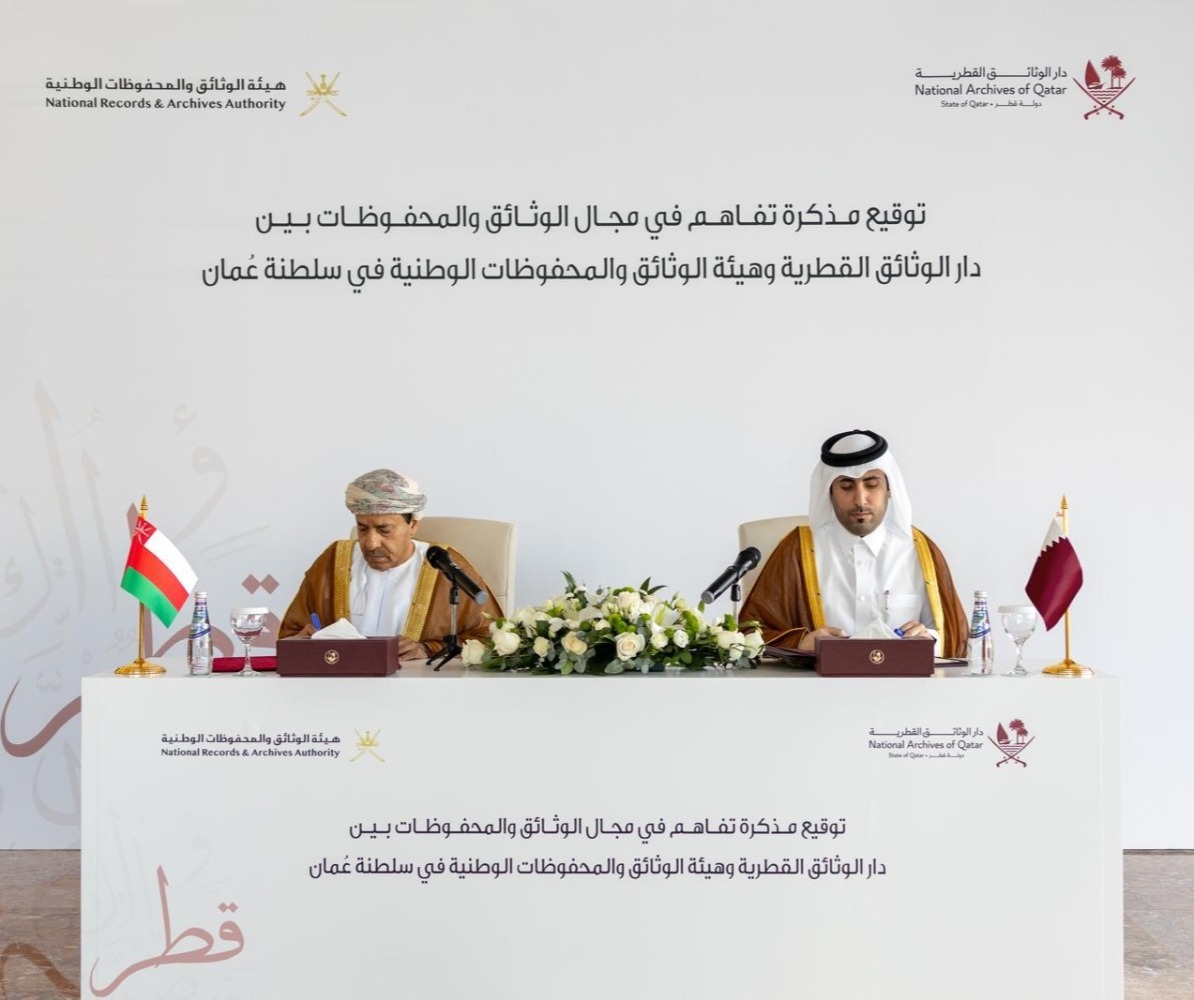

Doha, Qatar – The National Archives of Qatar and the National Records and Archives Authority of the Sultanate of Oman formalized a partnership on Monday, signing a memorandum of understanding (MoU) to strengthen collaboration in the field of records and archives. This agreement underscores a shared commitment to preserving national heritage and advancing documentation practices between the two Gulf nations. The initiative aims to enhance expertise exchange, modernize documentation systems, and support scholarly research in the region.
The MoU was signed by Dr. Ahmed Abdullah Al Buainain, Secretary-General of the National Archives of Qatar, and Dr. Hamad bin Mohammed Al Dhawyani, Chairman of the National Records and Archives Authority of the Sultanate of Oman. The signing ceremony reflects the longstanding fraternal relationship between Qatar and Oman and acknowledges the increasing importance of robust archival systems in the modern era.
Strengthening Cooperation in Records and Archives
The primary goal of the agreement is to safeguard national memory through the preservation and protection of historical records. Both nations recognize the importance of maintaining a comprehensive and accessible archive for future generations, according to statements released following the signing. This includes adhering to best practices and professional standards in the management of both physical and digital materials.
Abdullah Al-Badr, Head of the International Cooperation Department at the National Archives of Qatar, highlighted the MoU’s focus on coordinating participation in regional and international forums. This collaborative approach aims to ensure that the interests of Qatar and Oman are represented in global discussions concerning document management and cultural heritage preservation.
Preserving Documentary Heritage
The agreement outlines plans for collaborative projects aimed at identifying and acquiring historically significant documents held by government entities, private individuals, and institutions abroad. According to the National Archives of Qatar, a key responsibility is determining the best methods for obtaining physical documents, copies, or reproductions, expanding access to important historical resources.
Additionally, the MoU emphasizes the mutual benefit of sharing knowledge and expertise in areas such as digital archiving, conservation techniques, and the development of standardized metadata schemes for improved discoverability. This exchange is expected to contribute to the modernization of archiving practices in both countries.
Supporting Research and Digital Transformation
The partnership extends beyond preservation to actively promote historical research. Both organizations commit to supporting scientific inquiry and publication, and to fostering intellectual and artistic engagements with archival materials. The National Records and Archives Authority of Oman plans to focus on developing specialist training programs to enhance capabilities in these areas.
A crucial aspect of the collaboration involves keeping pace with the evolving demands of digital transformation. As more records are created and maintained digitally, the MoU recognizes the need for shared strategies to manage and preserve this expanding collection of information. This initiative aligns with broader efforts across the Gulf region to embrace digital technologies while safeguarding cultural assets.
On the sidelines of the signing, the Omani delegation toured an exhibition at the National Archives of Qatar, viewing key documents illustrating the significance of Qatar’s national heritage. Presentations were also given detailing future projects focusing on innovative documentation systems and increased public access to information. These efforts are directly linked to Qatar’s Law No. (7) of 2023 concerning Documents and Archives, which formalizes the Archives’ role in organizing, collecting, preserving, and providing access to national records.
The details of specific joint projects and timelines for implementation are expected to be discussed in subsequent meetings between the two authorities. While the full scope of the cooperation remains to be defined, the commitment to strengthening ties in archival science and cultural preservation signals a positive step forward for both nations. Continued monitoring of collaborative initiatives and the allocation of resources will be essential to realizing the full potential of this partnership.