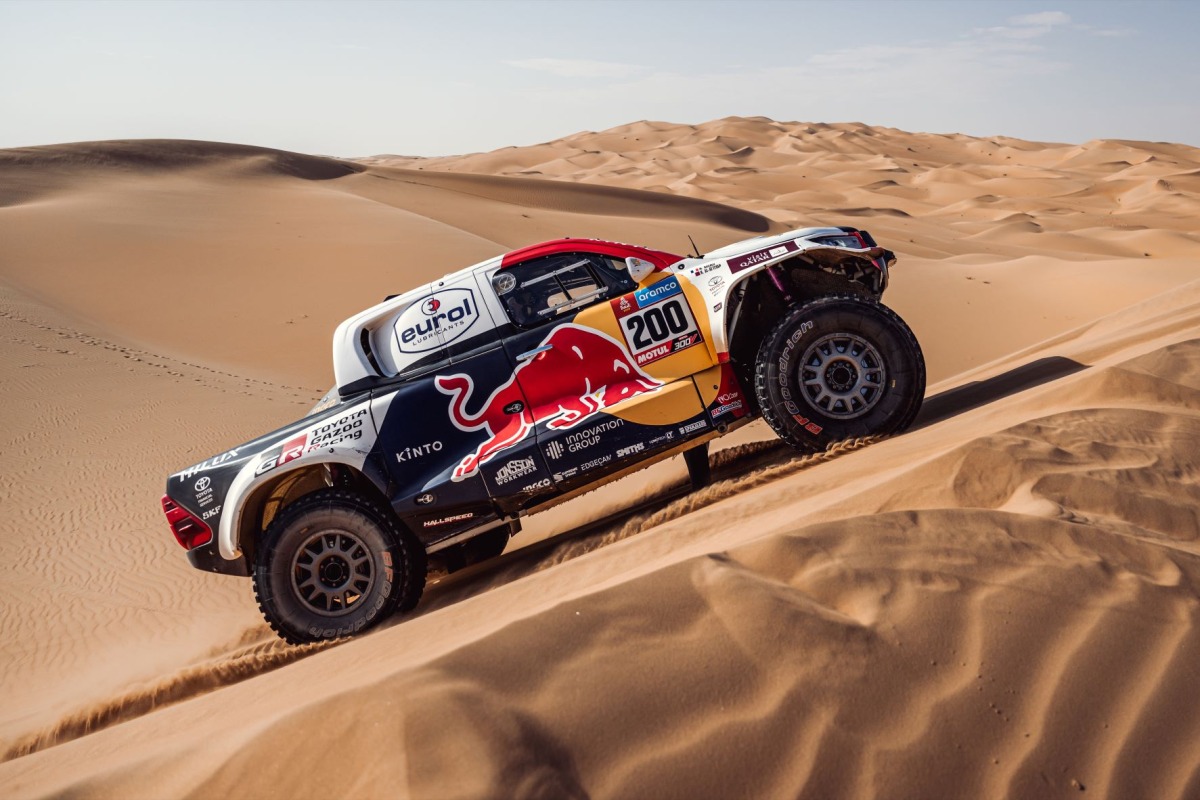

The 48th edition of the Dakar Rally officially began today in Yanbu, Saudi Arabia, with a 22-kilometer prologue stage. Qatar’s Nasser Al Attiyah, a five-time Dakar champion, posted a fourth-place finish in the car category, setting the stage for a challenging two weeks of racing across the Kingdom. The event features 812 competitors vying for victory across various vehicle classes, traversing nearly 8,000 kilometers of terrain.
Rally organizers set a total distance of 7,994 kilometers for cars and 7,906 kilometers for motorcycles, including 4,480 kilometers and 4,748 kilometers of timed special stages respectively. This marks the seventh consecutive year Saudi Arabia has hosted the prestigious off-road endurance race, solidifying its position as a key location for international motorsports. The rally is expected to draw significant tourism and media attention to the region.
Dakar Rally 2026: Prologue Results and Course Overview
Sweden’s Mattias Ekström led the car category in the prologue with a time of 10:48.7 minutes. American Mitch Guthrie followed closely in second place (10:56.1 minutes), with Belgium’s Guillaume de Mévius rounding out the top three (10:56.3 minutes). Al Attiyah’s time of 10:56.6 minutes places him within striking distance of the leaders as the rally progresses.
In the motorcycle division, Spain’s Edgar Canet secured the fastest time in the RallyGP class, completing the prologue in 11:31.9 minutes. He edged out Australia’s defending champion, Daniel Sanders (11:34.1 minutes), and American Ricky Brabec (11:36.8 minutes). The motorcycle competition is expected to be particularly fierce, with several experienced riders aiming for the podium.
Navigating the Saudi Arabian Terrain
The Dakar Rally route will navigate competitors through diverse landscapes, including deserts, canyons, and mountainous regions. Following the opening stage, the first full competitive leg will commence tomorrow from Bisha, comprising a 305-kilometer special stage and a 213-kilometer liaison section. This initial stage will provide a crucial test of vehicle preparation and driver/rider navigation skills.
The rally will then proceed through key cities like AlUla, Hail, and Riyadh, before heading south to Wadi Al-Dawasir and Al-Hanakiyah. The route features two demanding marathon stages, which require competitors to complete repairs and maintenance without external assistance. These stages are renowned for their difficulty and ability to separate contenders.
Marathon Stages and Championship Implications
The first marathon stage, held in AlUla, will present 451 kilometers of timed sections for cars and 417 kilometers for motorcycles. Competitors will then face another challenge in Hail, with 372 kilometers for cars and 356 kilometers for motorcycles. These extended competitive portions demand meticulous planning and endurance.
The second marathon stage, running from Wadi Al-Dawasir to Bisha, will test competitors with 418 kilometers of timed sections for motorcycles and 410 kilometers for cars. The overall off-road racing strategy will become increasingly important as the rally progresses, with competitors needing to balance speed and reliability. The demanding conditions often lead to mechanical failures and navigational errors, significantly impacting race standings.
Weather conditions and changing dune formations are expected to play a significant role in the outcome of the rally. The use of advanced navigation technology, including digital roadbooks, is now standard, but traditional skills in desert navigation remain vital. The event also showcases the latest advancements in rally raid vehicle technology.
The Dakar Rally is scheduled to conclude back in Yanbu on January 17th. The coming days will reveal how well teams and drivers have prepared for the grueling challenge ahead, and whether Al Attiyah can mount a serious challenge for a sixth title. Observers will be closely watching for any unforeseen issues with vehicle reliability or navigational errors that could dramatically shift the leaderboard.