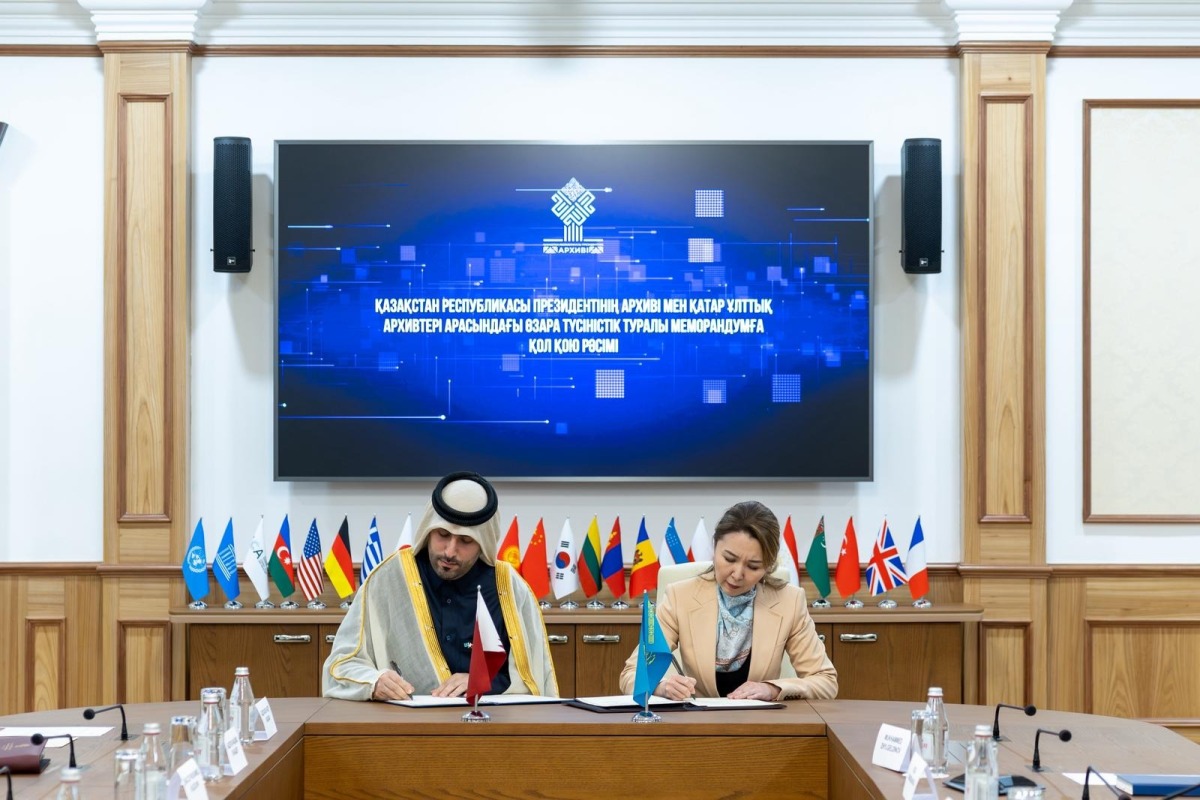

Qatar and Kazakhstan have solidified their commitment to preserving historical and cultural heritage with a new agreement focused on archival cooperation. The National Archives of Qatar (NAQ) and the Archive of the President of the Republic of Kazakhstan signed a memorandum of understanding (MOU) on Friday in Astana, Kazakhstan, to facilitate the exchange of expertise and resources in documentation and preservation. This partnership aims to strengthen ties between the two nations and bolster efforts to safeguard their national memories.
The signing ceremony took place as part of ongoing diplomatic efforts to enhance bilateral relations. Discussions between officials from both countries centered on modernizing digitization processes, ensuring the long-term preservation of valuable historical records, and improving the overall functionality of their respective archival institutions. The agreement represents a significant step in fostering collaboration within the Central Asian and Middle Eastern regions.
Strengthening Archival Cooperation Between Qatar and Kazakhstan
The MOU outlines several key areas of collaboration, including the sharing of best practices in document management. Both the NAQ and the Archive of the President of Kazakhstan will work together to develop and implement advanced techniques for organizing, cataloging, and accessing archival materials. This is particularly important as both nations possess extensive collections of historical documents detailing their unique histories and cultural identities.
A central focus of the agreement is the advancement of digitization initiatives. According to a statement released by the NAQ, the partnership will explore opportunities for joint projects aimed at converting physical documents into digital formats. This will not only improve accessibility for researchers but also mitigate the risk of damage or loss due to natural disasters or other unforeseen events.
Key Areas of Collaboration
The partnership isn’t limited to technology transfer. Officials also discussed strategies for enhancing the professional development of archivists and other personnel involved in the preservation of cultural heritage. This includes collaborative training programs, workshops, and opportunities for staff exchange.
Additionally, the MOU provides a framework for the exchange of scholarly resources and research findings. This will enable historians and researchers from both countries to gain a deeper understanding of each other’s past and contribute to a more comprehensive narrative of regional history. The exchange of knowledge will also cover legal frameworks surrounding historical preservation.
The meeting between Dr. Ahmed Abdullah Al Buainain, Secretary-General of the NAQ, and Aliya Mustafina, Director of the Archive of the President of the Republic of Kazakhstan, highlighted the shared commitment to preserving national identity through robust archival systems. Both leaders emphasized the importance of safeguarding historical records for future generations.
Qatar has been actively investing in its archival infrastructure in recent years, recognizing the crucial role of historical documentation in nation-building and cultural understanding. The NAQ has undertaken several initiatives to digitize its collections and make them more accessible to the public. This partnership with Kazakhstan aligns with Qatar’s broader strategy of international collaboration in the field of cultural heritage.
Kazakhstan, similarly, has prioritized the preservation of its historical records, particularly in light of its post-Soviet transition and the re-evaluation of its national identity. The Archive of the President of the Republic of Kazakhstan holds a vast collection of documents related to the country’s political, economic, and social development. The collaboration with Qatar is expected to enhance its capacity to manage and preserve these invaluable resources.
The next step involves the formation of joint working groups to develop detailed implementation plans for the various areas of cooperation outlined in the MOU. A timeline for these plans has not yet been publicly announced, but officials indicated a desire to begin collaborative projects as soon as possible. The success of this partnership will likely depend on securing adequate funding and logistical support from both governments, and navigating any potential challenges related to differing archival standards and practices.
Observers will be watching to see how this agreement translates into concrete projects and whether it serves as a model for similar collaborations between Qatar and other nations in the region. The long-term impact on the accessibility and preservation of historical documents in both countries remains to be seen.