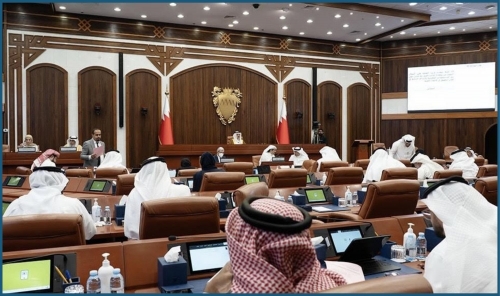

Bahrain is considering significant changes to its public sector employment practices, aiming to prioritize qualified Bahraini nationals for government jobs. Recently, Members of Parliament (MPs) approved a bill introducing stricter requirements for hiring expatriate workers in the public sector, sending it back to the Shura Council for further review. This move reflects a growing national focus on “Bahrainisation” – increasing the representation of Bahraini citizens in the workforce – and developing local talent.
New Regulations for Expatriate Employment in Bahrain
The approved amendments to Article 11 of the Civil Service Law establish a higher bar for the recruitment of non-Bahraini employees within ministries and state bodies. Currently, the process for hiring foreign workers isn’t as clearly defined regarding qualifications. The new legislation mandates that any expatriate considered for a public sector position must possess at least a Master’s degree (or its equivalent) in a relevant field, coupled with a minimum of ten years of practical experience.
This isn’t simply about imposing restrictions; it’s about ensuring that if a foreign national is brought on board, they represent a demonstrably higher level of expertise than available Bahraini candidates. The bill explicitly states that expatriates can only be hired if no suitably qualified Bahraini applicant is available to fill the role.
Contract Duration and Renewal Process
The proposed law also limits the duration of contracts for foreign employees to a maximum of two years. Renewal is permitted, but only once, extending the contract for another two-year term. This limitation is designed to encourage a continuous assessment of staffing needs and a proactive effort to identify and train Bahraini replacements.
Crucially, any contract renewal will be contingent upon confirmation that a qualified Bahraini candidate still hasn’t become available. A dedicated committee within the Civil Service Bureau will be responsible for verifying that all conditions outlined in the Civil Service Law’s executive regulations are met before approving a renewal. This adds a layer of oversight and accountability to the process.
Mandatory Training for Bahraini Nationals
A key component of the bill is the requirement for all employment contracts with non-Bahrainis to include a mandatory clause obligating the expatriate worker to actively train a Bahraini employee during their tenure. This “knowledge transfer” element is central to the government’s long-term strategy of building a skilled national workforce capable of assuming positions currently held by international hires.
The Civil Service Bureau will be tasked with issuing detailed instructions and standardized contract forms to ensure consistent implementation of this training requirement. This will likely include guidelines on the scope and duration of the training, as well as methods for evaluating its effectiveness.
Government Concerns and Legislative Debate
While the Council of Representatives has demonstrated strong support for the amendments, the government has expressed reservations. In a memorandum submitted alongside the draft bill, the government argued that specifying rigid academic qualifications and experience levels within the law could hinder the flexibility needed to address evolving staffing requirements.
They maintain that the current legislative approach allows government bodies to determine the necessary skills and qualifications for each position based on actual needs and changing circumstances. This flexibility, they believe, is vital for efficient operation.
The Shura Council initially rejected the bill in principle, echoing some of the government’s concerns. However, the Council of Representatives reaffirmed its support, sending the amended text back to the upper chamber for a second review. This back-and-forth highlights the ongoing debate about the optimal balance between prioritizing national employment and maintaining the agility of the public sector. The discussion around public sector jobs is a sensitive one, balancing national development goals with the need for specialized skills.
Implications and Future Outlook
The potential impact of this legislation is significant. If enacted, it could lead to a gradual shift in the composition of the Bahraini public sector workforce, with more opportunities for Bahraini citizens and a reduced reliance on expatriate labor. This aligns with broader economic diversification efforts and the goal of creating a more sustainable and self-reliant economy.
However, successful implementation will depend on several factors, including the availability of suitable training programs, the capacity of the Civil Service Bureau to effectively oversee the process, and a willingness to address any potential skill gaps that may emerge. The government will need to work closely with the Council of Representatives and the Shura Council to find a solution that balances the need for Bahrainisation with the practical requirements of a modern and efficient public service.
The outcome of the Shura Council’s second review will be crucial in determining the future of expatriate employment in Bahrain’s public sector and the progress of its nationalization initiatives. This ongoing legislative process demonstrates Bahrain’s commitment to developing its human capital and ensuring that its citizens have access to meaningful employment opportunities.