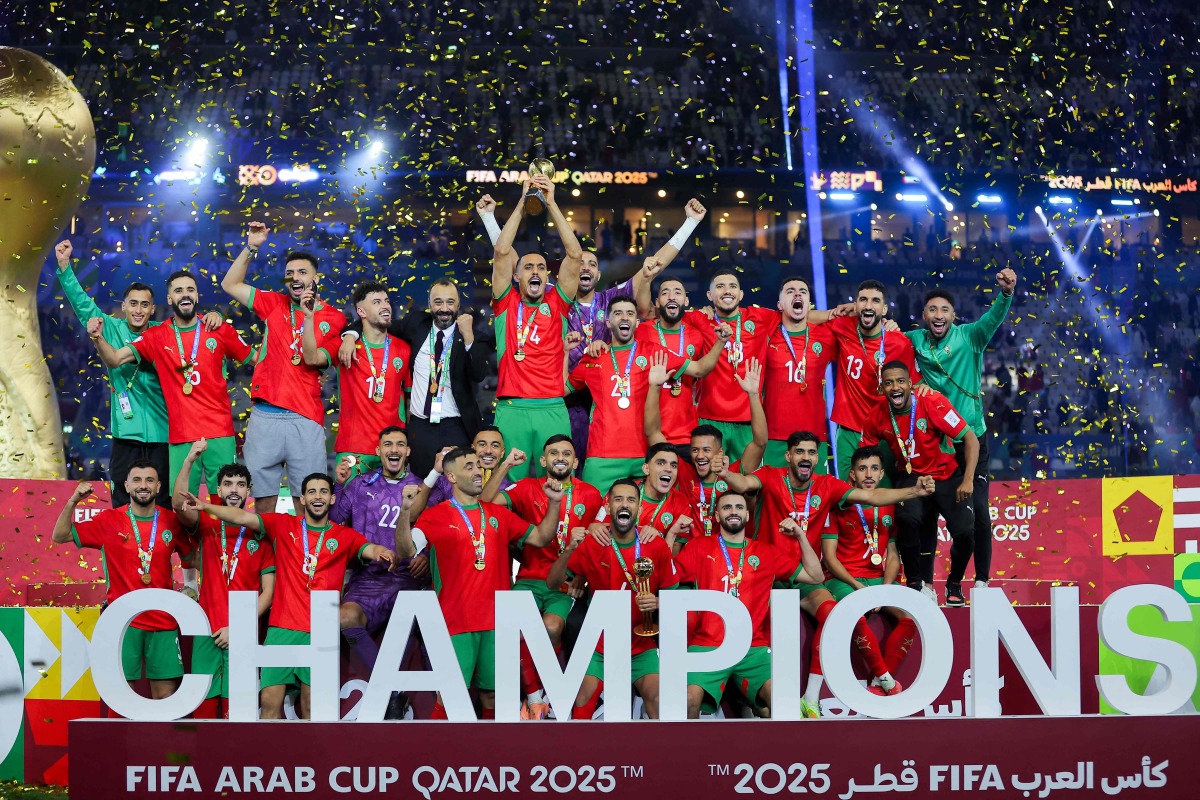

Morocco secured their second FIFA Arab Cup title on Thursday, December 18, 2025, with a dramatic 3-2 extra-time victory over Jordan at Lusail Stadium in Qatar. The match, played amidst rare rainfall coinciding with Qatar National Day celebrations, captivated a crowd of over 85,500 spectators. This win marks Morocco’s first Arab Cup triumph under FIFA’s governance and sets a positive tone as they prepare for upcoming international competitions.
The final, a thrilling contest, saw both teams display attacking prowess and resilience. Oussama Tannane’s stunning long-range goal opened the scoring for Morocco, but Jordan fought back with goals from Ali Olwan, including a penalty, to take the lead. A late equalizer from Abderrazzaq Hamdallah forced the game into extra time, where he ultimately scored the winning goal.
Morocco Claims 2025 FIFA Arab Cup Championship
Morocco’s victory in the FIFA Arab Cup is a significant achievement for the nation’s football program. Coach Tariq Sektioui’s team demonstrated tactical flexibility and a never-say-die attitude throughout the tournament. The win also provides a boost in morale as Morocco looks ahead to the African Cup of Nations, which begins shortly, and their participation in the 2026 FIFA World Cup.
The match began with a surprising moment of brilliance from Tannane, whose ambitious strike from inside his own half caught Jordan’s goalkeeper off guard. However, Jordan responded effectively, leveling the score through a well-placed header from Olwan. The second half saw a shift in momentum as Jordan earned a penalty, which Olwan confidently converted, putting his team ahead.
A Dramatic Finish and Extra Time
Despite facing adversity, Morocco refused to concede defeat. With just minutes remaining, a scramble in the box led to Hamdallah’s equalizer, sending the game into extra time. The extra period was equally tense, with both teams creating opportunities. Ultimately, it was Hamdallah who proved to be the hero, scoring the decisive goal to secure the championship for Morocco.
The atmosphere inside Lusail Stadium, the same venue that hosted the 2022 FIFA World Cup final, was electric throughout the match. The large crowd, comprised of passionate supporters from both nations, created a cauldron-like environment, adding to the drama on the pitch. Amir H H Sheikh Tamim Bin Hamad Al Thani, alongside FIFA President Gianni Infantino, presented the trophy to the victorious Moroccan team.
Ali Olwan finished the tournament as the top scorer with six goals, despite the heartbreaking loss in the final. Jordan’s impressive run to the final showcased their growing strength in regional football and provides a solid foundation for their World Cup preparations. The tournament also highlighted the increasing competitiveness of football in the Arab world.
Meanwhile, the third-place playoff between Saudi Arabia and the United Arab Emirates was abandoned due to adverse weather conditions. According to FIFA, the referee deemed the prolonged stoppage caused by the rain and concerns for player safety warranted the cancellation. A decision regarding the awarding of third place will be made by a relevant FIFA committee at a later date.
Looking ahead, the focus now shifts to Morocco’s participation in the African Cup of Nations. The team will undoubtedly carry the momentum from their Arab Cup triumph into the continental competition. The circumstances surrounding the cancelled third-place match and the final determination of the bronze medalist remain to be seen, and will be a point of interest for football fans in the region.