


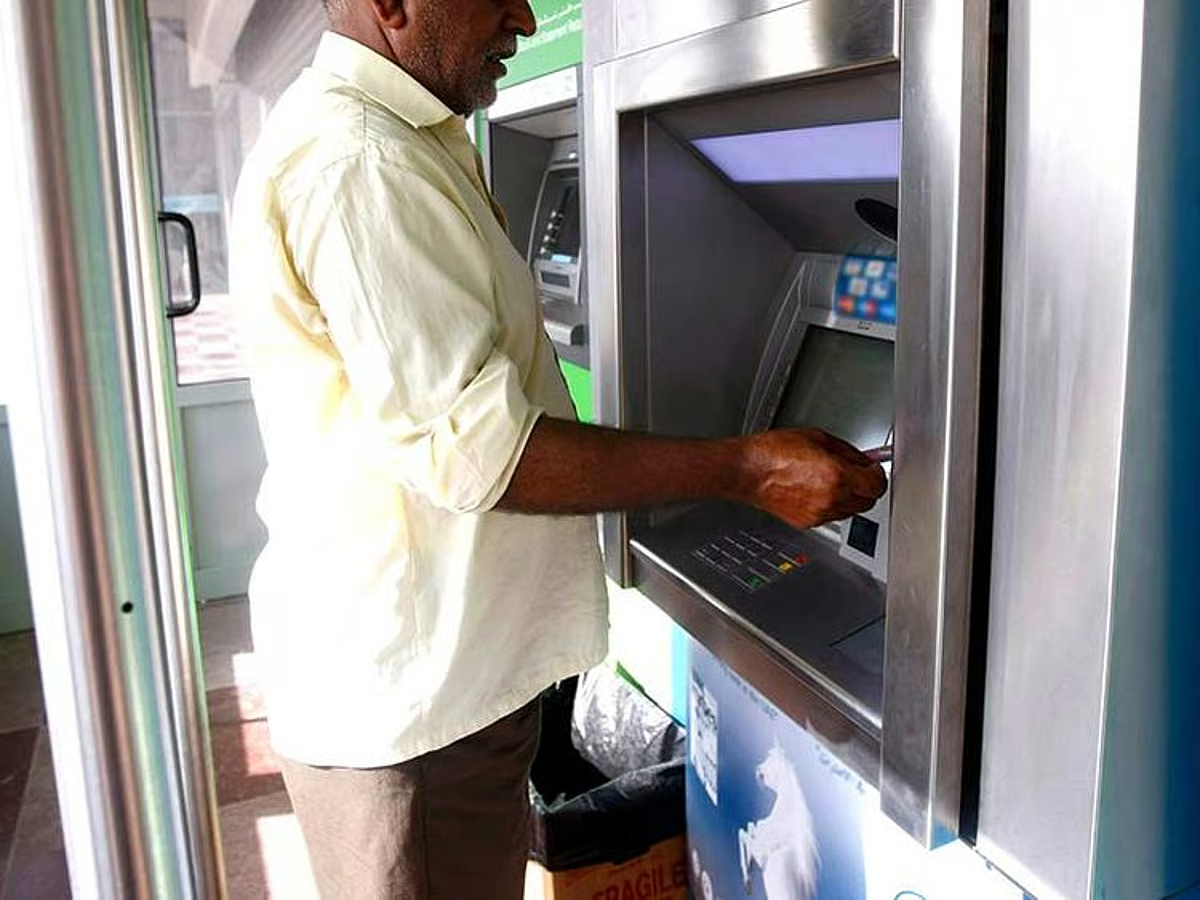

More than 60% of the United Arab Emirates (UAE) workforce earns below Dh5,000 a month, placing a critical emphasis on effective financial inclusion and how salaries are managed. While the UAE’s Wage Protection System (WPS) has successfully digitized salary payments across the country, simply receiving a digital salary doesn’t guarantee workers can utilize digital finance tools or develop financial security. Recent data shows significant shifts in financial behaviors among low-income workers, indicating progress toward genuine financial empowerment.
A new analysis by Edenred reveals a growing momentum toward greater financial participation. By 2026, financial inclusion in the UAE is expected to become more personalized, more practical, and more deeply integrated into the daily lives of its workforce, evolving beyond just receiving a paycheck. This transformation is driven by changing habits and increasing access to support systems.
Digital Salaries and the Decline of Cash Dependency
Historically, a large portion of low-income workers in the UAE received their salaries digitally but largely continued to operate within a cash-based economy. However, this trend is beginning to reverse. According to the Edenred study, cash dependency amongst this demographic has decreased by 15 percentage points over the past two years, falling from 84% to 69% – the most substantial decline observed to date.
This marks the first sustained shift away from cash usage within the UAE labor market. While approximately 45% of workers still withdraw their full salary shortly after receiving it, behavioral patterns are evolving. Online fund transfers are experiencing rapid growth, facilitated by user-friendly applications, transparent fee structures, and improved security measures. If current trends persist, cash withdrawals could dip below 60% for the first time, signaling a deeper integration with digital finance.
Salary Apps Evolving into Daily Financial Tools
The role of salary apps is expanding beyond basic paycheck access. These platforms are becoming comprehensive tools for managing various financial needs, including international remittances, bill payments, micro-savings schemes, and expense tracking.
For workers with limited experience using digital technologies, the consolidation of these services into a single app offers a streamlined and less daunting experience. Employers utilizing integrated payroll ecosystems are already reporting a substantial increase – up to 25% – in employee satisfaction. The next step is expanding the services offered to directly support everyday living, not merely banking functions.
The salary app is increasingly functioning as a daily utility, used for routine transactions like grocery purchases, rent payments, or sending money to family abroad, rather than being accessed solely on payday. This expanding use case furthers the goal of financial wellbeing.
The Importance of Financial Literacy
Financial literacy is no longer considered a supplementary benefit, but a crucial component of employee support. Employers are recognizing a direct correlation between financial understanding and stability in the workforce.
A recent study revealed that less than 31% of UAE residents demonstrate basic financial literacy skills, highlighting a significant gap in knowledge. This lack of understanding manifests in HR departments, leading to frequent payroll inquiries, confusion regarding deductions, and a higher incidence of disputes.
As access to salary-linked financial products grows, employers are partnering with financial technology companies to provide multilingual education on topics like budgeting, saving, and responsible credit utilization. The most effective methods emphasize practical, personalized learning, such as on-site card distribution, in-person workshops, and using real-world payslip examples.
Companies are reporting tangible benefits, including reduced employee turnover, fewer disputes related to salary, and increased workforce stability, especially within sectors such as construction, logistics, and facilities management.
A Broader Confidence Gap in Financial Planning
Concerns regarding financial stability extend beyond lower-income workers. A recent survey conducted by YouGov for HSBC found that 25% of UAE adults express uncertainty about their financial future, and nearly 10% admit to having no financial plan at all.
Only 34% of respondents indicated high confidence in their financial plan for life outside the UAE, emphasizing a larger challenge related to long-term financial preparedness among the country’s highly mobile population. The complexities of managing finances across multiple countries represent the biggest obstacle for those planning to live or retire abroad, cited by 28% of those surveyed.
Compliance and the Role of the WPS
Payroll compliance is gaining increased attention, moving beyond infrequent checks. In the first half of 2025, the Ministry of Human Resources and Emiratisation (MoHRE) identified over 5,400 companies for labor violations, including unpaid wages and failures related to the WPS, following more than 285,000 inspections. The Ministry has stated its commitment to enforcing worker rights and ensuring fair labor practices.
For employers, maintaining compliance requires continuous monitoring of salary disbursements, timing, and any discrepancies. Transparent payroll systems minimize surprises, protect workers, and help businesses avoid penalties, permit restrictions, and operational disruptions.
AI and the Future of Financial Inclusion
Artificial intelligence (AI) is playing a growing role in reshaping digital finance and financial inclusion in the UAE. By 2026, AI-powered models will be able to identify early warning signs of potential fraud, salary irregularities, or financial stress within the workforce.
The true value of AI lies in its ability to translate these insights into actionable steps, such as timely alerts, clearer communication in multiple languages, and practical guidance to help workers avoid financial hardship. However, technology alone isn’t sufficient; trust, clarity, and understandable communication are essential.
AI can identify risks effectively, but true financial inclusion emerges when workers comprehend the necessary steps to protect themselves. Throughout the UAE workforce, financial inclusion is progressively becoming less about the systems themselves and more about the people – their habits, their understanding, and their capacity to make informed financial decisions.
Looking ahead, the focus will likely remain on strengthening financial literacy programs and integrating them directly into the employee experience. Further enhancements to digital payment platforms will be crucial, alongside continued oversight by MoHRE to ensure robust compliance and worker protections. Monitoring the adoption rates of new financial tools and the evolving impact of AI will be key to gauging the long-term success of financial inclusion efforts in the UAE.