








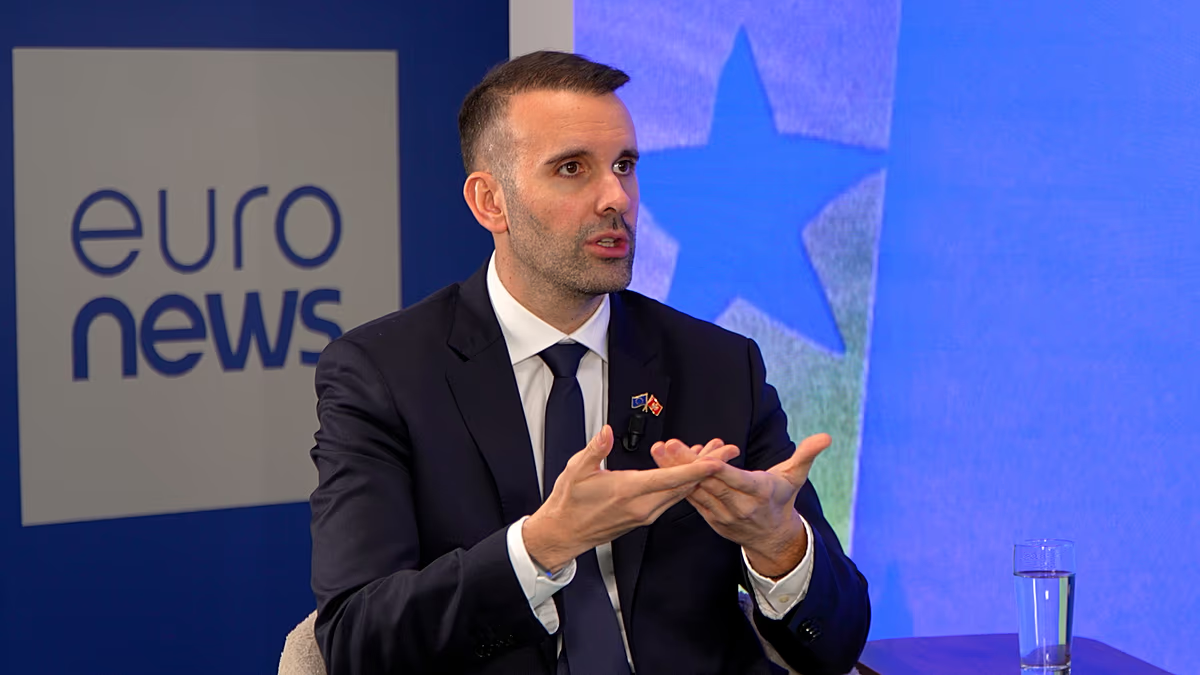

Montenegro is set to align its visa policy with the European Union, tightening restrictions for Russian citizens as it pursues membership in the 27-member bloc. Prime Minister Milojko Spajić announced the forthcoming changes, stating the country intends to implement the measures “very soon” following the EU’s recent decision to restrict visa access for Russian nationals. This move is a key step for Montenegro as it aims to join the EU by 2028.
The announcement comes after the EU introduced stricter rules earlier this month, responding to heightened security concerns linked to alleged Russian-attributed hybrid drone attacks. These new regulations limit Russian citizens to single-entry visas, requiring a new application for each subsequent visit to the EU. Currently, Russian citizens enjoy visa-free travel to Montenegro for up to 30 days with a valid passport, a significant difference in policy.
Montenegro Visa Policy Changes and EU Accession
Spajić emphasized Montenegro’s commitment to adhering to the EU’s Common Foreign and Security Policy (CFSP), a fundamental requirement for prospective members. The CFSP provides a framework for coordinated foreign policy and security actions, including the implementation of sanctions against Russia. He stated Montenegro is proactively behaving as a member state, even before officially gaining membership benefits.
In October, Montenegro already began aligning its policies with the EU by cancelling visa-free travel programs for citizens of Armenia, Uzbekistan, Kuwait, and Egypt. This demonstrates a clear pattern of prioritizing EU compliance. The country understands that adapting its visa regulations is crucial for demonstrating its commitment to the bloc.
Demonstrating Alignment with European Standards
Beyond visa policy, Spajić highlighted the need for Montenegro to actively demonstrate its value to potential member states. He acknowledged that securing unanimous support from the 27 EU nations requires convincing them that Montenegro’s accession is in their national interest. This involves a sustained effort to build stronger bilateral relationships.
A key area of focus is the rule of law, a traditionally sensitive topic for Balkan countries seeking EU membership. According to Spajić, Montenegro has already made progress in this area, successfully closing Chapter 5 of its accession negotiations, which pertains to public procurement. This signifies the adoption of relevant EU laws and regulations.
However, the Prime Minister stressed that further reforms are necessary to showcase continued improvement in the rule of law. He believes Montenegro must prove it can contribute positively to the EU, rather than becoming a burden. This commitment extends to all technical aspects of the accession process, ensuring the country is fully prepared.
Montenegro’s push for EU membership is part of a broader effort to integrate the Western Balkans into the European Union. Euronews reports that the EU is increasingly focused on enlargement, with a renewed commitment to welcoming new members.
The country’s economic stability and geopolitical alignment are also considered important factors in its bid for membership. Strengthening these areas will further bolster Montenegro’s case for accession. The government is actively working to attract foreign investment and promote regional cooperation.
Looking ahead, Montenegro will continue to implement reforms aligned with EU standards, with a particular emphasis on the rule of law and security. The coming months will be critical as the country works to finalize its visa policy adjustments and demonstrate its readiness for EU membership. Observers will be watching closely to see how effectively Montenegro navigates these challenges and secures its place within the European Union. Stay informed about the latest developments in Montenegro’s EU accession process by following official government announcements and reputable news sources.
The success of Montenegro’s EU bid also hinges on addressing concerns related to corruption and organized crime, as outlined by the U.S. Department of State. Continued progress in these areas will be essential for building trust and securing support from EU member states.

