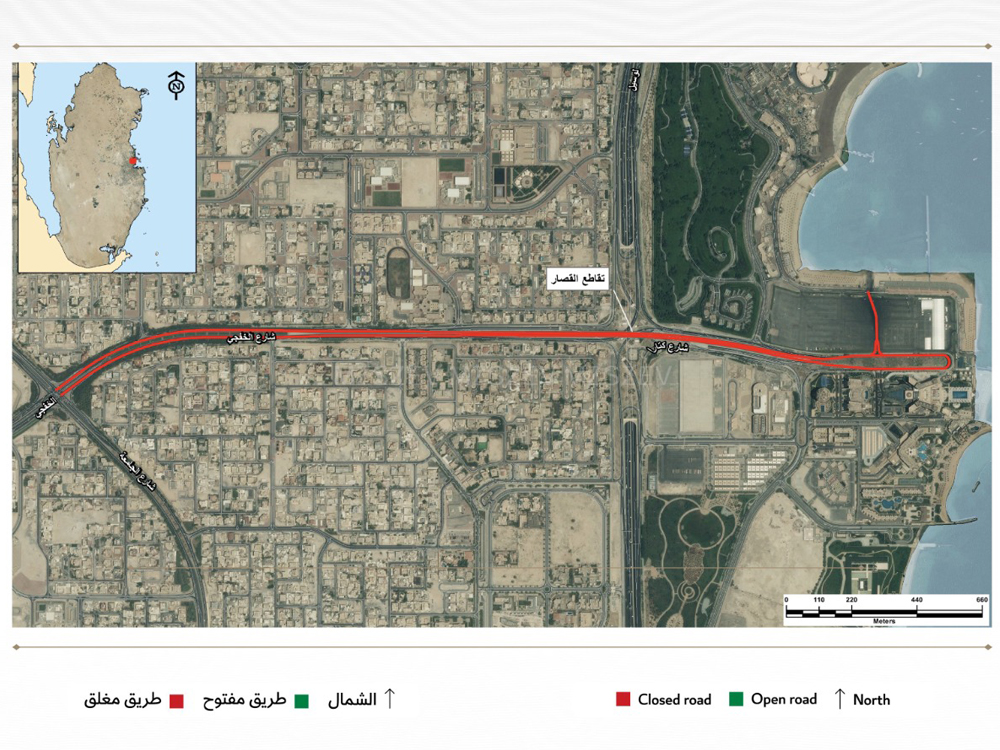

Doha, Qatar – The Ministry of Interior has announced a temporary, full closure of key roadways – Al Khafji Street and Katara Street – on Friday, January 12, 2026, to facilitate the Katara Triathlon Championship. The road closures will be in effect from 2:00 AM to 1:00 PM, impacting traffic flow in the West Bay area and surrounding neighborhoods. This measure aims to prioritize the safety of athletes and ensure the smooth execution of the international sporting event.
The affected streets are vital arteries for commuters in Doha, and the extended closure period is expected to cause significant traffic disruptions. According to the Ministry’s announcement, made via official social media channels, motorists are strongly advised to plan alternative routes and allow for extra travel time. The Ministry emphasized the importance of cooperation with traffic officials during the event.
Understanding the Katara Triathlon Road Closures
The decision to close Al Khafji Street and Katara Street stems from the logistical requirements of the triathlon course. The event encompasses swimming, cycling, and running segments, necessitating a secure and uninterrupted pathway for participants. The Ministry of Interior stated that the complete closure is the most effective way to guarantee athlete safety and prevent potential accidents.
Impact on Commuters and Local Businesses
The traffic disruption is likely to affect residents, commuters, and businesses in the West Bay, Katara Cultural Village, and surrounding areas. Individuals traveling to or from these locations on January 12th should anticipate delays and consider alternative transportation options, such as the Doha Metro or ride-sharing services. Businesses in the immediate vicinity may also experience reduced foot traffic during the closure period.
However, authorities have indicated that directional signage will be prominently displayed to guide motorists around the closed areas. Traffic management personnel will be deployed to assist drivers and maintain order. The Ministry encourages drivers to adhere to these signs and instructions to minimize inconvenience.
Details of the Alternative Routes
While specific alternative routes haven’t been fully detailed, the Ministry suggests utilizing roads parallel to Al Khafji Street and Katara Street. Motorists are advised to consult online mapping services or traffic apps for real-time updates and route suggestions. The Ministry also recommends avoiding the area altogether if possible, particularly during peak hours.
The Katara Triathlon Championship is an annual event that attracts athletes from around the globe, contributing to Qatar’s growing reputation as a hub for international sports. This year’s competition is expected to draw a large crowd of spectators, further adding to the potential for congestion. Related events, such as pre-race registration and post-race celebrations, may also contribute to localized road congestion in the days leading up to and following the main event.
In contrast to typical road maintenance closures, this shutdown is a planned event with a defined timeframe. The Ministry of Interior has a history of implementing similar measures for large-scale events, prioritizing public safety and event organization. This proactive approach aims to mitigate potential risks and ensure a successful event.
The Ministry of Interior’s announcement follows a period of increased infrastructure development in Doha, including ongoing road construction projects. These projects, while ultimately aimed at improving transportation networks, have occasionally resulted in temporary traffic delays. The Katara Triathlon closure adds another layer of complexity to the city’s traffic landscape.
Looking ahead, the Ministry of Interior is expected to monitor traffic conditions closely throughout the duration of the road closures. Updates and further guidance may be issued via social media and official channels as needed. Motorists should remain vigilant and check for the latest information before embarking on their journeys on January 12th. The effectiveness of the traffic management plan and the overall impact on commuters will be assessed following the event, potentially informing future event-related road closure strategies.