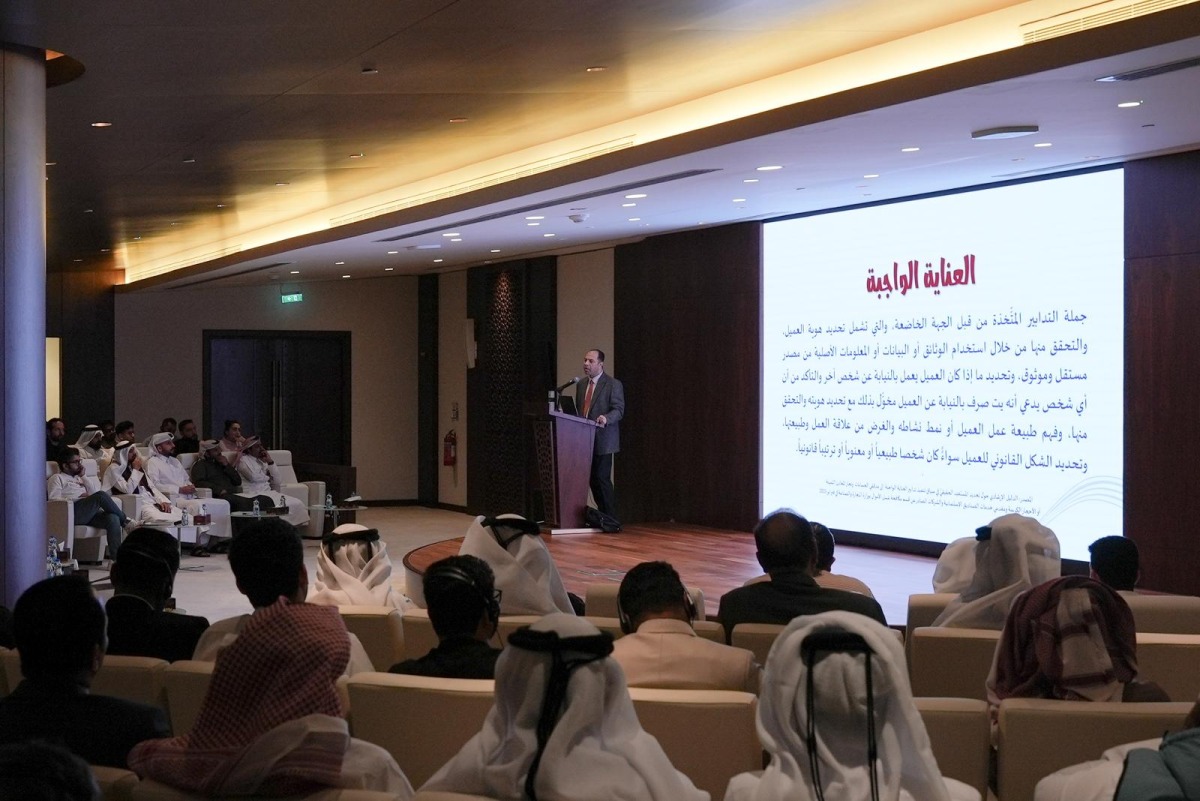

Doha, Qatar – The Ministry of Commerce and Industry (MoCI) recently concluded a specialized training workshop focused on beneficial ownership identification procedures, a critical component of anti-money laundering (AML) and counter-terrorism financing (CTF) efforts. The workshop, held at the MoCI headquarters, targeted trust and company service providers, auditors, and dealers in precious metals and gemstones. This initiative underscores Qatar’s commitment to strengthening its financial safeguards and aligning with international standards.
The training, which took place this week, brought together key stakeholders to address the complexities of due diligence and customer verification. According to the MoCI, the workshop aimed to enhance compliance with both national legislation and global recommendations regarding financial transparency. Participants gained insights into identifying individuals who ultimately own or control companies, even if their ownership is obscured through complex structures.
Understanding Beneficial Ownership Identification
Beneficial ownership identification is a cornerstone of modern financial regulation, designed to prevent illicit financial flows. It requires businesses to go beyond simply knowing their immediate customers and to uncover the true individuals who benefit from transactions. This process is increasingly important as criminals and terrorists exploit legal structures to hide their activities.
The Role of FATF and Qatari Law
The workshop specifically referenced the standards set by the Financial Action Task Force (FATF), the global money laundering and terrorist financing watchdog. Qatar has been actively working to implement FATF recommendations, as evidenced by Law No. (20) of 2019 on Combating Money Laundering and Terrorism Financing and its subsequent Executive Regulations. Additionally, Ministerial Decision No. (48) of 2020 further clarifies obligations for specific sectors.
The MoCI emphasized the principles underlying the concept of beneficial ownership, outlining criteria for identifying owners and controllers. Participants discussed the core principles of compliance and the potential penalties for failing to meet these obligations. These penalties can include significant fines and reputational damage, according to legal experts.
Practical Application and Suspicious Indicators
The training wasn’t solely theoretical. The workshop included practical examples of suspicious indicators related to beneficial ownership, equipping participants with the tools to recognize and report potentially illicit activity. These indicators can range from complex ownership structures with no clear purpose to discrepancies in provided documentation.
However, identifying beneficial owners can be challenging. Complex corporate structures, nominee shareholders, and the use of shell companies can all obscure true ownership. The workshop addressed these challenges, providing guidance on navigating these complexities and utilizing available resources.
Meanwhile, the focus on precious metals and gemstones dealers reflects the inherent risks associated with these industries. These sectors are often targeted for money laundering due to the ease with which value can be moved across borders. Strengthening due diligence in these areas is therefore a priority for regulators.
The training also touched upon the importance of robust customer verification mechanisms. This includes verifying the identity of customers, understanding the nature of their business, and assessing the risks associated with their transactions. Effective Know Your Customer (KYC) procedures are essential for preventing financial crime and maintaining the integrity of the financial system.
The MoCI’s initiative aligns with a broader global trend towards increased financial transparency. International cooperation is crucial in combating money laundering and terrorist financing, and Qatar is actively participating in these efforts.
Looking ahead, the MoCI is expected to continue monitoring compliance with these regulations and providing further guidance to relevant sectors. The effectiveness of the training will likely be assessed through ongoing monitoring of reported suspicious activity and potential enforcement actions. Further updates to legislation and regulations are possible as FATF standards evolve and new risks emerge. Stakeholders should continue to monitor announcements from the MoCI and stay informed about best practices in AML/CTF compliance.