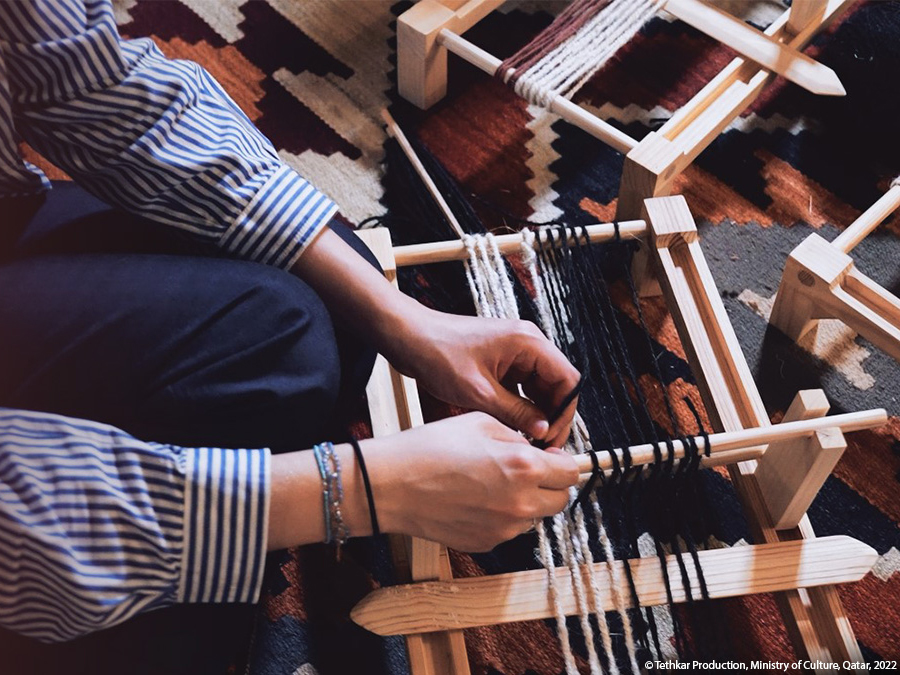

New Delhi recently hosted a significant cultural event as the United Nations Educational, Scientific and Cultural Organization (UNESCO) approved the inscription of Sadu weaving onto its Representative List of the Intangible Cultural Heritage of Humanity for 2025. This recognition, achieved through a joint nomination by India, Kuwait, and Saudi Arabia, highlights the importance of preserving this traditional Bedouin craft. The decision was made during the 20th session of the Intergovernmental Committee for the Safeguarding of the Intangible Cultural Heritage.
Sadu weaving, a practice deeply rooted in the Gulf region, is a traditional art form historically created by Bedouin women. The announcement, made by the Indian Ministry of Culture (MoC), signifies a commitment to safeguarding this cultural expression for future generations. This inscription is expected to bolster efforts in documentation, education, and the continued practice of this unique textile art.
The Significance of Sadu Weaving’s UNESCO Recognition
The inclusion of Sadu weaving on the UNESCO list is a major step towards acknowledging its cultural and historical value on an international stage. According to the MoC, this recognition validates the efforts of Qatar and other Gulf states in protecting this art form from disappearing due to modernization and the availability of mass-produced alternatives. The UNESCO Representative List aims to ensure the visibility and awareness of these cultural practices.
Historically, Sadu weaving provided essential materials for Bedouin tents, camel saddles, and other utilitarian items. The textiles were known for their geometric designs and vibrant colors, often incorporating symbolic motifs reflecting Bedouin life and beliefs. The art form was traditionally passed down through generations of women, embedding it within the social fabric of nomadic communities.
Preservation Efforts and Community Impact
The Ministry of Culture emphasized that the inscription isn’t merely about documentation; it’s about fostering community awareness and ensuring the sustainability of Sadu weaving. This will be achieved through national and regional programs, training workshops, and specialized exhibitions. The MoC also plans to support research initiatives to further understand the aesthetic, anthropological, and social dimensions of the art.
Additionally, the recognition is anticipated to create new opportunities for artisans. It could lead to increased integration of Sadu products into contemporary creative industries, providing economic benefits to communities that continue to practice the craft. This economic empowerment is seen as crucial for the long-term survival of the tradition. The Ministry also highlighted the importance of continued collaboration with Kuwait and Saudi Arabia, as well as other cultural institutions.
However, challenges remain in ensuring the continued vitality of Sadu weaving. The availability of affordable, industrially produced textiles poses a significant threat to the demand for traditionally woven pieces. Maintaining the authenticity of the craft while adapting to modern markets will require careful consideration and innovative approaches. Related crafts, such as Bedouin jewelry and traditional embroidery, also benefit from increased attention to the region’s cultural heritage.
The UNESCO inscription also draws attention to the broader context of Gulf culture and its rich traditions. This recognition can serve as a catalyst for preserving other intangible cultural heritage elements in the region, fostering a sense of pride and identity among local communities. The Ministry of Culture stated that this is part of a larger effort to promote and protect the diverse cultural landscape of the Gulf.
Looking ahead, the focus will be on implementing the programs and initiatives outlined by the MoC and its partner states. The success of these efforts will depend on sustained funding, community engagement, and the ability to attract new generations of artisans to learn and practice the art of Sadu weaving. The long-term impact of the UNESCO inscription remains to be seen, but it represents a positive step towards safeguarding this important piece of cultural heritage. Further reports are expected in the coming months detailing specific implementation plans and progress updates.