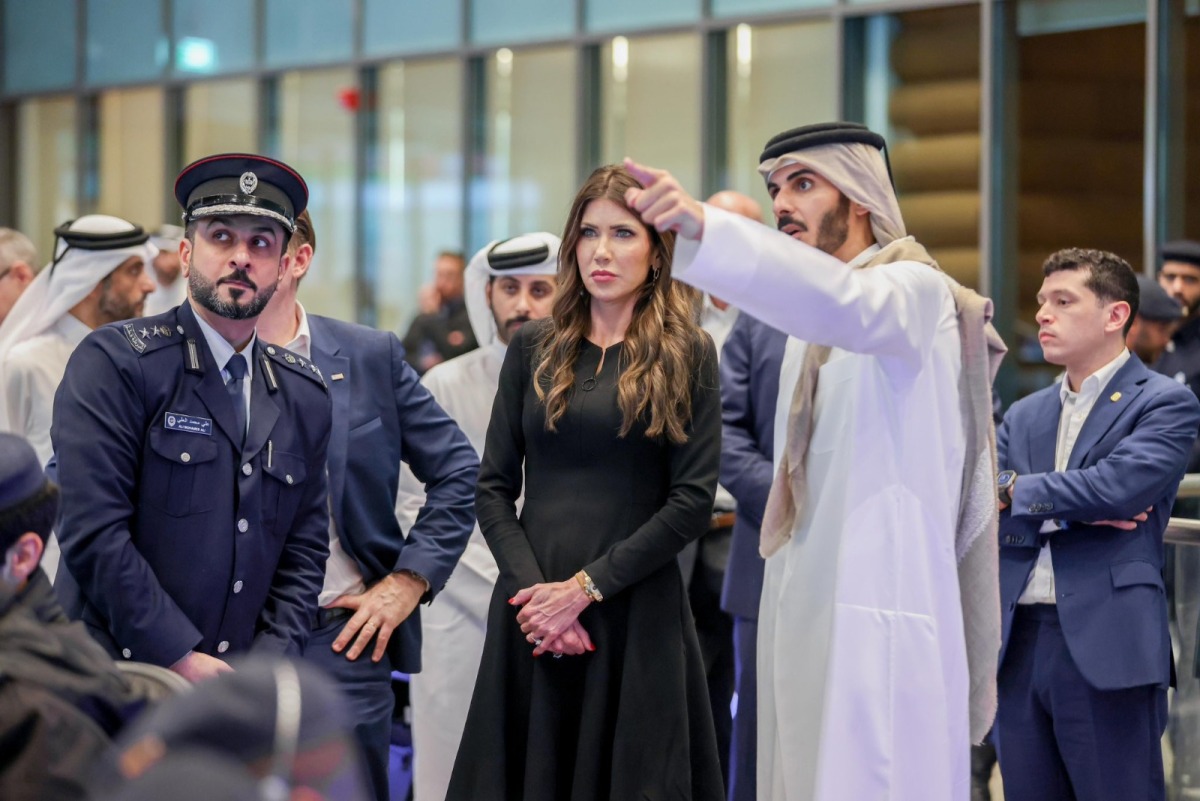

Doha, Qatar – A high-level meeting between Qatari and U.S. officials focused on security cooperation and technology took place Thursday at the National Command Center (NCC) in Doha. Sheikh Khalifa bin Hamad bin Khalifa Al-Thani, Minister of Interior and Commander of the Internal Security Force “Lekhwiya,” met with U.S. Secretary of Homeland Security Kristi Noem to discuss strategies for enhancing security operations and preparedness. The visit underscores the growing partnership between the two nations on matters of national security.
The meeting, held at the NCC, involved a detailed tour for Secretary Noem, showcasing Qatar’s advanced infrastructure for managing security. According to the official Qatar News Agency, the discussions centered on leveraging technology and best practices to address shared security challenges. This collaboration is particularly relevant as Qatar continues to host major international events.
Strengthening Qatar’s Security Infrastructure
The core of the visit revolved around demonstrating Qatar’s sophisticated security operations capabilities. Secretary Noem was briefed on the NCC’s command and control systems, which integrate real-time data from various sources to provide a comprehensive overview of the security landscape. These systems are designed to facilitate rapid decision-making during both routine operations and large-scale emergencies.
Advanced Technologies on Display
The NCC utilizes advanced monitoring and analytical technologies, including artificial intelligence and machine learning, to identify and mitigate potential threats. The ministry highlighted the center’s ability to process vast amounts of information and provide actionable intelligence to security personnel. This focus on technological innovation is a key component of Qatar’s national security strategy.
Additionally, the tour extended to the Tournament Command Center (TCC), a specialized facility dedicated to securing major sporting events. The TCC’s operational systems were presented, illustrating how Qatar manages security during high-profile tournaments, ensuring the safety of athletes, spectators, and officials. This is a critical area of focus given Qatar’s increasing role as a global sports hub.
The Qatari government has invested heavily in its security infrastructure in recent years, driven by both regional geopolitical considerations and the need to host events like the FIFA World Cup 2022. This investment reflects a commitment to maintaining a safe and stable environment for residents and visitors alike. The partnership with the U.S. Department of Homeland Security is seen as a valuable component of this effort, offering access to expertise and technology.
However, the specifics of any agreements reached during the meeting have not been publicly disclosed. The discussions likely included areas such as cybersecurity, counterterrorism, and border security, all of which are priorities for both countries. Experts suggest that information sharing and joint training exercises are likely outcomes of this strengthened collaboration.
Meanwhile, the U.S. has a long-standing strategic partnership with Qatar, encompassing defense, economic, and security cooperation. Qatar hosts Al Udeid Air Base, a critical U.S. military installation in the Middle East, and serves as an important ally in regional stability efforts. This visit reinforces the importance of the relationship for both nations.
In contrast to some regional security approaches, Qatar has consistently emphasized a technology-driven and intelligence-led strategy. This approach, as demonstrated by the NCC and TCC, aims to proactively identify and address threats before they materialize. The focus on international best practices also suggests a commitment to transparency and accountability in security operations. The implementation of these advanced security measures is ongoing.
The visit by Secretary Noem comes amid heightened global security concerns and a growing emphasis on international cooperation to combat terrorism and transnational crime. Qatar’s willingness to share its experiences and collaborate with the U.S. is viewed positively by regional security analysts. Further collaboration on national security is expected.
Looking ahead, the two countries are expected to continue discussions on specific areas of cooperation, potentially leading to formal agreements in the coming months. The effectiveness of these collaborations will depend on ongoing information sharing, joint training initiatives, and a continued commitment to addressing shared security challenges. The long-term impact of this strengthened partnership on regional stability remains to be seen, but it represents a significant step in enhancing Qatar’s security infrastructure and its ability to host major international events safely and securely.
Source: The Peninsula Qatar
Doha Institute for International Studies
U.S. Department of Homeland Security