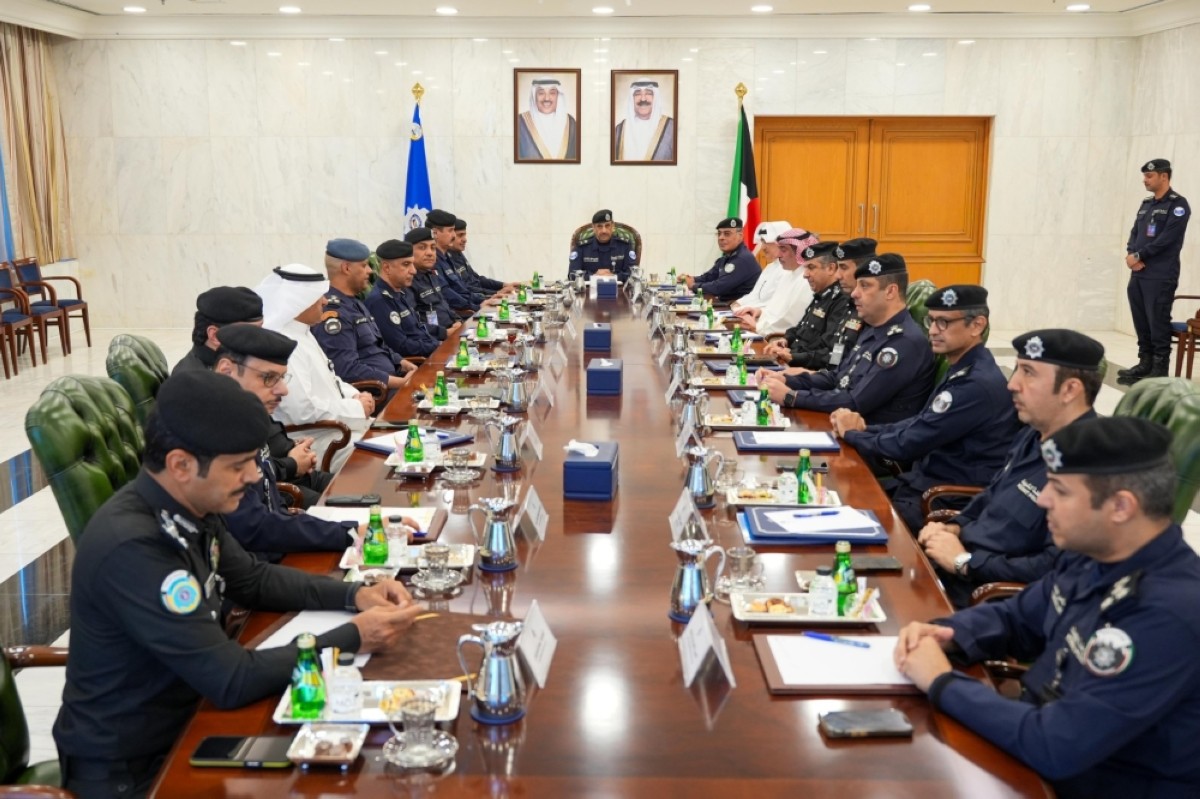

Kuwait’s commitment to national security remains unwavering, as demonstrated by recent high-level discussions within the Ministry of Interior. Acting Interior Ministry Undersecretary Maj Gen Ali Al-Adwani led a crucial coordination meeting on Sunday, focusing on streamlining operations and bolstering Kuwait security measures. This review of workflow and administrative updates underscores the nation’s proactive approach to maintaining public order and stability in a dynamic regional landscape.
Strengthening Kuwait Security Through Enhanced Coordination
The meeting, held at the ministry headquarters, brought together assistant undersecretaries and sector heads, signifying a unified front in addressing present and future challenges. Maj Gen Al-Adwani began by conveying greetings from First Deputy Prime Minister and Minister of Interior Sheikh Fahad Al-Yousef Saud Al-Sabah, reinforcing the importance of these collaborative efforts from the highest levels of government.
The core of the discussion revolved around evaluating the progress of previously approved work plans. This wasn’t simply a status update; it was a detailed assessment of what’s working, what needs adjustment, and how to optimize resource allocation. Efficient resource allocation is critical to effectively respond to evolving security concerns.
Focus on Discipline and Readiness
A significant emphasis was placed on cultivating discipline and ensuring readiness across all sectors of the Ministry. Maintaining a high level of preparedness requires continuous training, updated equipment, and clearly defined protocols. This readiness extends beyond responding to immediate threats and includes proactive measures to prevent incidents from occurring in the first place.
The aim is to deliver security services to the public with greater efficiency, reducing response times and improving overall effectiveness. This dedication to enhancing service delivery highlights the Ministry’s commitment to citizen wellbeing.
Addressing Field and Administrative Issues
Beyond overarching strategy, the meeting delved into specific field and administrative issues currently facing the Ministry. These discussions likely involved problem-solving related to daily operations, identifying bottlenecks in processes, and finding practical solutions to improve workflow. These pragmatic approaches are vital to translating policy into tangible results.
The ministry highlighted its ongoing work regarding border control procedures as part of the administrative improvements. Modernizing these systems is essential to safeguarding Kuwait’s territorial integrity and combating transnational crime. This includes investing in advanced technologies for surveillance and identification and strengthening cooperation with neighboring countries.
Prioritizing Teamwork and Continuous Improvement
Maj Gen Al-Adwani passionately championed the importance of teamwork as a cornerstone of effective security. He stressed that a collaborative environment, where information is readily shared and expertise is leveraged, is paramount to achieving common goals. This internal cohesion directly translates to a more unified and robust external response.
Furthermore, Al-Adwani emphasized the need for continuous improvement in performance across all sectors. This isn’t about assigning blame for shortcomings; it’s about fostering a culture of learning and adaptation. Actively seeking feedback, analyzing data, and implementing best practices are all integral to this process. This commitment to progress is central to long-term national safety.
Streamlining Procedures for Greater Efficiency
A key component of continuous improvement involves streamlining existing procedures. Complex and bureaucratic processes can hinder efficient operation and create opportunities for errors or delays. Simplifying these procedures, without compromising security, is crucial for optimizing performance.
The Ministry has been actively working to digitize many of its administrative functions, a move that will significantly reduce paperwork, improve transparency, and expedite decision-making. This modernization effort is a clear indication of Kuwait’s commitment to aligning its security apparatus with global best practices.
Developing Proactive Security Plans
The meeting didn’t solely focus on reactive measures; a substantial portion of the discussion was dedicated to developing proactive security plans and programs. Predicting potential threats and implementing preventative strategies is far more effective than simply responding to crises after they occur.
This strategic foresight involves analyzing intelligence data, identifying vulnerabilities, and formulating comprehensive plans to mitigate risks. The focus rests on strengthening stability and, crucially, ensuring the safety of the Kuwaiti community. Al-Adwani underscored that robust security plans are essential for protecting citizens and maintaining a peaceful society. The success of these plans will hinge on effective implementation and ongoing adaptation to the changing threat landscape.
In conclusion, the coordination meeting chaired by Maj Gen Ali Al-Adwani represents a significant step in reinforcing Kuwait security and enhancing the capabilities of the Ministry of Interior. By prioritizing teamwork, continuous improvement, streamlined procedures, and proactive planning, Kuwait is demonstrating its dedication to maintaining a safe and stable environment for its citizens and residents. Stay informed about ongoing developments in Kuwaiti security through official ministry channels and reputable news sources.