
The Sultanate of Oman is making significant strides in its labor market transformation, driven by the Ministry of Labour’s strategic initiatives and a commitment to sustainable development. A recent media briefing detailed the Ministry’s accomplishments in 2025 and outlined ambitious plans for the future, focusing on job creation, skills development, and empowering Omani citizens within the Oman labour market. These efforts are directly aligned with the nation’s broader economic goals and aim to create a more dynamic and inclusive workforce.
Significant Achievements in 2025
The Ministry of Labour reported a robust performance in 2025, successfully providing a total of 36,413 job opportunities across various sectors. This was complemented by 15,069 employment placements achieved through targeted training programs linked to job replacement and broader employment initiatives. These figures demonstrate a proactive approach to addressing unemployment and fostering economic growth.
Strengthening Employment Governance
A key component of the Ministry’s success lies in its enhanced employment governance. Eighteen sectoral committees actively identified and announced the availability of 13,000 job openings, streamlining the connection between employers and job seekers. Furthermore, the growth of the freelance work system, with 2,300 registered professions, signifies a move towards a more flexible and diversified Oman job market.
Empowering Omani Professionals
The Ministry has also prioritized the advancement of Omani professionals, with over 4,000 citizens now holding technical and leadership positions. This focus on upskilling and placing Omanis in key roles is crucial for long-term economic independence and knowledge transfer. Efforts to retain employment in cases of termination were also successful, with the Economic Committee securing 713 positions for Omani workers.
Focus on Job Security and Contract Renewals
Recognizing the importance of job stability, the Ministry actively intervened in negotiations regarding terminated employment. Beyond the 713 cases retained by the Economic Committee, further negotiations led to the successful retention of 4,388 additional positions. The Job Security Benefit scheme provided vital support to 660 beneficiaries, offering a safety net during periods of transition. Moreover, the diligent follow-up on employment status resulted in the renewal of contracts for 2,146 individuals, ensuring continued employment and economic stability.
Enhancing Compliance and Institutional Performance
The Ministry has made considerable progress in ensuring compliance with labor regulations. Over 141,000 establishments are now registered under the Wage Protection System, with a commendable 91,000 demonstrating full compliance. This system safeguards the rights of workers and promotes fair labor practices. Internally, the Ministry has also focused on improving its own performance, achieving a 95% improvement in results under the Individual Performance Excellence System within the Human Resources Development sector.
Innovation and Excellence Systems
The implementation of the Ejada (Excellence) System across 67 government units, coupled with the delivery of over 150 workshops and awareness sessions, underscores the Ministry’s commitment to institutional excellence. Furthermore, more than 150 innovation projects and development initiatives were launched, including 39 specifically designed to enhance the Vocational Training System. These initiatives demonstrate a dedication to continuous improvement and adaptation to evolving needs.
Future Directions: 2026-2030
Looking ahead, the Ministry of Labour has outlined clear priorities for the Oman employment landscape between 2026 and 2030. A key focus will be accelerating the absorption and employment of jobseekers in both the public and private sectors. This will be achieved through expanding freelance work opportunities, developing specialized programs for jobseekers with unique challenges, and strengthening legislation to ensure fair labor practices.
Strategic Programs within the Eleventh Five-Year Plan
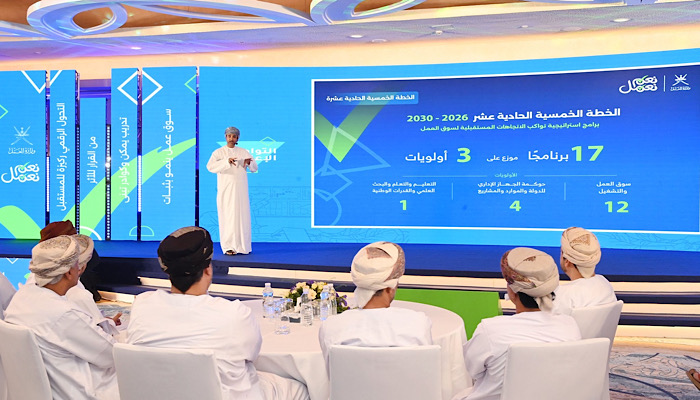
The Eleventh Five-Year Plan (2026–2030) will serve as a roadmap for these efforts, incorporating 17 strategic programs aligned with future labor market trends. A significant portion of these programs – 12 in total – are directly dedicated to labor market and employment initiatives. This demonstrates the high level of importance placed on workforce development within the national agenda.
Developing National Competencies
The Ministry plans to empower national competencies through the expansion of freelance work platforms and by fostering partnerships to increase Omani representation in priority economic sectors. A particular emphasis will be placed on enabling Omani cadres to assume supervisory, specialized, and technical roles within the private sector. In 2026, the Ministry aims to create 60,000 job opportunities, including 10,000 in the government sector, 33,000 in the private sector, and 17,000 through national training and qualification programs.
Targeted Support for Vulnerable Groups
The Ministry is committed to inclusive growth, as evidenced by the employment of 2,000 citizens from low-income families and individuals with disabilities in the private sector during 2025. Initiatives are also underway to allocate appropriate financial grades within the government sector specifically for persons with disabilities. The “Sahem” initiative has already proven successful in absorbing jobseekers, with many securing permanent employment and others awaiting financial grade availability.
The Undersecretary emphasized that the 50,000 jobs targeted in the private sector for 2026 will be a combination of replacement jobs in vital sectors like oil and gas, logistics, and tourism, alongside opportunities created through direct support, wage subsidies, and comprehensive training programs. The Ministry of Labour’s comprehensive strategy and demonstrable achievements position Oman for continued success in building a skilled, competitive, and inclusive workforce.