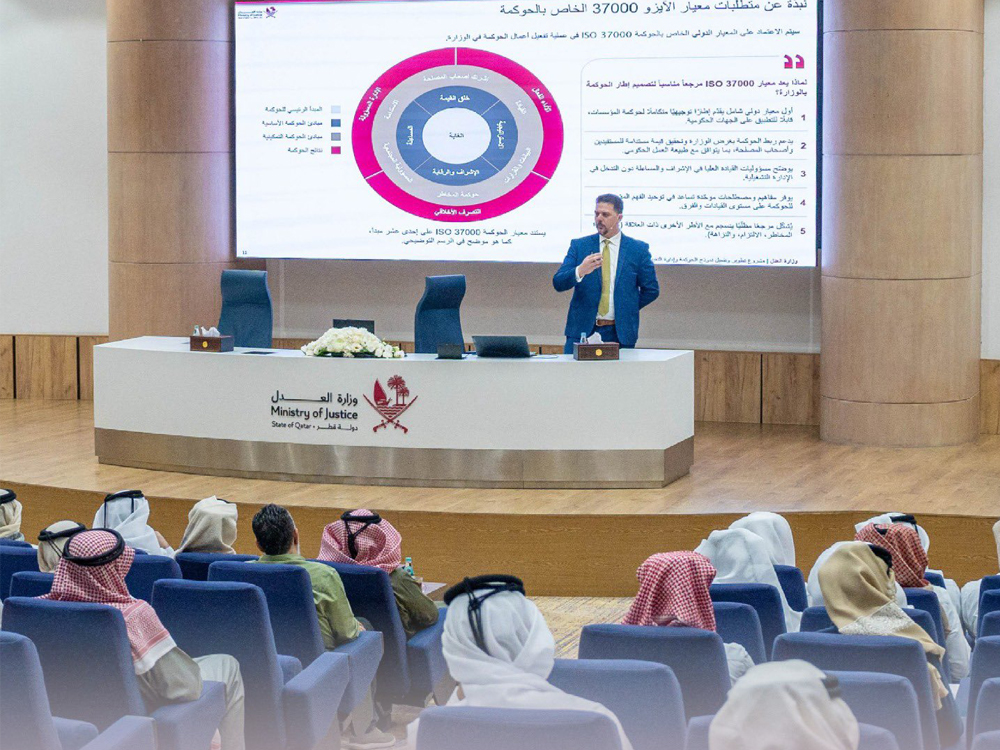

Doha, Qatar – The Ministry of Justice in Qatar recently concluded a workshop focused on governance and change management, signaling a continued commitment to modernizing its internal operations. The workshop, held this month, brought together department heads and staff to strengthen understanding and implementation of effective governance practices. This initiative reflects a broader trend in Qatar towards enhanced transparency and efficiency within government institutions.
The event, organized by the Planning, Quality and Innovation Department, aimed to provide a comprehensive overview of governance principles and their application within the Ministry. Participants explored the interconnectedness of governance, risk management, and compliance (GRC), and examined international standards relevant to public sector administration. The Ministry indicated that this training is part of a larger strategy to achieve its strategic objectives.
Strengthening Governance Frameworks at the Ministry of Justice
The workshop’s core focus was on establishing a unified understanding of what constitutes effective governance. According to the Ministry, this includes clearly defining the roles and responsibilities of all stakeholders and work teams involved in decision-making processes. This clarity is intended to streamline operations and reduce potential conflicts of interest.
Key Areas of Discussion
Several key areas were addressed during the training sessions. These included a detailed examination of established governance frameworks, drawing on best practices from around the world. Additionally, the workshop provided an introduction to the ISO 37000 standard, a globally recognized set of guidelines for operational excellence in governance.
The Ministry emphasized the positive impact of robust governance on institutional performance. Improved efficiency, increased transparency, and enhanced sustainability were all highlighted as potential benefits. These improvements are seen as crucial for maintaining public trust and delivering effective services.
The training also covered the importance of risk management and compliance in supporting good governance. Effective risk assessment and mitigation strategies are essential for protecting the Ministry’s assets and ensuring adherence to legal and ethical standards. This aspect of the workshop aligns with Qatar’s national vision for a diversified and sustainable economy, which requires a strong regulatory environment.
However, implementing new governance frameworks can present challenges. Change management strategies were therefore a significant component of the workshop, focusing on how to effectively communicate and integrate new processes within the existing organizational structure. The Ministry recognizes that successful implementation requires buy-in from all levels of staff.
The initiative comes at a time of increasing global scrutiny of public sector transparency and accountability. Governments worldwide are under pressure to demonstrate responsible stewardship of public funds and to operate with integrity. Qatar’s commitment to strengthening governance practices positions it favorably in this evolving landscape.
Furthermore, the focus on sustainability within the Ministry’s operations suggests a long-term perspective on institutional development. This includes not only environmental sustainability but also financial and operational resilience. The integration of these principles into governance frameworks is expected to contribute to the Ministry’s long-term success.
The Ministry of Justice’s investment in institutional capacity building is also noteworthy. By providing training and development opportunities for its staff, the Ministry is ensuring that it has the skills and knowledge necessary to meet the challenges of a rapidly changing world. This proactive approach to workforce development is crucial for maintaining a competitive and effective public sector.
Looking ahead, the Ministry has not specified a firm deadline for the full implementation of the revised governance frameworks. However, it is expected that further training and workshops will be conducted in the coming months to reinforce the concepts covered in this initial session. Monitoring the Ministry’s progress in adopting the ISO 37000 standard and integrating GRC principles will be key indicators of the initiative’s success.
The long-term effects of these changes on the Ministry’s operational efficiency and public perception remain to be seen. It will be important to assess whether the new governance practices lead to tangible improvements in service delivery and a greater level of public trust.