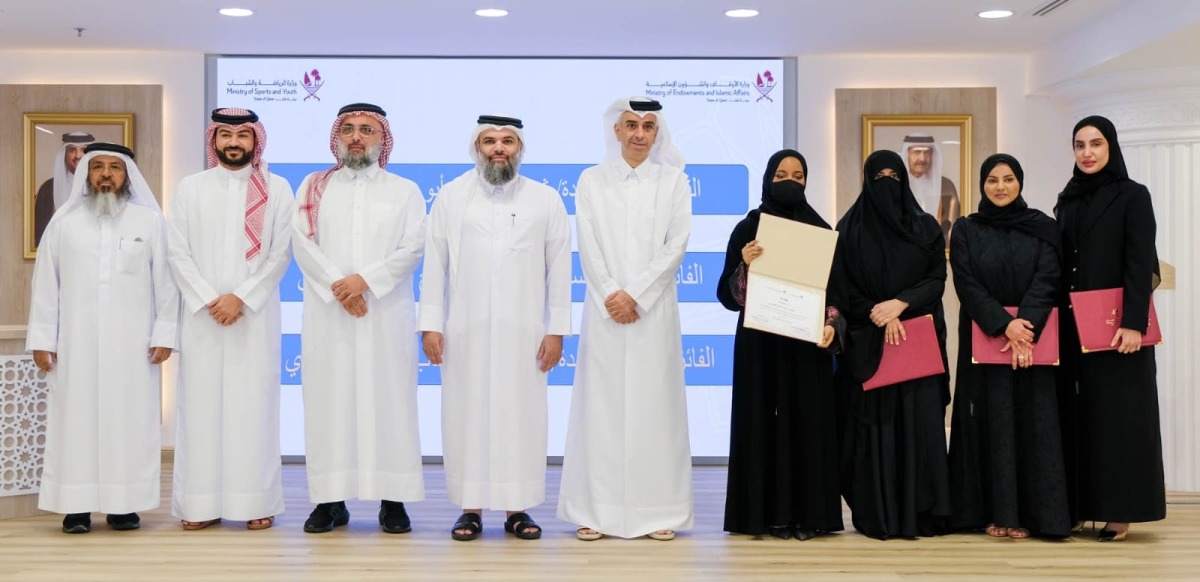

Doha, Qatar – The Ministry of Awqaf and Islamic Affairs, in partnership with the Ministry of Sports and Youth, hosted an awards ceremony recognizing winners of the inaugural “Distinguished Young Researcher Award” yesterday. The research award focused on the increasingly pertinent social issue of delayed marriage and its repercussions on Qatari youth. This initiative is a key component of Qatar’s National Youth Policy, demonstrating a commitment to empowering young people through academic pursuits and addressing critical societal challenges.
The event, held in Doha, honored the top three researchers, as well as the members of the judging panel and those involved in the evaluation process. The Ministry of Awqaf and Islamic Affairs intends this award to foster a generation of informed and engaged citizens contributing to national development.
The Importance of Research into Delayed Marriage in Qatar
The selection of “Delayed Marriage and Its Impact on Youth in Qatari Society” as the inaugural research topic highlights a growing concern within the country. Demographic shifts, economic pressures, and evolving social norms are believed to be contributing factors to rising marriage ages, prompting the need for in-depth analysis. The ministries stated they hope a deeper understanding of these factors will enable the development of targeted solutions.
According to statements made during the ceremony, understanding the reasons behind delayed marriage is crucial for mitigating potential social and economic consequences. This includes examining the effects on family formation, population growth, and overall societal well-being. Additionally, the ministries believe encouraging research in this area will promote a nuanced discussion on cultural values and expectations.
Award Winners and Prizes
The competition attracted numerous submissions from young Qatari researchers. Shamma Khalid Hamad Abu Sattouh Al-Hajri took first place, receiving a prize of QR100,000, which includes funding for the printing and publication of her research. Deema Ali Faraj Mutib Al-Kubaisi secured second place with a QR75,000 award, while Dalma Ali Hijab Mohammed Al-Hajri earned third place and a prize of QR50,000.
Undersecretary of the Ministry of Awqaf and Islamic Affairs, H.E. Dr. Sheikh Khalid bin Mohammed bin Ghanem Al Thani, emphasized that the research award is an investment in developing youth awareness and driving national progress. He characterized the initiative not merely as a competition, but as a platform for shaping young minds and directing their energies towards addressing pressing societal concerns.
Meanwhile, Undersecretary of the Ministry of Sports and Youth, H.E. Eng. Yasser bin Abdullah Al Jamal, connected the award to the implementation plan of Qatar’s National Youth Policy. He stated that scientific research is fundamental to cultivating an informed generation capable of critically analyzing social issues and proposing viable solutions.
Future of the Distinguished Young Researcher Award
The success of the first edition of the research award suggests a strong foundation for its continuation. Government officials present at the ceremony indicated plans to make the award an annual event, focusing on different relevant social issues affecting Qatari society each year. The specific topic for the next iteration of the research award is expected to be announced in the coming months.
The Ministries have not yet released details regarding the timeline for the second edition, including application deadlines or potential shifts in prize amounts. However, prospective researchers are encouraged to follow updates from both the Ministry of Awqaf and Islamic Affairs and the Ministry of Sports and Youth for further information. The continued support of youth-led scientific research will likely remain a key objective of Qatar’s national policies.