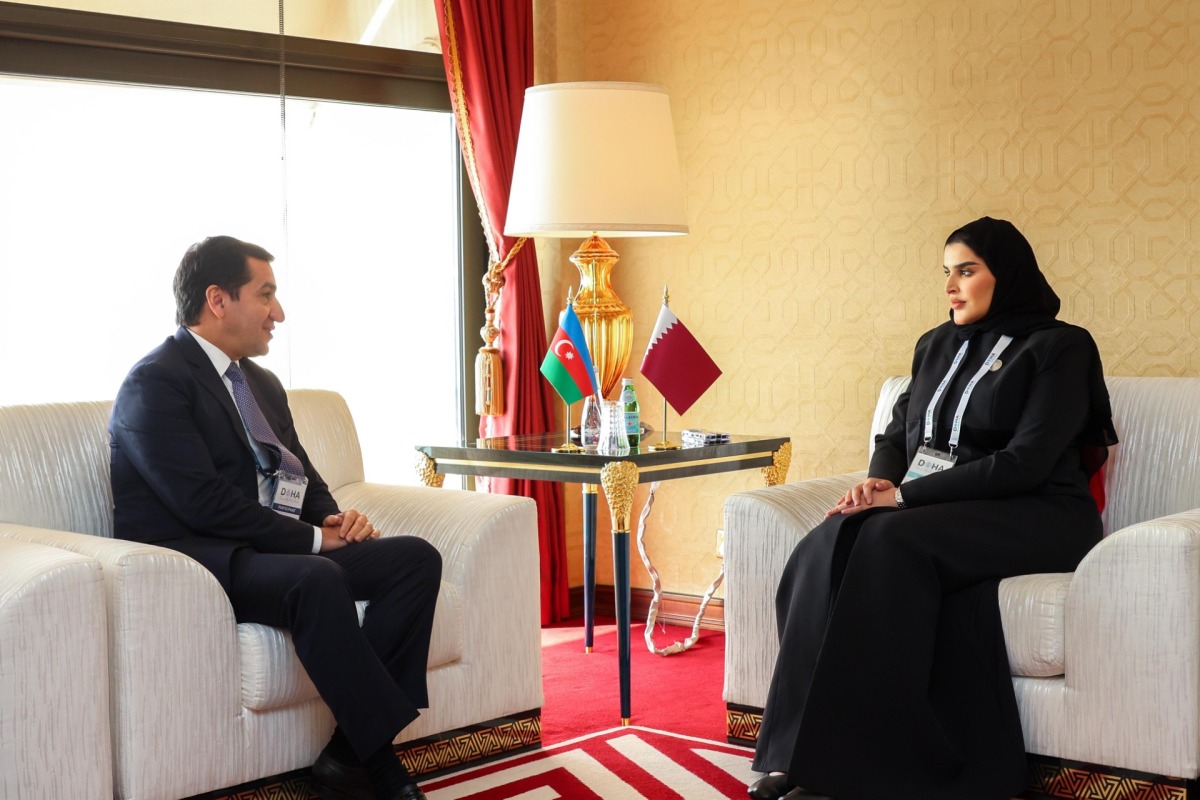

Qatar and Azerbaijan are strengthening bilateral cooperation following a meeting between Qatar’s Minister of State for International Cooperation, Dr. Maryam bint Ali bin Nasser Al Misnad, and Azerbaijan’s Assistant to the President for Foreign Affairs, Hikmet Hajiyev. The discussion, held on the sidelines of the 23rd Doha Forum 2025, focused on expanding ties and addressing issues of mutual concern. This meeting underscores Qatar’s continued diplomatic engagement in the region and its commitment to fostering international partnerships.
The meeting took place yesterday, December 7, 2025, during the annual Doha Forum, a platform for global dialogue on critical issues. Both officials reportedly explored avenues for increased collaboration, though specific details of the agreements discussed were not immediately released. The encounter signals a renewed focus on strengthening ties between the two nations, particularly in areas of economic and political interest.
Enhancing Qatar-Azerbaijan Bilateral Cooperation
The focus on bilateral cooperation comes as both Qatar and Azerbaijan navigate evolving geopolitical landscapes. Qatar, a significant energy producer, is diversifying its economic and political relationships, while Azerbaijan seeks to strengthen its position as a regional energy and transportation hub. This shared interest in diversification likely formed a key part of the discussion.
Areas of Potential Collaboration
While the specifics remain undisclosed, several areas are ripe for increased collaboration. These include:
Energy sector investment is a likely focal point, given both countries’ prominence in energy markets. Azerbaijan has significant natural gas reserves, and Qatar possesses extensive experience in liquefied natural gas (LNG) production and export.
Transportation infrastructure could also be a key area. Azerbaijan’s strategic location along the East-West transport corridor, linking Europe and Asia, presents opportunities for Qatar to invest in and benefit from increased trade flows.
Political coordination on regional security issues is another potential avenue for collaboration. Both nations share concerns regarding regional stability and may seek to align their diplomatic efforts.
However, challenges remain. Geopolitical tensions in the broader region, including ongoing conflicts and competing interests, could complicate efforts to deepen ties. Additionally, differing economic priorities may require careful negotiation to ensure mutually beneficial outcomes.
According to the Ministry of Foreign Affairs, Qatar has consistently emphasized the importance of peaceful resolutions to regional disputes. This stance likely influenced the discussions with the Azerbaijani delegation, particularly concerning the ongoing situation in the South Caucasus. Qatar has previously called for dialogue and adherence to international law in resolving conflicts.
Meanwhile, Azerbaijan has been actively seeking to strengthen its international partnerships following recent developments in the Nagorno-Karabakh region. The country is focused on rebuilding infrastructure and fostering economic growth, creating opportunities for foreign investment and collaboration.
The Doha Forum provides a crucial venue for such discussions, bringing together policymakers, business leaders, and civil society representatives from around the world. The forum’s emphasis on dialogue and cooperation aligns with Qatar’s broader foreign policy objectives. The event also facilitates networking and the exploration of new partnerships, as evidenced by this meeting.
In contrast to some regional relationships, Qatar and Azerbaijan have maintained a generally positive diplomatic relationship, characterized by mutual respect and a shared interest in economic development. This foundation provides a solid basis for further strengthening ties.
Looking ahead, the next step will likely involve follow-up discussions between Qatari and Azerbaijani officials to translate the broad agreements reached at the Doha Forum into concrete projects and initiatives. The timeline for these developments remains uncertain, dependent on ongoing negotiations and internal approvals within both governments. Observers will be watching for announcements regarding specific investment deals or joint ventures in the coming months, as well as any further statements from the Ministry of Foreign Affairs regarding Qatar’s foreign policy and regional diplomacy.