


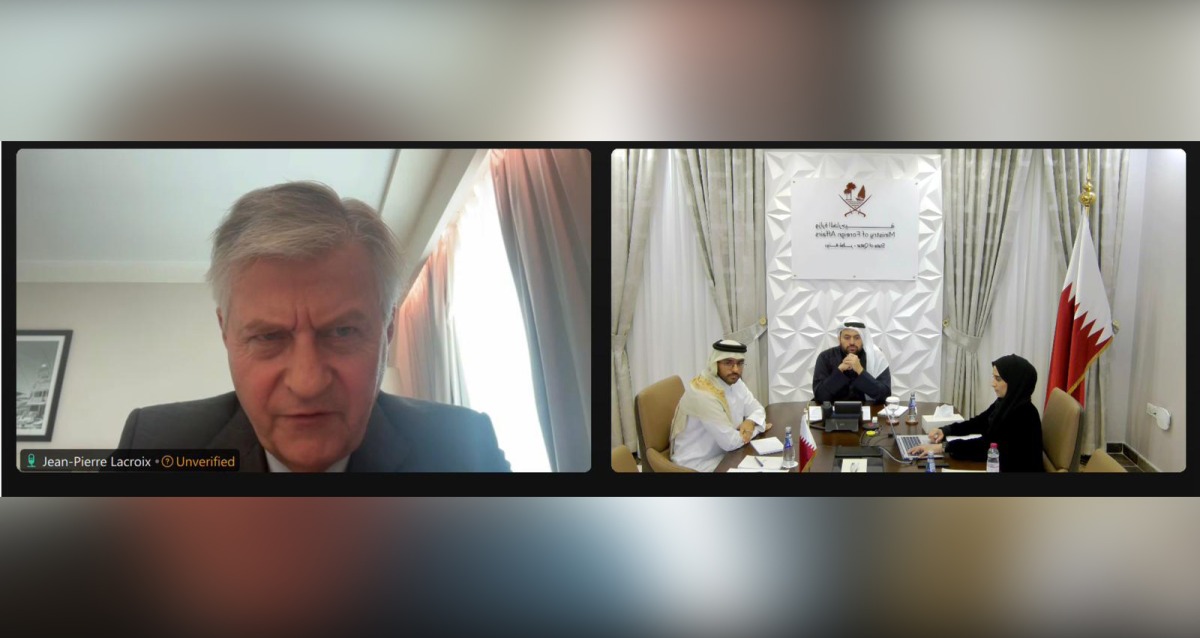

Doha, Qatar – Qatar is playing a key role in ongoing efforts to secure peace in the eastern Democratic Republic of Congo (DRC), as evidenced by a recent virtual meeting between the Minister of State at the Ministry of Foreign Affairs, HE Dr. Mohammed bin Abdulaziz bin Saleh Al Khulaifi, and UN Under-Secretary-General for Peace Operations, HE Jean-Pierre Lacroix. Discussions centered on the fragile ceasefire between the DRC government and the M23 rebel group, and the implementation of oversight mechanisms. The situation in the DRC remains volatile, and Qatar’s involvement is focused on facilitating dialogue and supporting regional stability.
The meeting, held on Thursday, focused specifically on the progress of the ceasefire agreement reached in October, which Qatar helped broker. This agreement established a verification mechanism intended to monitor and ensure compliance from both the Congolese army and the March 23 Movement (M23). The UN official’s praise of Qatar’s diplomatic efforts underscores the international recognition of the country’s mediation role in the complex Congolese conflict.
Qatar’s Mediation in the DRC Conflict
Qatar’s engagement in the DRC peace process stems from its broader foreign policy of proactive diplomacy and conflict resolution. The country has increasingly positioned itself as a mediator in regional disputes, particularly in Africa and the Middle East. This latest initiative highlights Qatar’s commitment to multilateral cooperation with organizations like the United Nations to address international security challenges.
The conflict in eastern DRC is rooted in decades of ethnic tensions, competition for resources, and political instability. Numerous armed groups operate in the region, including the M23, which has been accused of atrocities and destabilizing the area. The fighting has displaced millions of people and created a humanitarian crisis, drawing international concern and calls for a lasting solution.
The Ceasefire and Verification Mechanism
The October ceasefire agreement was a significant, though preliminary, step towards de-escalation. However, maintaining the truce has proven difficult, with reports of sporadic clashes and accusations of violations from both sides. The verification mechanism, overseen by regional and international observers, is crucial for building trust and ensuring accountability.
According to the Ministry of Foreign Affairs, the meeting with the UN official addressed the operational challenges facing the verification mechanism. These challenges reportedly include logistical difficulties in accessing conflict zones and ensuring the impartiality of observers. Qatar is working with its partners to address these issues and strengthen the mechanism’s effectiveness.
The Minister of State reiterated Qatar’s firm belief that dialogue is the only viable path to resolving the conflict. He emphasized the importance of addressing the root causes of the instability, including economic grievances and political marginalization. Qatar’s approach prioritizes inclusive negotiations that involve all relevant stakeholders, including civil society groups and local communities.
Meanwhile, the UN continues to provide peacekeeping support to the DRC, with a mandate to protect civilians and assist the government in stabilizing the eastern region. The UN peacekeeping mission, known as MONUSCO, has faced criticism for its effectiveness, but remains a key player in the security landscape. The coordination between Qatar’s mediation efforts and the UN’s peacekeeping operations is vital for achieving sustained peace.
Several regional players also have interests in the DRC conflict, including Rwanda, Uganda, and Burundi. These neighboring countries have been accused of supporting various armed groups, further complicating the situation. Qatar’s diplomatic efforts are aimed at fostering regional cooperation and preventing external interference in the DRC.
The situation in the DRC is further destabilized by the presence of numerous internally displaced persons. Addressing the humanitarian crisis, which includes providing food, shelter, and medical care, is a pressing concern for the international community. Recent reports indicate that the number of displaced people continues to rise, putting a strain on already limited resources.
Looking ahead, the next critical step is full implementation of the ceasefire agreement and the effective functioning of the verification mechanism. The success of these efforts will depend on the continued commitment of all parties to the conflict, as well as the sustained support of international mediators like Qatar. The UN Security Council is expected to review the situation in the DRC and the mandate of MONUSCO in the coming months, and its decisions will likely shape the future of the peace process. A definitive timeline for a comprehensive political settlement remains uncertain.
Ongoing monitoring of the ceasefire and diplomatic initiatives, particularly those by Qatar, will be crucial in determining whether lasting peace can be achieved in the eastern DRC. The Council on Foreign Relations provides a robust overview of the instability in the region.