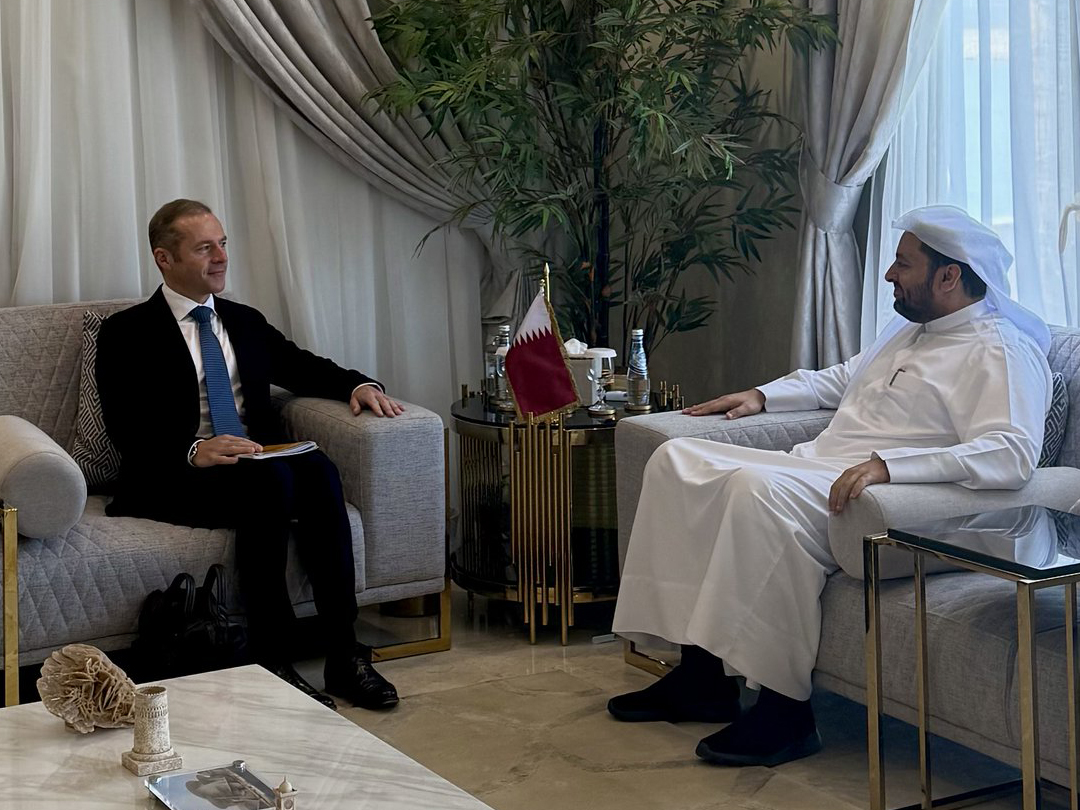

Doha, Qatar – Discussions regarding the fragile ceasefire in Gaza, alongside regional conflicts in Sudan, Libya, and Chad, took center stage during a meeting between Qatari and French officials on Tuesday. Minister of State at the Ministry of Foreign Affairs HE Dr. Mohammed bin Abdulaziz bin Saleh Al Khulaifi met with HE Paul Soler, Special Envoy of the French President, to address these pressing international concerns and explore avenues for collaborative diplomatic efforts. The meeting underscores Qatar’s continued role as a key mediator in regional disputes.
The meeting, held in Doha, focused on the implementation of the recent ceasefire agreement between Israel and Hamas, and the humanitarian situation in the Gaza Strip and occupied Palestinian territories. Both officials also exchanged views on ongoing instability in Sudan, the political landscape of Libya, and the security challenges facing Chad, according to a statement released by the Ministry of Foreign Affairs. This dialogue highlights the shared interests of Qatar and France in promoting stability across the Middle East and Africa.
Qatar and France Collaborate on Regional Security and the Ceasefire
Qatar has been instrumental in brokering negotiations leading to the current ceasefire, working alongside Egypt and the United States. The country has provided significant humanitarian aid to Gaza and continues to advocate for a lasting resolution to the Israeli-Palestinian conflict. France, a permanent member of the UN Security Council, has consistently supported international efforts to de-escalate tensions and facilitate a two-state solution.
Gaza Ceasefire Implementation
The primary focus of the discussion was reportedly the challenges in ensuring the full implementation of the ceasefire. This includes the release of hostages held by Hamas, the delivery of essential aid to Gaza, and preventing a resumption of hostilities. The report indicates that both Qatar and France emphasized the importance of sustained international pressure to uphold the agreement.
Broader Regional Concerns
Beyond Gaza, the meeting addressed the escalating crisis in Sudan, where fighting between the Sudanese army and the paramilitary Rapid Support Forces continues to displace millions. Qatar and France have both expressed concern over the humanitarian consequences of the conflict and called for a peaceful resolution. Additionally, the situation in Libya, marked by political divisions and ongoing instability, was also discussed.
The situation in Chad, which is grappling with political transition and security threats, also featured prominently in the talks. Qatar and France share an interest in supporting Chad’s stability and preventing further regional spillover effects. The discussions likely touched upon the need for continued international assistance to address the root causes of conflict and promote good governance in the region. The Council on Foreign Relations provides further background on these regional dynamics.
However, achieving lasting peace and stability in these regions remains a complex undertaking. The success of the ceasefire in Gaza hinges on the commitment of all parties to adhere to its terms and address the underlying issues fueling the conflict. Similarly, resolving the crises in Sudan, Libya, and Chad requires sustained diplomatic engagement, humanitarian assistance, and a commitment to inclusive political processes.
Meanwhile, Qatar and France have a history of close diplomatic and economic ties. This latest meeting reinforces their commitment to working together to address shared security challenges and promote regional stability. The two countries have collaborated on various initiatives, including counter-terrorism efforts and humanitarian aid programs. The French Ministry for Europe and Foreign Affairs details their foreign policy priorities.
Looking ahead, continued dialogue between Qatar and France, as well as broader international coordination, will be crucial in navigating these complex regional challenges. The immediate focus will be on solidifying the ceasefire in Gaza and ensuring the delivery of much-needed aid to the affected population. The long-term outlook remains uncertain, and the situation will require ongoing monitoring and proactive diplomatic efforts to prevent further escalation and promote lasting peace.
The next steps will likely involve continued Qatari mediation efforts and further discussions with regional and international stakeholders. A key deadline to watch is the expiration of the current ceasefire agreement, and whether it will be extended.