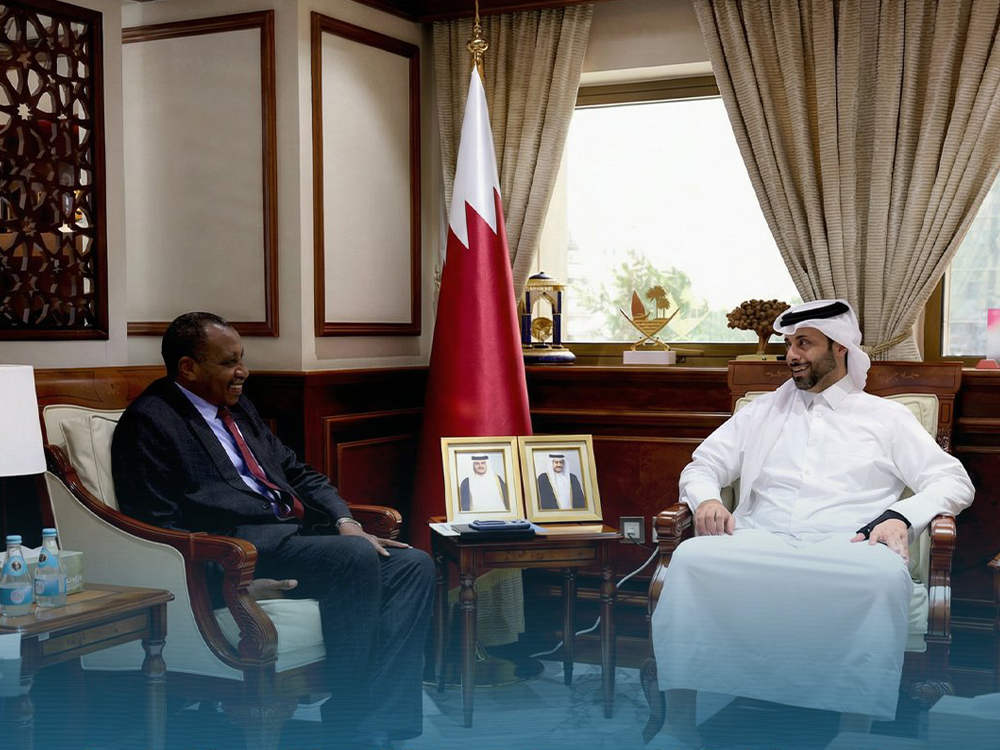

Doha, Qatar – Qatar’s Minister of Municipality, HE Abdullah bin Hamad bin Abdullah Al Attiya, met with Professor Ibrahim Adam Al-Dukhairi, President of the Arab Organization for Agricultural Development, on Thursday. The discussions centered on strengthening food security within Qatar and across the Arab region, exploring potential collaborative projects and knowledge sharing initiatives. This meeting underscores Qatar’s ongoing commitment to diversifying its food sources and bolstering its agricultural capabilities.
The meeting, held in Doha, involved a review of current agricultural practices and challenges facing both Qatar and other Arab nations. Officials aimed to identify areas where joint efforts could yield significant improvements in agricultural output and resilience. The focus extended beyond production to encompass sustainable practices and innovative technologies within the food security sector.
Qatar and the Arab Organization Explore Enhanced Food Security Cooperation
Qatar has been actively pursuing strategies to enhance its food security in recent years, driven by a desire to reduce reliance on imports and build a more self-sufficient system. This initiative gained particular momentum following regional geopolitical events that disrupted supply chains. The country has invested heavily in agricultural technology, including vertical farming and desalination projects, to overcome the limitations of its arid climate.
The Arab Organization for Agricultural Development, headquartered in Sudan, works to coordinate agricultural efforts among its member states. It provides technical assistance, conducts research, and facilitates the exchange of information related to agricultural development and food security. According to the organization’s website, its priorities include improving crop yields, managing water resources, and promoting sustainable agricultural practices.
Areas of Potential Collaboration
The meeting between Minister Al Attiya and President Al-Dukhairi reportedly covered several key areas for potential collaboration. These included:
Joint research initiatives focused on drought-resistant crops and efficient irrigation techniques. This is particularly relevant given the shared climate challenges faced by Qatar and many other Arab countries.
Capacity building programs to train Qatari agricultural professionals in the latest technologies and best practices. The ministry indicated a desire to leverage the expertise of the Arab Organization in this regard.
Development of regional agricultural projects aimed at increasing food production and reducing dependence on external sources. Such projects could involve shared investments and coordinated efforts to address common challenges.
Additionally, discussions touched upon the importance of data sharing and early warning systems to mitigate the impact of climate change and other potential disruptions to the food supply. Improved monitoring and forecasting capabilities are seen as crucial for proactive planning and response.
Qatar’s National Food Security Strategy, launched in 2018, outlines a comprehensive plan to achieve greater self-sufficiency in food production. The strategy focuses on four key pillars: sufficient production, safe and healthy food, optimal resource utilization, and resilient systems. This meeting with the Arab Organization aligns with these broader national goals.
Meanwhile, the global context of increasing food prices and supply chain vulnerabilities adds urgency to these efforts. The COVID-19 pandemic and the ongoing conflict in Ukraine have highlighted the fragility of international food systems, prompting countries worldwide to reassess their agricultural policies.
In contrast to traditional farming methods, Qatar is increasingly embracing innovative approaches like hydroponics and aquaculture. These technologies allow for food production in controlled environments, minimizing water usage and maximizing yields. The country is also exploring the potential of utilizing treated wastewater for irrigation, further enhancing its water resource management.
The Ministry of Municipality has not yet released specific details regarding the outcomes of the meeting or the timeline for implementing any collaborative projects. However, officials expressed optimism about the prospects for strengthened cooperation with the Arab Organization for Agricultural Development. Further announcements are expected in the coming months as concrete plans are developed.
Looking ahead, the success of these collaborative efforts will depend on securing adequate funding, fostering effective communication between stakeholders, and adapting to evolving regional and global circumstances. The ongoing monitoring of food prices and supply chain dynamics will be essential for informing future strategies and ensuring the long-term sustainability of Qatar’s food security initiatives.