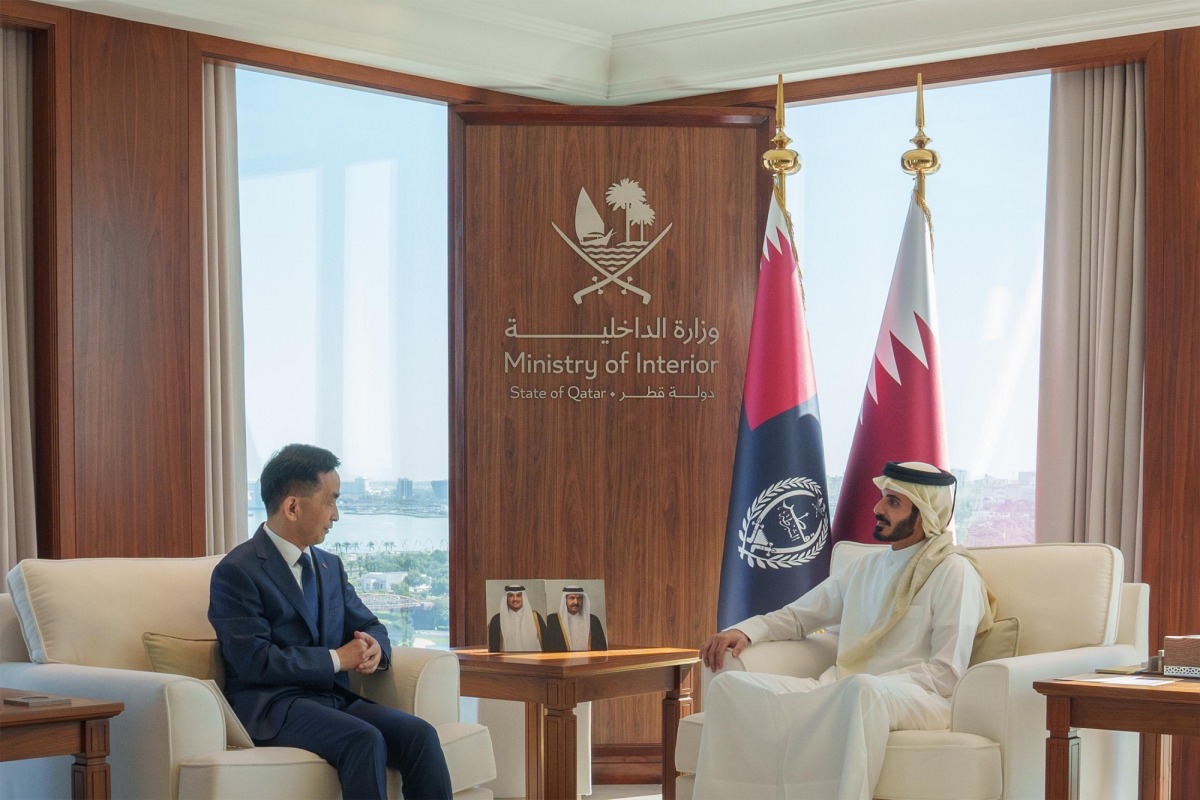

Doha, Qatar – Qatar’s Minister of Interior and Commander of the Internal Security Force “Lekhwiya,” Sheikh Khalifa bin Hamad bin Khalifa Al Thani, met with Chinese Ambassador to Qatar, Cao Xiaolin, this week to discuss strengthening Qatar-China relations, with a specific focus on security cooperation. The meeting, held in Doha, signals continued efforts to bolster ties between the two nations as they navigate evolving regional and global challenges. Discussions centered on areas of mutual interest and a review of existing collaborative efforts.
The meeting took place as both countries are increasingly engaged in multifaceted partnerships. According to the official Qatar News Agency, the discussion included ways to expand their long-standing friendship. While specific details of the conversations were not disclosed, it demonstrates the commitment of both Qatar and China to a stable and cooperative relationship.
Boosting Qatar-China Relations Through Security Collaboration
The emphasis on security cooperation during the meeting highlights its growing importance within the broader Qatar-China relations. Both nations face unique security concerns—Qatar related to regional geopolitical dynamics, and China regarding counter-terrorism and cybersecurity—and recognize the value of shared intelligence and collaborative training. This builds upon a prior history of security collaboration, but the renewed focus is noteworthy.
Recent years have seen increasing diplomatic and economic engagement between Doha and Beijing. Qatar is a key energy supplier to China, and Chinese investment in Qatar’s infrastructure projects has steadily risen, particularly surrounding the 2022 FIFA World Cup. However, security partnerships have often been less publicly discussed, making this meeting a notable indication of priority areas.
Areas of Potential Cooperation
The security cooperation discussed likely encompasses several key areas. These could include counter-terrorism initiatives, as both nations have expressed concern over extremist groups operating in the region. Information sharing relating to transnational crime, such as financial fraud and drug trafficking, is another potential focus.
Additionally, the discussion may have touched on cybersecurity threats. With increasing digitization across all sectors, protecting critical infrastructure from cyberattacks has become a global imperative. Qatar and China could explore joint strategies for enhancing their cybersecurity defenses. https://www.brookings.edu/regions/middle-east/ (target=”_blank” rel=”nofollow noopener”) provides further context on Qatar’s foreign relations.
Meanwhile, the partnership extends beyond direct security-related issues. Qatar’s growing role as a mediator in regional conflicts aligns with China’s stated preference for peaceful resolutions and diplomatic engagement. The exchange of expertise in areas like border control and crisis management could further contribute to regional stability.
In contrast to some geopolitical alignments in the region, Qatar maintains strong relationships with both Western powers and China. This balancing act allows Qatar to benefit from diverse partnerships and exert its own influence on the international stage. This approach is often described as pragmatic diplomacy.
The meeting between Sheikh Khalifa and Ambassador Cao also occurs within the context of China’s broader engagement in the Middle East. Beijing has been actively seeking to strengthen its economic and political ties with countries in the region, presenting itself as a reliable partner with long-term interests. The Gulf states, including Qatar, represent crucial markets and sources of energy for China’s continued economic growth. https://www.cfr.org/china/ (target=”_blank” rel=”nofollow noopener”) analyzes China’s foreign policy.
According to observers, deepening ties with China offer Qatar a strategic diversification of partnerships, reducing reliance on any single actor. The renewed discussions on security cooperation represent a logical extension of this broader strategy, addressing vulnerabilities and strengthening Qatar’s overall security posture. The strengthening of Qatar-China relations will continue to be an important geopolitical story.
Looking ahead, further announcements detailing specific agreements or joint initiatives resulting from this meeting are anticipated. The ministry has not provided a timeline for these disclosures. It remains to be seen how these collaborative efforts will translate into tangible outcomes and what additional steps will be taken to enhance Qatar-China relations in the coming months. Monitoring future diplomatic engagements and investment flows will be crucial for understanding the evolving dynamics of this partnership. The ongoing development of the Al Khor Community reflects broader economic ties, with Chinese firms involved in construction and infrastructure development. https://www.qatarliving.com/forum-topic/21763076(target=”_blank” rel=”nofollow noopener”)