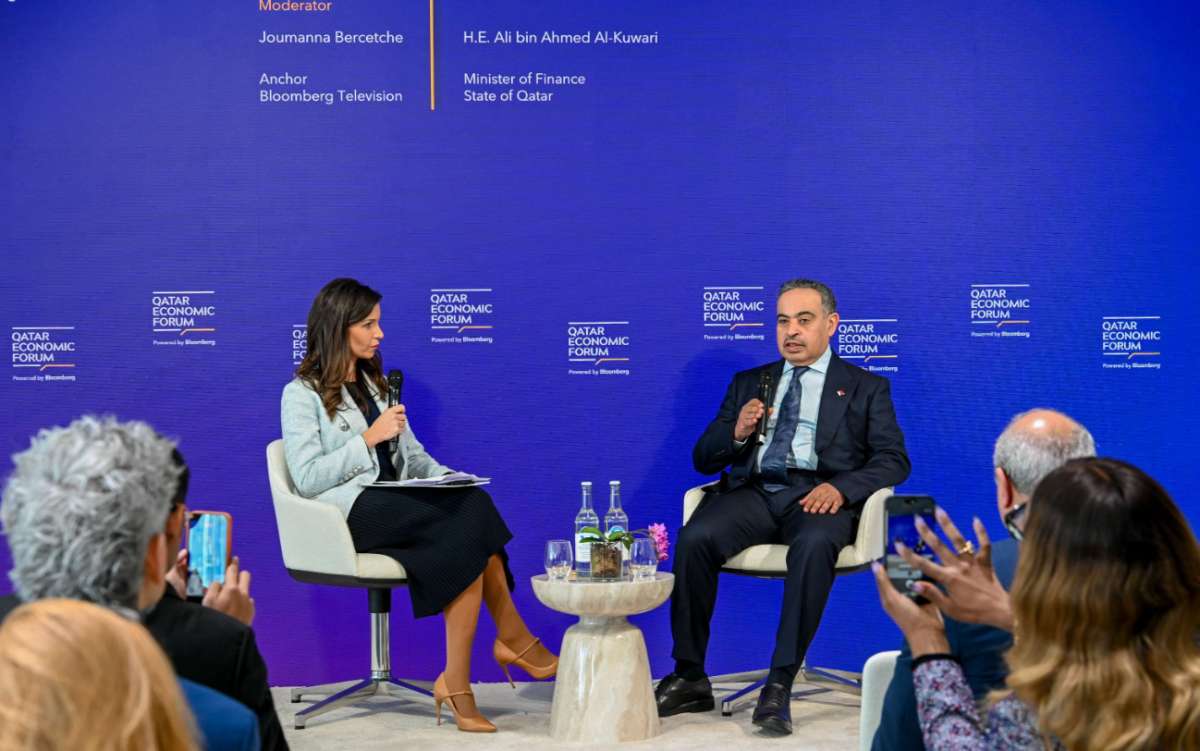

Qatar’s Minister of Finance, HE Ali bin Ahmed Al Kuwari, participated in a key discussion at the 2026 World Economic Forum (WEF) in Davos, Switzerland, focusing on the global economic landscape and its impact on the Qatari economy. The session, hosted by Bloomberg under the title “The Global Rebalance: Capital, Power, and the Middle East,” addressed topics ranging from international market conditions to Qatar’s ongoing economic diversification efforts. This engagement underscores Qatar’s commitment to international economic dialogue and its preparations for the Qatar Economic Forum in May.
The discussion took place on the sidelines of the annual WEF meeting, which brings together global leaders from business, government, and academia. Al Kuwari’s participation highlights Qatar’s proactive role in shaping conversations around global economic trends and its own strategic development. The Bloomberg session provided a platform to explore challenges and opportunities facing the region and the world.
Qatar’s Economic Diversification and Global Market Outlook
A central theme of the discussion was Qatar’s progress in diversifying its economy away from a reliance on hydrocarbons. According to the Minister, the nation is approximately one-third of the way through its Third National Development Strategy, which aims to achieve significant diversification by 2030. This strategy prioritizes flexible fiscal policies and investment in sectors with high growth potential.
The conversation also covered current borrowing conditions in global financial markets. Al Kuwari discussed how these conditions might influence Qatar’s plans for future debt issuance, a crucial aspect of funding national projects and maintaining fiscal stability. The ministry indicated a careful approach to debt management, considering prevailing interest rates and market volatility.
Focus on Emerging Sectors
Qatar is actively strengthening key non-energy sectors, particularly tourism and logistics, as part of its diversification strategy. Investment in infrastructure, such as Hamad International Airport and new hotels, is intended to attract more visitors and establish Qatar as a regional logistics hub. These efforts are designed to create new revenue streams and employment opportunities.
Additionally, the discussion highlighted Qatar’s growing interest in and competitive advantages within the data center industry. The government is actively supporting the development of this sector, recognizing its potential to contribute to sustainable economic growth and position Qatar as a leader in digital infrastructure. This aligns with broader regional trends toward increased digital adoption and data sovereignty.
Artificial Intelligence and Future Growth
The role of artificial intelligence (AI) in Qatar’s future economic development was another key topic. Al Kuwari emphasized the importance of investing in advanced technologies, including AI, to support sustainable growth and enhance the nation’s competitiveness. The government is exploring ways to integrate AI into various sectors, from healthcare to finance, to improve efficiency and innovation.
However, the rapid development of AI also presents challenges, including the need for workforce retraining and the ethical considerations surrounding its deployment. Qatar is reportedly addressing these issues through educational initiatives and the development of regulatory frameworks. The country is also looking at ways to attract foreign investment in the AI sector.
The Bloomberg partnership with Qatar, which supports the Qatar Economic Forum, is intended to foster ongoing dialogue and collaboration on these critical economic issues. This collaboration aims to build momentum leading up to the forum in May, providing a platform for further discussion and potential partnerships. The Qatar Economic Forum is expected to draw significant international attention to the country’s economic reforms and investment opportunities.
Looking ahead, the success of Qatar’s economic diversification will depend on its ability to navigate global economic uncertainties and effectively implement its national development strategies. Monitoring the progress of the Third National Development Strategy and Qatar’s debt issuance plans will be crucial indicators of its economic trajectory. The impact of AI on the Qatari economy, and the country’s ability to capitalize on its data center potential, also remain key areas to watch in the coming years. Further details and outcomes from the Qatar Economic Forum in May are anticipated to provide more clarity on these evolving trends and the nation’s future economic direction.
Bloomberg is a key partner in these discussions. The World Economic Forum continues to be a vital platform for global economic cooperation. Qatar’s Ministry of Foreign Affairs provides further information on the nation’s economic policies.