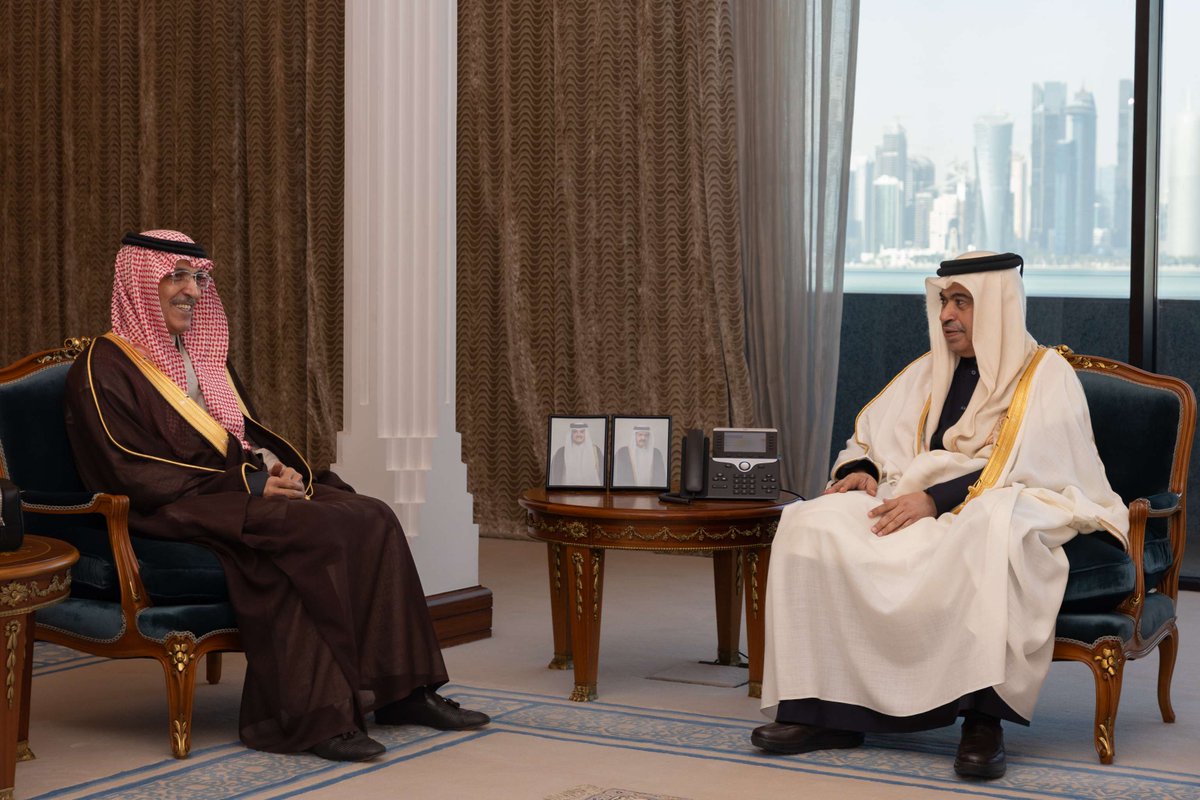

Doha, Qatar – Qatar and Saudi Arabia are strengthening their economic ties following a meeting between Qatar’s Minister of Finance, HE Ali bin Ahmed Al Kuwari, and Saudi Arabia’s Minister of Finance, HE Mohammed bin Abdullah Al Jadaan, in Doha. Discussions centered on bolstering bilateral relations and expanding cooperation across key sectors including investment and trade. The meeting underscores the ongoing efforts to deepen collaboration between the two Gulf nations amid a period of regional economic diversification.
The visit by the Saudi Finance Minister, which occurred today, signals a continued commitment to resolving past disputes and fostering a more unified economic front. Both ministers addressed shared interests and reviewed recent economic developments impacting the region. This dialogue is particularly significant given the evolving global economic landscape and the shared goals of Qatar and Saudi Arabia within the Gulf Cooperation Council (GCC).
Strengthening Qatar-Saudi Arabia Economic Cooperation
The primary focus of the meeting was to identify areas for increased bilateral relations in the economic sphere. According to a statement released by the Qatari Ministry of Finance, the ministers explored opportunities to enhance joint investments and streamline commercial exchanges. This includes potential projects in infrastructure, energy, and technology, sectors vital to both nations’ long-term economic strategies.
Investment Opportunities
Qatar’s sovereign wealth fund, the Qatar Investment Authority (QIA), has been increasingly active in international investments, including within the GCC. Saudi Arabia, similarly, is pursuing ambitious economic reforms under its Vision 2030 plan, creating a demand for foreign capital and expertise. The ministers likely discussed aligning these investment strategies for mutual benefit.
Trade Facilitation
Recent years have seen efforts to remove barriers to trade between Qatar and Saudi Arabia, following a period of strained relations. The ministers’ discussion likely included reviewing the progress of these initiatives and identifying further steps to facilitate smoother cross-border commerce. This could involve simplifying customs procedures and harmonizing regulations.
Additionally, the meeting addressed broader regional economic issues. The ministers reportedly exchanged views on global energy markets, the impact of inflation, and strategies for sustainable economic growth. These discussions are crucial as both countries navigate a complex international economic environment.
The relationship between Qatar and Saudi Arabia has undergone significant shifts in recent years. A diplomatic dispute that began in 2017 saw Saudi Arabia, along with other nations, impose a blockade on Qatar. However, relations were restored in 2021, paving the way for renewed cooperation. This restoration has been a key factor in the current push for stronger economic ties.
The move towards closer economic alignment also reflects the broader trend of intra-GCC cooperation. The GCC is seeking to strengthen its economic integration to enhance its collective bargaining power and promote regional stability. Increased trade relations and investment flows between member states are seen as essential components of this strategy.
Furthermore, the discussions likely touched upon the potential for collaboration in diversifying their economies away from reliance on hydrocarbons. Both Qatar and Saudi Arabia are investing heavily in non-oil sectors, such as tourism, finance, and manufacturing, and exploring synergies in these areas could accelerate their diversification efforts. This diversification is a key element of their respective national visions and a response to the global energy transition.
The ministers’ meeting also comes at a time when both countries are actively seeking to attract foreign investment. Qatar is preparing to host the Expo 2023 Doha, while Saudi Arabia is investing heavily in mega-projects like NEOM. Strengthening economic partnerships can enhance their appeal to international investors.
Looking ahead, the ministries are expected to form joint working groups to delve deeper into specific areas of cooperation identified during the meeting. A timeline for the implementation of these initiatives has not been publicly announced, and the success of these efforts will depend on continued political will and effective coordination. Observers will be watching for concrete outcomes in the coming months, particularly regarding new investment projects and trade agreements. The development of a more integrated financial infrastructure between the two nations is also a key area to monitor, as is the impact of these developments on broader regional financial stability.