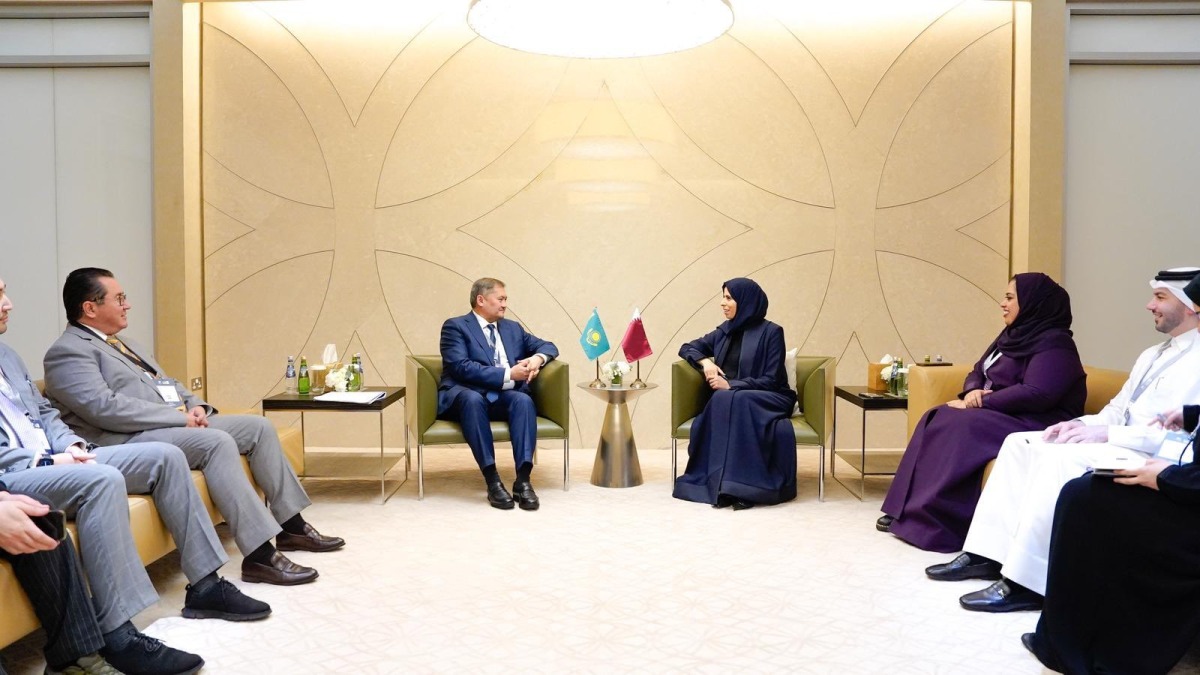

Doha, Qatar – Qatar’s Minister of Education and Higher Education, HE Lolwah bint Rashid bin Mohammed Al Khater, engaged in bilateral discussions with education ministers from Kazakhstan, Somalia, and Nigeria on Monday. The meetings, held on the sidelines of the World Innovation Summit for education (WISE) in Doha, focused on strengthening collaboration and exploring advancements in learning strategies. These talks signal a growing international focus on educational development and the importance of shared expertise.
HE Al Khater met with Kazakhstan’s Minister of Science and Higher Education, HE Sayasat Nurbek, Somalia’s Minister of Education, Culture, and Higher Education, HE Farah Sheikh Abdulkadir, and Nigeria’s Minister of Education, HE Dr. Tunji Alausa. Discussions centered on partnerships in education, cultural exchange, and higher learning, according to a statement released by the Qatari Ministry of Education and Higher Education. The broader aim is to identify and implement solutions addressing common challenges within their respective educational systems.
Strengthening International Collaboration in Education
The significance of these meetings lies in the increasing recognition of education as a cornerstone of national and global progress. Qatar, through WISE and these direct ministerial dialogues, is positioning itself as a key facilitator in international educational initiatives. This approach underscores the belief that collective efforts can yield more effective and sustainable improvements in learning outcomes worldwide.
A prominent theme throughout the discussions was the integration of artificial intelligence in education. Ministers explored how AI technologies can be leveraged to personalize learning experiences, enhance teaching methodologies, and broaden access to educational resources. The potential for AI-driven tools to address skill gaps and improve educational efficiency was a key talking point.
Focus on Modernizing Learning Approaches
The meetings aren’t solely focused on technology; ministers also discussed how best to leverage modern applications to support innovation within curricula. This includes exploring new pedagogical techniques that foster critical thinking, problem-solving skills, and creativity among students. The officials acknowledged the need for continuous curriculum development and adaptation to meet the rapidly evolving demands of the 21st-century workforce.
However, the implementation of such technologies and methodologies often faces hurdles such as infrastructure limitations and teacher training requirements. The discussions presumably covered strategies to overcome these obstacles, potentially through collaborative funding initiatives and knowledge transfer programs.
Additionally, the meetings explored opportunities for student and faculty exchange programs. Such programs can facilitate cross-cultural understanding and allow educators to learn from diverse educational systems. These exchanges could foster a more globally interconnected and collaborative educational landscape. The potential for joint research projects in areas of mutual interest was also considered.
Meanwhile, the incorporation of cultural aspects into educational frameworks arose as another critical area. Recognizing the importance of preserving and promoting cultural heritage, the ministers discussed ways to integrate local cultures into the curriculum to enhance student engagement and a sense of national identity. This is particularly relevant for countries like Somalia and Nigeria with rich and diverse cultural traditions.
In contrast to historical, often siloed, approaches to national education policy, this wave of diplomatic engagement highlights a growing trend toward international partnerships. These partnerships offer access to best practices, resources, and expertise that may not be readily available within individual countries. The rise of digital learning platforms and the increasing mobility of students and educators have further fueled this collaborative spirit.
The Ministry of Education and Higher Education has not yet announced specific outcomes or agreements resulting from these meetings. Future developments will likely involve the formulation of joint working groups to explore specific areas of cooperation and the development of concrete action plans. The success of these initiatives will depend on sustained commitment from all participating nations and a clear articulation of shared goals and objectives. WISE continues through November 7th, and further announcements regarding international partnerships are expected in the coming weeks.