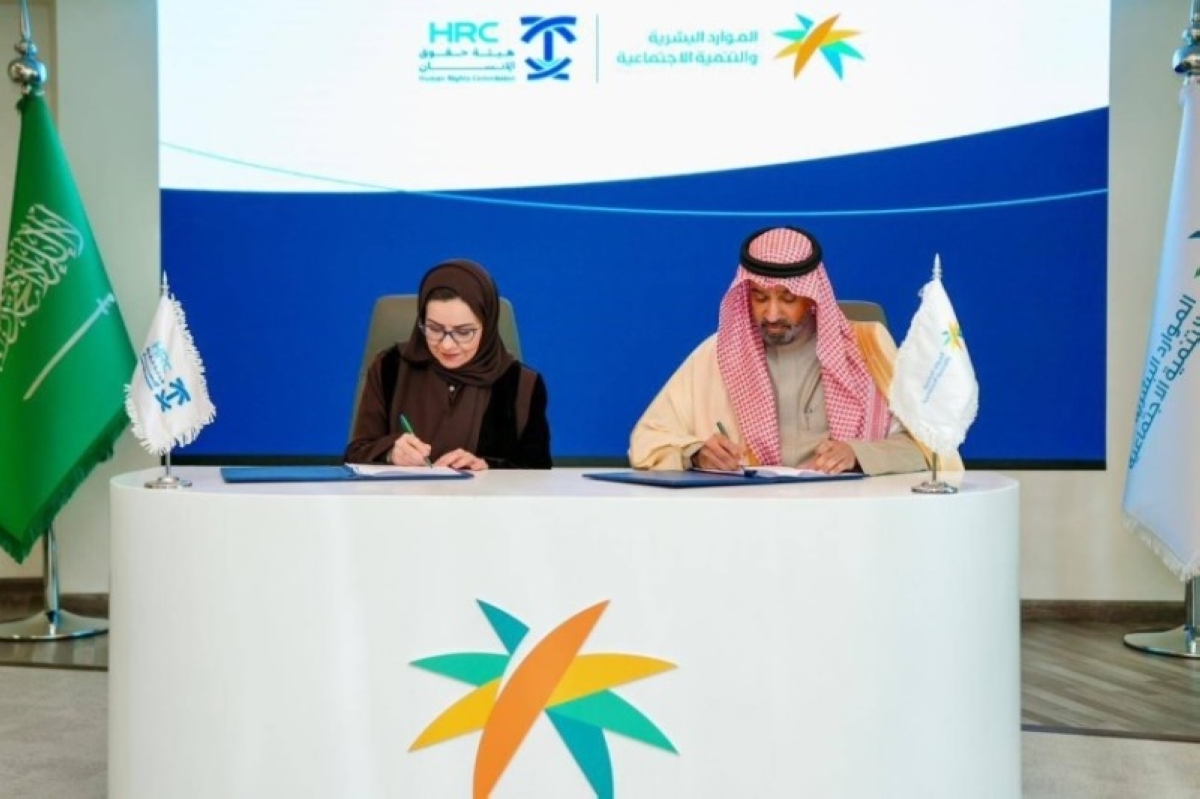

RIYADH — The Saudi Arabian Ministry of Human Resources and Social Development (MHRSD) and the Human Rights Commission (HRC) formalized a partnership on Sunday with the signing of a memorandum of understanding (MoU) in Riyadh. This collaboration aims to bolster human rights within the Kingdom’s labor market, focusing on fair treatment, a secure work environment, and adherence to both national and international standards. The agreement signifies a renewed commitment to social progress under Saudi Vision 2030.
Minister of Human Resources and Social Development Ahmed Al-Rajhi and HRC President Hala Al-Tuwaijri executed the MoU, which details a framework for cooperative efforts. The initiative intends to improve oversight and enforcement of worker protections across all sectors, affecting both Saudi nationals and the substantial expatriate workforce. This development comes as Saudi Arabia continues to enact sweeping economic and social reforms.
Strengthening Human Rights in the Saudi Workplace
The core objective of the MoU is to integrate human rights principles more effectively into the Kingdom’s labor market regulations and practices. This includes reinforcing existing laws related to wages, working conditions, and freedom of association, while also addressing emerging challenges related to worker welfare. The MHRSD anticipates that the collaboration will lead to a more transparent and equitable system for all participants.
According to a statement released by the ministry, the agreement outlines several key areas of cooperation. These include joint training programs for MHRSD inspectors and HRC staff to enhance their understanding of human rights standards, as well as collaborative research to identify vulnerabilities within the workforce. The initiative also is expected to improve mechanisms for reporting and investigating labor disputes.
Alignment with Vision 2030
Saudi Vision 2030 represents a broad strategic framework for diversifying the Saudi economy and improving the quality of life for its citizens. Labor market reforms are a crucial component of this vision. A key goal is to increase the participation of Saudi nationals in the workforce, and fostering a rights-respecting environment is deemed essential to attracting and retaining talent.
The initiative extends beyond merely compliance with regulations. It aims to create a culture of respect for human rights within the private sector, encouraging businesses to adopt responsible employment practices. This approach includes promoting ethical recruitment, preventing forced labor, and ensuring access to grievance mechanisms for workers.
Focus on Vulnerable Workers
The MoU specifically addresses the need to protect vulnerable worker groups, including domestic workers and those employed in low-skilled occupations. These segments of the workforce are often at higher risk of exploitation and abuse. The HRC and MHRSD intend to develop targeted interventions to address these risks.
These interventions may involve raising awareness about workers’ rights among employers and employees, strengthening inspection regimes in sectors with high concentrations of vulnerable workers, and providing legal assistance to those who have experienced violations. The plan also aims to simplify processes for reporting workplace violations.
However, implementation challenges remain. Saudi Arabia has previously faced criticism from international organizations regarding its labor laws and enforcement practices. Concerns surrounding restrictions on collective bargaining and the *kafala* system (a sponsorship system often used for migrant workers) have been raised in the past.
In contrast to previous approaches, the Kingdom is implementing new programs and policies to address such concerns. Recent legislative changes have already started to weaken elements of the *kafala* system, giving workers greater mobility and autonomy. The HRC and MHRSD partnership is built on these progressive moves.
Meanwhile, the Kingdom’s economic diversification plans are creating new employment opportunities, placing further emphasis on worker training and skills development. The ministry is actively sponsoring programs aimed at improving the competencies of the Saudi workforce. These efforts are expected to reduce reliance on foreign labor in some sectors.
The agreement’s success also depends on effective coordination between the MHRSD, the HRC, and other relevant government agencies. This includes collaboration with the Ministry of Justice and the Public Prosecution to ensure that labor violations are prosecuted swiftly and fairly. Clear communication and data sharing will be vital.
The MHRSD and HRC will jointly establish a committee to oversee the implementation of the MoU. This committee will be responsible for developing action plans, monitoring progress, and addressing any challenges that arise. Official timelines for initial implementation steps were not disclosed, but the ministry indicated a swift commencement of joint activities is anticipated.
Looking ahead, the impact of this collaboration will be evaluated through regular reporting and analysis of key indicators, such as the number of labor disputes resolved, the rate of compliance with labor laws, and the overall level of worker satisfaction. The committee’s findings will inform future policy adjustments. It remains to be seen how quickly and comprehensively these changes will be integrated into the Saudi workplace though continued monitoring of related legislation and official statements will provide further insight.
The next steps involve detailed action planning and establishing the joint committee. A full assessment of existing labor market data and a review of current enforcement mechanisms are expected within the next quarter. Watch for additional announcements from both the MHRSD and the HRC regarding specific initiatives and timelines in the coming weeks.