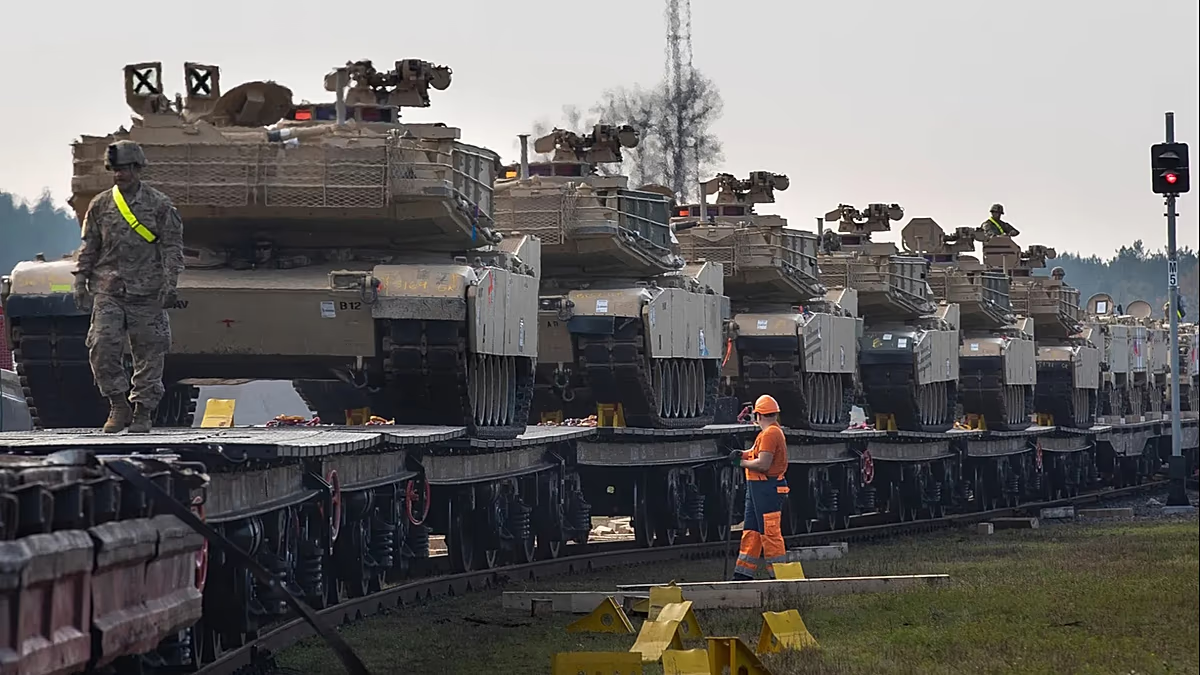

The European Union is moving to dramatically improve military mobility across its member states with a new “military Schengen” proposal. Announced on November 19, 2025, the plan aims to streamline the process of transporting troops and equipment, reducing transit times from months to just days, or even hours in emergency situations. This initiative reflects growing concerns about security on the continent, particularly in light of the ongoing conflict in Ukraine and assessments of potential Russian aggression.
European Commissioner for Sustainable Transport and Tourism, Apostolos Tzitzikostas, stated that current logistical hurdles are hindering a cohesive defense strategy. He emphasized that the ability to rapidly move forces is “very clear” and essential for defending the continent. The Commission’s proposal comes amid a broader effort to bolster the EU’s defense capabilities before the end of the decade.
Accelerating Military Mobility: A New Framework
Central to the plan is a significant reduction in the time required for permitting cross-border military movements. Currently, the process varies considerably among the 27 EU member states, often taking weeks to receive necessary approvals. The new regulations will cap peacetime transit approvals at three days and reduce them to just six hours during emergencies, with presumptions of authorization in crisis scenarios.
Additionally, the package introduces a new European military mobility enhanced response system, modeled after the EU’s Civil Protection Mechanism. This will create a “military mobility solidarity pool,” allowing nations to share resources like specialized railcars and air transport. A “military mobility catalogue” will detail civilian assets that can be repurposed for military logistics.
Key Infrastructure Upgrades
Coordinating these efforts will be a new military mobility transport group, consisting of national coordinators from each member state. The group will prioritize funding for 500 identified infrastructure projects focused on upgrading key transportation corridors.
These improvements will target roads, railway lines, bridges, ports, and airports, ensuring they can handle the weight and dimensions of modern military equipment. Tzitzikostas highlighted the need for “short-term, quick win investments” to rapidly increase capacity, noting, “Solid logistic networks make the difference between winning and losing wars.”
The Commission anticipates the entire effort will require roughly €100 billion, though current budgetary commitments fall far short. While the EU has allocated €1.7 billion for military mobility through 2027, and proposes almost €18 billion for the 2028-2034 budget, Tzitzikostas acknowledged this is still considerably less than the estimated need. However, he indicated that additional funding sources are available.
Member states should be able to leverage cohesion funds, designed to reduce regional inequalities, and the SAFE defense loan scheme. This aligns with broader European defense spending goals and allows nations, many of which are also NATO members, to contribute toward the alliance’s increased spending targets. For more information on European defense policies, see the European Defence Agency website.
However, Tzitzikostas emphasized that funding is only part of the equation. “The package is also about the framework,” he stated. He urged accelerated action given the current “geopolitical situation,” stressing the need to “move faster, work harder and bring the results much earlier than what one would expect”.
The plan addresses not only the physical movement of troops and equipment but also the bureaucratic processes that contribute to delays. Enhanced logistics, coupled with streamlined approvals, aims to create a more responsive and integrated European defense posture. Streamlining these processes is viewed as critical for effective military mobility within the alliance as well.
Looking ahead, the success of this initiative hinges on securing sufficient funding and achieving genuine harmonization of regulations across member states. The coming months will be crucial as the European Commission works with national governments to implement these changes and assess their impact on the continent’s defense readiness. Industry stakeholders should monitor developments closely for potential opportunities in infrastructure and logistical support.