
The 2026 Milan-Cortina Winter Olympics opened Friday evening with a ceremony celebrating Italian culture and emphasizing harmony, but the event was immediately shadowed by political protests and displays of dissent. Boos were directed at both the Israeli Olympic team and U.S. Vice President JD Vance during the opening ceremony held at the San Siro stadium. The Games, set to run through February 16th, are already facing scrutiny over their environmental impact and economic sustainability.
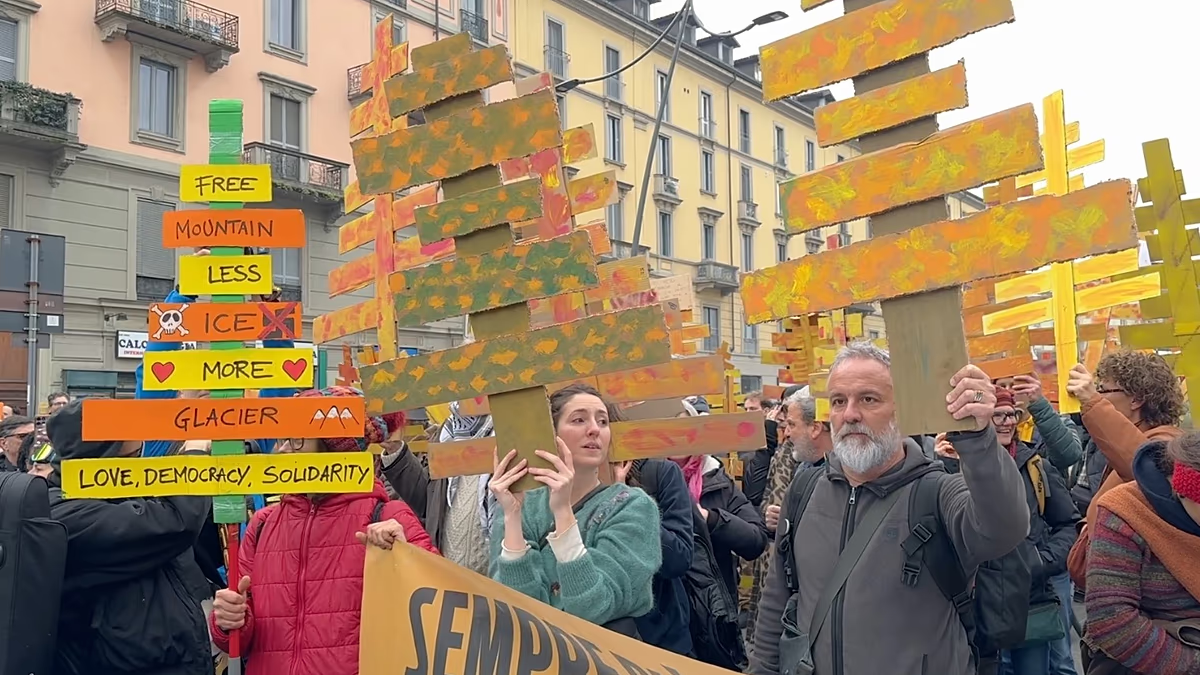
Demonstrations began in Milan on Friday and continued Saturday, with activists and students voicing opposition to the Games and the Italian government. Protests centered around concerns regarding the financial allocation for the Olympics, perceived environmental damage, and the broader socio-economic impact on the Lombardy region. The opening weekend has highlighted a significant undercurrent of opposition to the event.
Protests Mar the Start of the Milan-Cortina Winter Olympics
Saturday saw a larger organized protest led by a grassroots union, marching through Milan and passing the newly constructed Olympic Village. Demonstrators carried banners with slogans like “ICE out” – referring to the Italian Olympic Committee – and criticized both Prime Minister Giorgia Meloni’s government and Milan Mayor Beppe Sala. The protests reflect a growing sentiment that public funds would be better allocated to essential services.
Clashes with Police
While the majority of the protest remained peaceful, tensions escalated near a Winter Olympics venue. According to reports from the Associated Press, a group of protesters attempted to reach the Santagiulia ice hockey rink, leading to a confrontation with Italian police. Police responded by deploying tear gas and a water cannon against protesters who were throwing firecrackers and attempting to access a nearby highway.
Earlier in the day, a separate group of masked protesters set off smoke bombs and firecrackers on a bridge overlooking a construction site near the Olympic Village, which is currently housing approximately 1,500 athletes. The larger, peaceful demonstration, including families, had largely dispersed by the time of the clashes.
Economic and Environmental Concerns
Protesters articulated a range of grievances, primarily focusing on the financial cost of hosting the Winter Olympics. One healthcare worker at the protest told Euronews that the money spent on the Games could have been used for essential services like healthcare, schools, and social welfare. This sentiment echoes broader concerns about the economic benefits of hosting large-scale sporting events.
Environmental sustainability was another key concern. Several protesters argued that the construction and infrastructure projects undertaken for the Milan-Cortina Games have had a detrimental impact on the environment. They claim the works are unsustainable and prioritize spectacle over ecological responsibility. Euronews provides further coverage of the protesters’ statements.
A third protester stated that the Olympics have not brought wealth to Milan or Lombardy, alleging that funds have been diverted from vital public services. This criticism highlights a common argument against hosting the Olympics – that the economic benefits are often overstated and do not reach local communities.
The opening weekend’s events suggest that the 2026 Winter Olympics will be held under a cloud of political and social unrest. The Italian government will likely face continued pressure to address the concerns of protesters and demonstrate the value of hosting the Games. As the competitions begin, it remains to be seen whether these protests will escalate or subside, and how they will impact the overall atmosphere of the event. Follow ongoing coverage to see how these issues develop throughout the duration of the Milan-Cortina event.