
Football icon Lionel Messi concluded a promotional tour of India on Monday, captivating fans in New Delhi despite concerns about the city’s severe air pollution. The Argentine superstar, accompanied by Inter Miami teammates Luis Suarez and Rodrigo de Paul, engaged with supporters at the Arun Jaitley Stadium, traditionally a cricket venue, marking the end of his “GOAT Tour.” The visit aimed to boost football’s profile in a cricket-dominated nation.
The event in New Delhi followed a somewhat turbulent start to the tour in Kolkata, where fans expressed frustration over limited access to Messi. However, the final stop appeared to be a success, with Messi greeting thousands of cheering fans and participating in a brief football session with children.
Lionel Messi’s India Tour: A Mixed Reception
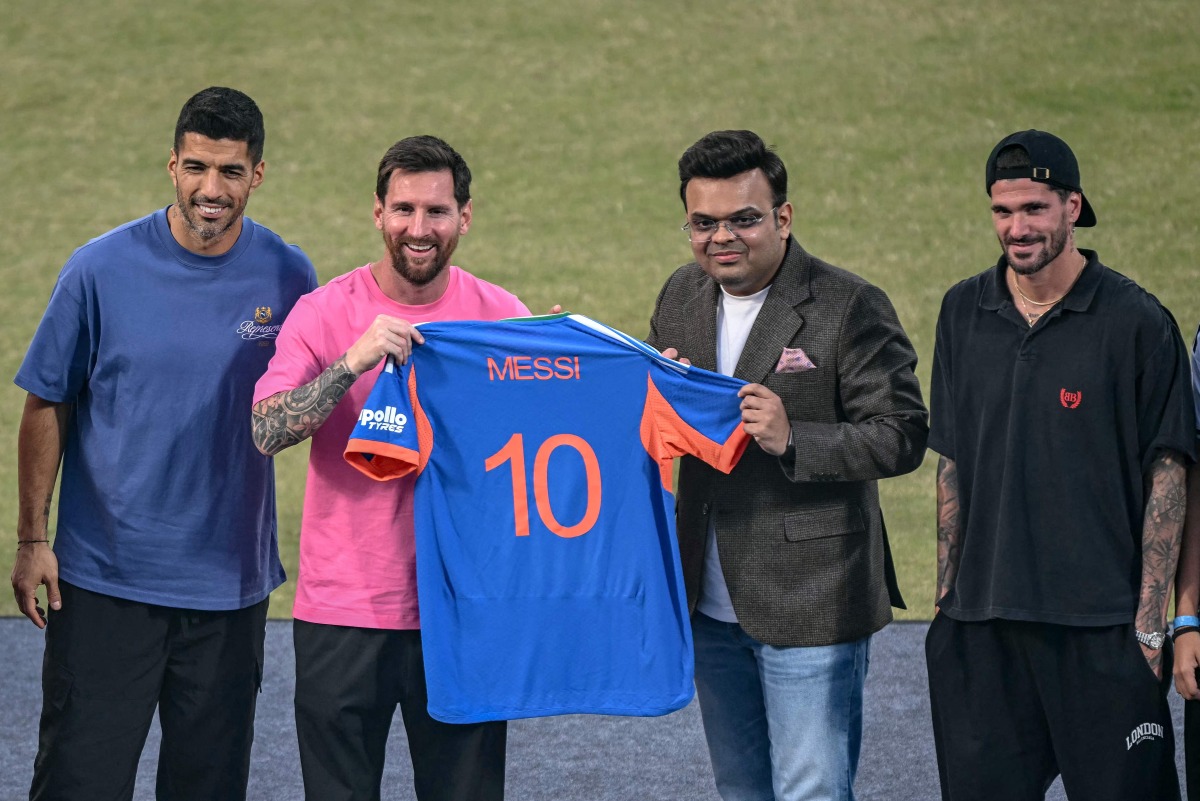
Messi’s visit to India, while generating immense excitement, highlighted the challenges of bringing global football stars to a country where the sport lags behind cricket in popularity. The tour, organized by the International Cricket Council (ICC), saw Messi meet with prominent figures from both sports, including cricket legend Sachin Tendulkar and Indian footballer Sunil Chhetri. He was also presented with a T20 World Cup ticket and an Indian jersey by ICC Chairman Jay Shah.
The initial event in Kolkata on Saturday was marred by chaos as fans, many having paid significant sums for tickets, breached security barriers and rushed the pitch after Messi’s brief appearance. This led to criticism of the event organization and concerns about crowd control. Authorities increased security measures for the New Delhi appearance to prevent a recurrence.
Air Quality Concerns in New Delhi
Despite the enthusiasm, the New Delhi event took place amidst hazardous air quality. According to monitoring organization IQAir, PM2.5 levels exceeded 300 micrograms per cubic meter in parts of the city, significantly above World Health Organization guidelines. This raised questions about the health risks for both Messi and the fans attending the event.
New Delhi consistently ranks among the world’s most polluted capitals, a result of vehicle emissions, industrial activity, and seasonal crop burning. A 2023 study in The Lancet Planetary Health estimated that 3.8 million deaths in India between 2009 and 2019 were linked to air pollution, underscoring the severity of the issue. Messi himself appeared unaffected, maintaining his energy throughout the 35-minute appearance.
The tour also served as a platform to acknowledge the growing, albeit still modest, football fanbase in India. Despite being ranked 142nd by FIFA, interest in the sport is increasing, particularly among younger generations. The presence of a global superstar like Messi is expected to further fuel this growth.
Messi recently received his second consecutive Major League Soccer (MLS) Most Valuable Player award after leading Inter Miami to the MLS title. He is now preparing to lead Argentina in their defense of the World Cup, which will be held in North America in June-July. The success of Inter Miami and Messi’s individual performance have significantly boosted his profile and marketability, contributing to the demand for appearances like this one.
Looking ahead, the impact of Messi’s visit on the long-term development of football in India remains to be seen. Further investment in grassroots programs and infrastructure will be crucial to capitalize on the increased awareness and enthusiasm generated by the tour. The ICC and other stakeholders will likely assess the logistical challenges encountered during the tour to improve the organization of future events featuring international sporting icons. The focus will now shift to Argentina’s preparations for the upcoming World Cup and Messi’s continued performance with Inter Miami.
Keywords: Lionel Messi, football, India, GOAT Tour, Inter Miami
Secondary Keywords: air pollution, ICC, MLS