


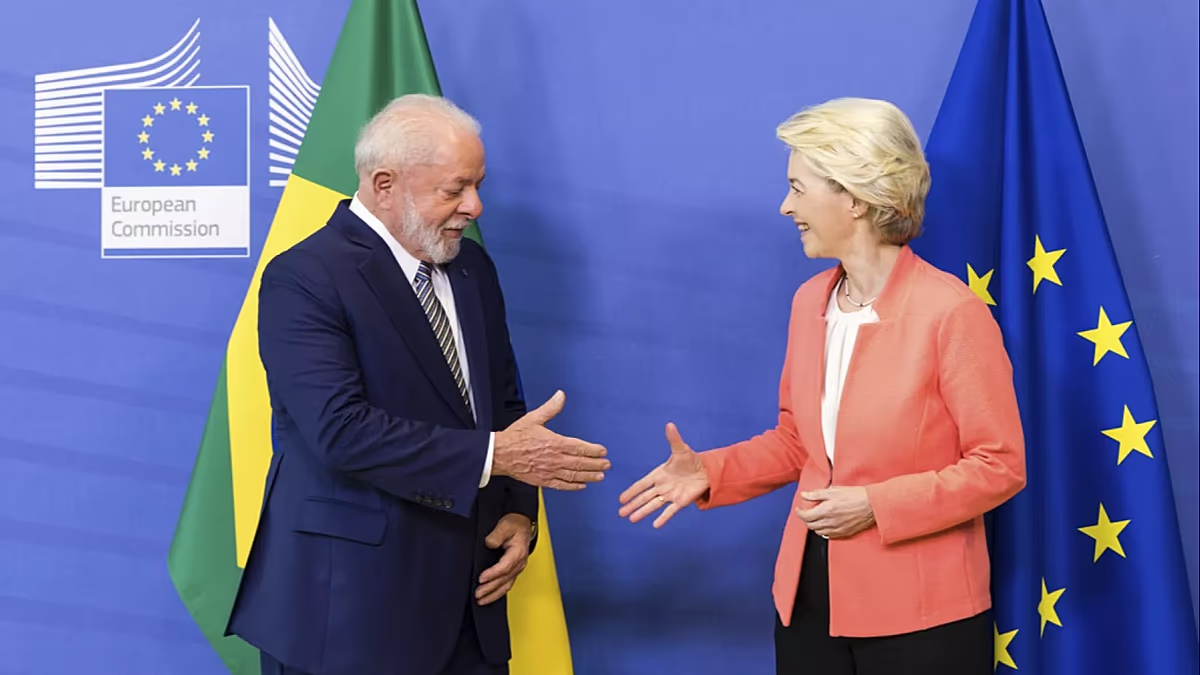

The European Union is on the cusp of finalizing a landmark trade agreement with the Mercosur bloc – Argentina, Brazil, Paraguay, and Uruguay – after 25 years of negotiations. EU Commission President Ursula von der Leyen and European Council President Antonio Costa are scheduled to travel to South America on December 20th for a potential signing ceremony, but the Mercosur deal faces a last-minute scramble for support among EU member states. The agreement aims to create a vast transatlantic free-trade zone, but significant opposition remains.
The planned trip underscores the urgency of the situation, with the next ten days considered critical for securing approval. While the European Commission believes a majority of member states will ultimately endorse the agreement, diplomats caution that the vote is exceptionally close. The outcome hinges on navigating concerns about agricultural competition and ensuring reciprocal trade standards.
The Future of the EU-Mercosur Trade Agreement
The core of the Mercosur deal involves the liberalization of trade between the EU and the South American nations. However, this liberalization has sparked anxieties, particularly within the agricultural sector of several EU countries. France has been the most vocal opponent, consistently arguing that increased imports from Mercosur will unfairly disadvantage European farmers.
Paris is now pushing for robust safeguard clauses to mitigate potential market disruptions and demanding reciprocity provisions to ensure Mercosur countries adhere to comparable production standards as those in the EU. Other nations, including Poland, Ireland, and Hungary, have also expressed strong reservations, often fueled by domestic agricultural lobbying. The governments of the Netherlands and Austria are similarly constrained by prior parliamentary stances against the pact, while Belgium is expected to abstain from voting.
Despite this opposition, a blocking minority – requiring at least four member states representing 35% of the EU population – has not yet solidified. This places Italy in a pivotal position. According to reports, Italy is the second-largest EU exporter to Mercosur, making the potential market access highly valuable for its industries.
Italian Agriculture Minister Francesco Lollobrigida initially voiced support for protecting Italian farmers, advocating for strong safeguards. However, guarantees presented by the Commission on October 8th, designed to monitor the EU market, may be shifting Rome’s stance towards approval. Even opposing nations acknowledge the necessity of strong market protections if the agreement proceeds.
Parliamentary Hurdles Remain
The path to ratification isn’t solely dependent on member state approval. The European Parliament must also consent to the deal, and a vote on enhanced safeguards, including the reciprocity clause, is scheduled for December 16th. Following the Parliament’s vote, negotiations with the Council will aim to establish a unified text.
A special procedure could expedite these negotiations, potentially allowing member states to finalize their positions before the planned signing in South America. However, even with member state approval and a signature, the process is far from complete. The European Parliament will still need to formally ratify the agreement, a process complicated by deep internal divisions.
Divisions within the Parliament are mirroring those in the Council, with opposition coming from both the far-right and far-left political groups. This fractured landscape raises concerns that the Parliament could ultimately derail the entire agreement, even after years of negotiation. Euronews reports that diplomats are increasingly anxious about the fragility of the negotiations.
Failure to secure the deal would represent a significant setback for the EU, potentially jeopardizing strategic market access and weakening its trade diversification efforts. This is particularly concerning given the current state of the EU’s relationship with the United States, a key trading partner. The situation highlights broader concerns about the EU’s geopolitical influence and its ability to finalize major trade agreements.
On the Mercosur side, patience is wearing thin after decades of negotiations. A senior diplomat from the South American bloc reportedly stated their frustration, suggesting they would “bury” the deal if it were to fall apart at this late stage.
The coming days will be crucial in determining the fate of the EU-Mercosur trade agreement. Watch for Italy’s formal position and the outcome of the European Parliament vote on December 16th. The future of transatlantic trade relations and the EU’s broader trade strategy hang in the balance. For further information on EU trade policy, visit the European Commission’s Trade website.